
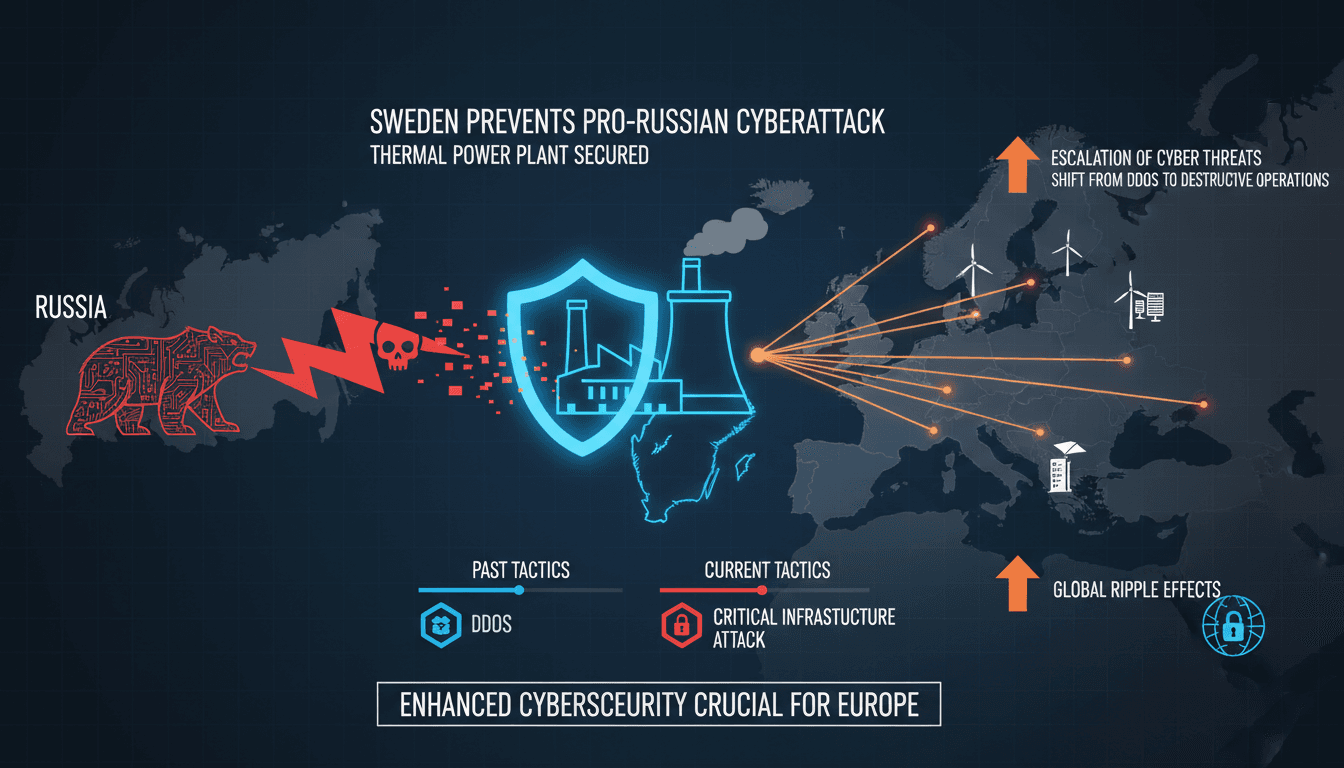
Sweden Prevents Pro-Russian Cyberattack on Thermal Power Plant
Here's what it means for you.
As global tensions rise, the resilience of critical infrastructure directly impacts energy security and operational stability in your sector.
Why it matters
This incident underscores the increasing threat to energy infrastructure, which can have ripple effects on global markets and supply chains.
What happened (in 30 seconds)
- Pro-Russian hackers attempted a destructive cyberattack on a thermal power plant in western Sweden in spring 2025.
- Built-in security mechanisms successfully thwarted the attack, preventing operational disruptions.
- Swedish authorities attributed the incident to a shift in tactics among pro-Russian actors, highlighting escalating cyber threats.
The context you actually need
- Escalating cyber threats: Since Russia's invasion of Ukraine in 2022, there has been a notable increase in cyberattacks targeting European critical infrastructure.
- Shift in tactics: Pro-Russian groups have moved from denial-of-service attacks to more aggressive operations aimed at disrupting operational technology systems.
- Broader implications: The attack reflects a growing trend of hybrid warfare, where cyber capabilities are used to achieve strategic objectives without conventional military engagement.
What's really happening
In spring 2025, a pro-Russian hacker group, linked to Russian intelligence services, targeted the operational technology (OT) systems of a thermal power plant in western Sweden. The aim was to disrupt heating supply operations, a critical service for both residential and industrial consumers. However, the facility's built-in security protections detected and blocked the intrusion attempt, resulting in no damage or service interruption.
This incident is part of a broader pattern of cyberattacks attributed to Russian-linked actors since the onset of the Ukraine conflict in February 2022. Initially, these groups focused on denial-of-service attacks, which aimed to overwhelm systems and disrupt services temporarily. However, the tactical shift to destructive operations targeting OT systems indicates a more aggressive approach, likely driven by the heightened geopolitical tensions and the desire to undermine Western infrastructure.
The Swedish Security Service conducted an investigation, identifying the perpetrators and closing the case without ongoing threats. Civil Defence Minister Carl-Oskar Bohlin publicly disclosed the attribution on April 15, 2026, emphasizing the reckless behavior of these groups and the potential severe societal consequences of successful attacks. This incident serves as a wake-up call for nations and organizations to bolster their cybersecurity measures, particularly in critical sectors like energy.
The implications extend beyond Sweden, as energy infrastructure is interconnected globally. A successful cyberattack on one country's energy systems could lead to cascading effects, impacting supply chains, energy prices, and economic stability in other regions. The incident also highlights the importance of international cooperation in cybersecurity, as nations must work together to share intelligence and develop robust defenses against these evolving threats.
Who feels it first (and how)
- Energy sector professionals: Increased scrutiny on cybersecurity measures and potential operational changes.
- Government agencies: Heightened focus on national security and infrastructure protection strategies.
- Businesses reliant on energy: Potential disruptions in supply chains and operational costs if similar attacks succeed elsewhere.
What to watch next
- Increased cybersecurity investments: Watch for companies and governments ramping up spending on cybersecurity measures to protect critical infrastructure.
- International cooperation: Monitor developments in international agreements aimed at enhancing cybersecurity collaboration among nations.
- Emerging attack patterns: Keep an eye on the evolution of cyberattack tactics, particularly from state-affiliated groups, as they adapt to countermeasures.
Pro-Russian actors are increasingly targeting critical infrastructure in Europe.
Other nations will enhance their cybersecurity protocols in response to this incident.
The long-term impact on energy prices and market stability remains to be seen.
Frequently Asked Questions
- Why it matters?
- This incident underscores the increasing threat to energy infrastructure, which can have ripple effects on global markets and supply chains.
- What happened (in 30 seconds)?
- Pro-Russian hackers attempted a destructive cyberattack on a thermal power plant in western Sweden in spring 2025. Built-in security mechanisms successfully thwarted the attack, preventing operational disruptions. Swedish authorities attributed the incident to a shift in tactics among pro-Russian actors, highlighting escalating cyber threats.
- What's really happening?
- In spring 2025, a pro-Russian hacker group, linked to Russian intelligence services, targeted the operational technology (OT) systems of a thermal power plant in western Sweden. The aim was to disrupt heating supply operations, a critical service for both residential and industrial consumers. However, the facility's built-in security protections detected and blocked the intrusion attempt, resulting in no damage or service interruption. This incident is part of a broader pattern of cyberattacks
- Who feels it first (and how)?
- Energy sector professionals: Increased scrutiny on cybersecurity measures and potential operational changes. Government agencies: Heightened focus on national security and infrastructure protection strategies. Businesses reliant on energy: Potential disruptions in supply chains and operational costs if similar attacks succeed elsewhere.
- What to watch next?
- Increased cybersecurity investments: Watch for companies and governments ramping up spending on cybersecurity measures to protect critical infrastructure. International cooperation: Monitor developments in international agreements aimed at enhancing cybersecurity collaboration among nations. Emerging attack patterns: Keep an eye on the evolution of cyberattack tactics, particularly from state-affiliated groups, as they adapt to countermeasures.
Consumer tech news, reviews, and buying guides for gadgets and electronics.
"TechRadar is known for comprehensive buying advice, hardware reviews, and consumer tech news targeted at mainstream audiences."
— A47 Editor
Russia hits European thermal power plant in attempted ‘destructive’ cyberattack – Pro-Kremlin hackers are engaging in ‘riskier and more reckless behavior’ in latest attempt to cripple Western critical infrastructure
A thermal power plant in Sweden was targeted in an attempted 'destructive' cyberattack attributed to Russian hackers, highlighting escalating cyber threats against Western critical infrastructure.
Startup news with frequent AI coverage.
"Covers launches, funding, and product updates in AI."
— A47 Editor
Sweden blames Russian hackers for attempting ‘destructive’ cyberattack on thermal plant
Sweden's minister for civil defense has accused Russian hackers of attempting a destructive cyberattack on a thermal plant, highlighting the increasing threat posed by such malicious activities in Europe.
Pan-Arab news coverage spanning politics, business, sports, and regional affairs.
"Asharq Al-Awsat reflects a broad Arab editorial perspective with strong attention to regional geopolitics."
— A47 Editor
السويد تحبط هجوماً إلكترونياً لمجموعة موالية لروسيا على محطة توليد طاقة حرارية
Sweden's Civil Defense Minister announced on Wednesday that the country thwarted a cyberattack planned by a Russia-aligned hacking group targeting a thermal power station in the western part of the country. This incident highlights ongoing cybersecur...