
US-Israel Airstrikes Target Iran's Bushehr Nuclear Facility
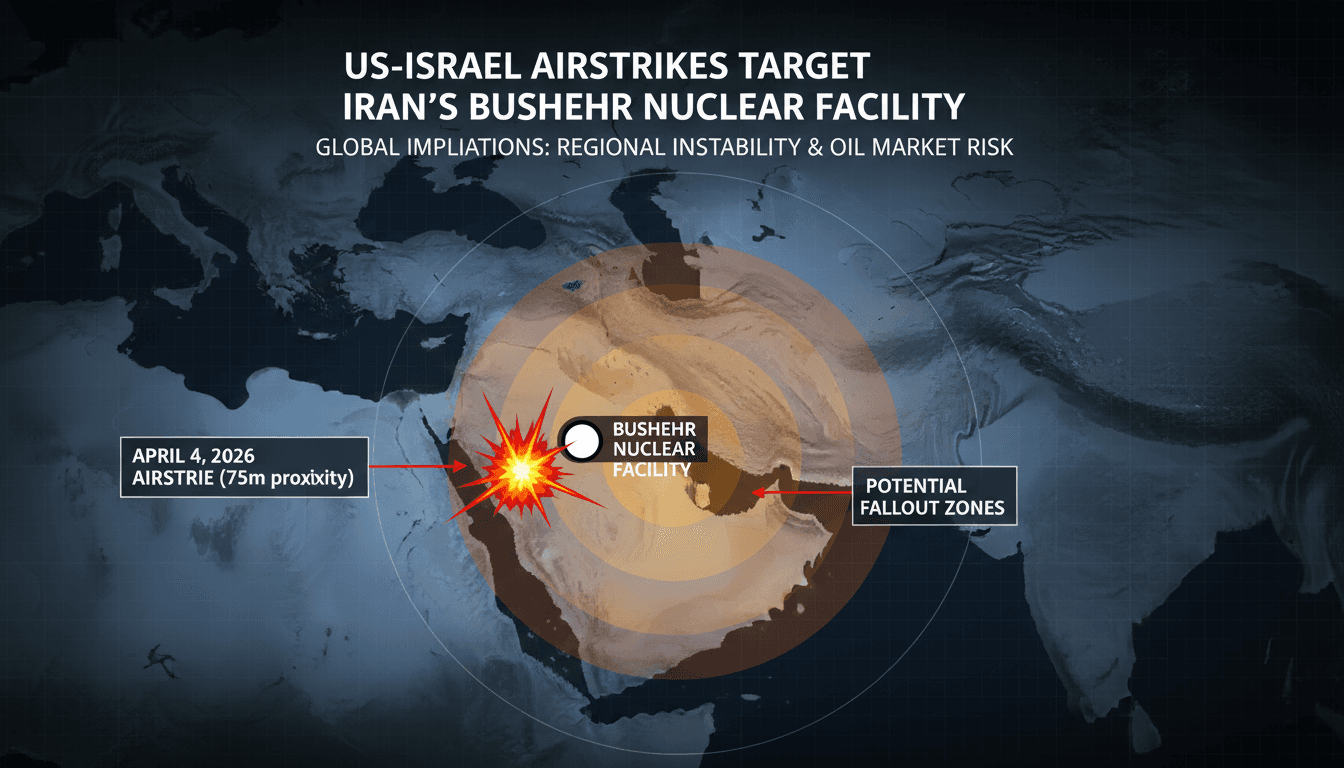
Here's what it means for you.
The proximity of military actions to nuclear sites raises risks that could impact global energy markets and regional stability.
Why it matters
The airstrikes near Iran's Bushehr Nuclear Power Plant could destabilize the Middle East, affecting oil prices and international trade routes.
What happened (in 30 seconds)
- On April 4, 2026, airstrikes attributed to the United States and Israel struck within 75 meters of Iran's Bushehr Nuclear Power Plant.
- The IAEA confirmed no radiation increase but warned of severe risks from continued military actions near the facility.
- One Iranian security guard was killed by projectile fragments during the strikes, which are part of the ongoing 2026 Iran war.
The context you actually need
- The Bushehr facility, operational since 2011, is Iran's only nuclear power plant and contains significant nuclear fuel, making it a critical point of concern.
- This incident marks the fourth airstrike near the Bushehr site since military operations escalated, following the US-Israel surprise airstrikes on February 28, 2026.
- Iran has accused the US and Israel of hypocrisy, threatening retaliation and emphasizing the potential for a radiological disaster affecting neighboring countries.
What's really happening
The airstrikes near Iran's Bushehr Nuclear Power Plant are not isolated incidents but part of a broader conflict that escalated significantly in 2026. The US and Israel launched surprise airstrikes on February 28, targeting Iranian military capabilities, nuclear infrastructure, and leadership, in response to rising tensions over Iran's nuclear ambitions and its regional proxy networks. The closure of the Strait of Hormuz on March 4 further heightened the stakes, as this vital shipping route is crucial for global oil transport.
The International Atomic Energy Agency (IAEA) confirmed the proximity of the strikes to the Bushehr facility, which is constructed with Russian assistance and has been operational since 2011. The IAEA's Director General Rafael Grossi emphasized the risks associated with military actions near nuclear sites, warning that continued strikes could lead to a severe radiological accident. The facility's operational status amid these heightened risks raises alarms not just for Iran but for neighboring countries, particularly those in the Gulf Cooperation Council (GCC).
Iranian media reported that one security guard was killed during the strikes, which caused damage to nearby buildings and created shockwaves felt in the region. The evacuation of Rosatom personnel, who were working at the facility, underscores the operational risks and the potential for a mass exodus of skilled workers from the site. The geopolitical implications are profound, as Iran's Foreign Minister has warned that radioactive fallout could impact GCC capitals, including Dubai.
Market reactions have already begun to unfold, with UAE equities declining and oil prices surging past $120 per barrel due to fears of escalating conflict and disrupted shipping. The situation is compounded by the ongoing threats from former President Trump regarding Iranian infrastructure and the reopening of the Strait of Hormuz, which is critical for oil exports.
The underlying mechanism driving these events is a complex interplay of military strategy, energy security, and regional power dynamics. The US and Israel are motivated by a desire to curb Iran's nuclear capabilities and regional influence, while Iran is responding with threats and military posturing. This cycle of action and reaction has the potential to spiral into broader conflict, affecting not only regional stability but also global energy markets.
Who feels it first (and how)
- Energy sector professionals: Increased oil prices and volatility affect profitability and operational costs.
- Investors in GCC markets: Stock market fluctuations and geopolitical risks can impact investment strategies and returns.
- Residents in GCC countries: Heightened tensions may lead to increased security measures and economic instability.
- International shipping companies: Disruptions in the Strait of Hormuz can affect shipping routes and costs.
What to watch next
- Continued military actions: Monitor for further airstrikes or retaliatory measures from Iran, which could escalate tensions.
- IAEA assessments: Keep an eye on reports from the IAEA regarding the safety of the Bushehr facility and any changes in operational status.
- Oil market fluctuations: Watch for shifts in oil prices as geopolitical tensions impact supply and demand dynamics.
The airstrikes occurred within 75 meters of the Bushehr Nuclear Power Plant, and one security guard was killed.
Further military actions or retaliatory strikes from Iran could occur, escalating the conflict.
The long-term implications for regional stability and global energy markets remain uncertain.
Frequently Asked Questions
- Why it matters?
- The airstrikes near Iran's Bushehr Nuclear Power Plant could destabilize the Middle East, affecting oil prices and international trade routes.
- What happened (in 30 seconds)?
- On April 4, 2026, airstrikes attributed to the United States and Israel struck within 75 meters of Iran's Bushehr Nuclear Power Plant. The IAEA confirmed no radiation increase but warned of severe risks from continued military actions near the facility. One Iranian security guard was killed by projectile fragments during the strikes, which are part of the ongoing 2026 Iran war.
- What's really happening?
- The airstrikes near Iran's Bushehr Nuclear Power Plant are not isolated incidents but part of a broader conflict that escalated significantly in 2026. The US and Israel launched surprise airstrikes on February 28, targeting Iranian military capabilities, nuclear infrastructure, and leadership, in response to rising tensions over Iran's nuclear ambitions and its regional proxy networks. The closure of the Strait of Hormuz on March 4 further heightened the stakes, as this vital shipping route is c
- Who feels it first (and how)?
- Energy sector professionals: Increased oil prices and volatility affect profitability and operational costs. Investors in GCC markets: Stock market fluctuations and geopolitical risks can impact investment strategies and returns. Residents in GCC countries: Heightened tensions may lead to increased security measures and economic instability. International shipping companies: Disruptions in the Strait of Hormuz can affect shipping routes and costs.
- What to watch next?
- Continued military actions: Monitor for further airstrikes or retaliatory measures from Iran, which could escalate tensions. IAEA assessments: Keep an eye on reports from the IAEA regarding the safety of the Bushehr facility and any changes in operational status. Oil market fluctuations: Watch for shifts in oil prices as geopolitical tensions impact supply and demand dynamics.
Breaking news, politics, business, and entertainment from the U.S. and around the world.
"The New York Post is a tabloid-format newspaper known for its sensationalist headlines and conservative-leaning editorial tone."
— A47 Editor
Airstrikes come within 82 yards of Iran’s nuclear power plant: UN watchdog
A series of airstrikes have targeted areas near Iran's Bushehr nuclear power plant, with one strike occurring just 82 yards from the main building and another resulting in the death of a security staff member, as reported by the United Nations' atomi...
English-language reporting on Saudi politics, policy, and society.
"Saudi Gazette reflects mainstream Saudi institutional perspectives."
— A47 Editor
Strikes near Iran power plant could cause 'severe radiological accident', IAEA says
The International Atomic Energy Agency (IAEA) has warned that ongoing military strikes near Iran's Bushehr nuclear power plant could lead to a severe radiological accident, with potential repercussions extending beyond Iran's borders. Recent attacks ...
Regional coverage and analysis focused on politics, diplomacy, and business across the Middle East.
"Al-Monitor is known for analytical reporting on Middle East politics and policy developments."
— A47 Editor
IAEA confirms impact of recent strikes near Iran's Bushehr nuclear power plant
The International Atomic Energy Agency (IAEA) confirmed that recent military strikes occurred near Iran's Bushehr nuclear power plant, with one strike landing just 75 meters from the facility's perimeter. However, the IAEA reported that the plant its...