
U.S. Utilities Plan $1.4 Trillion Investment to Address AI Data Center Electricity Demand
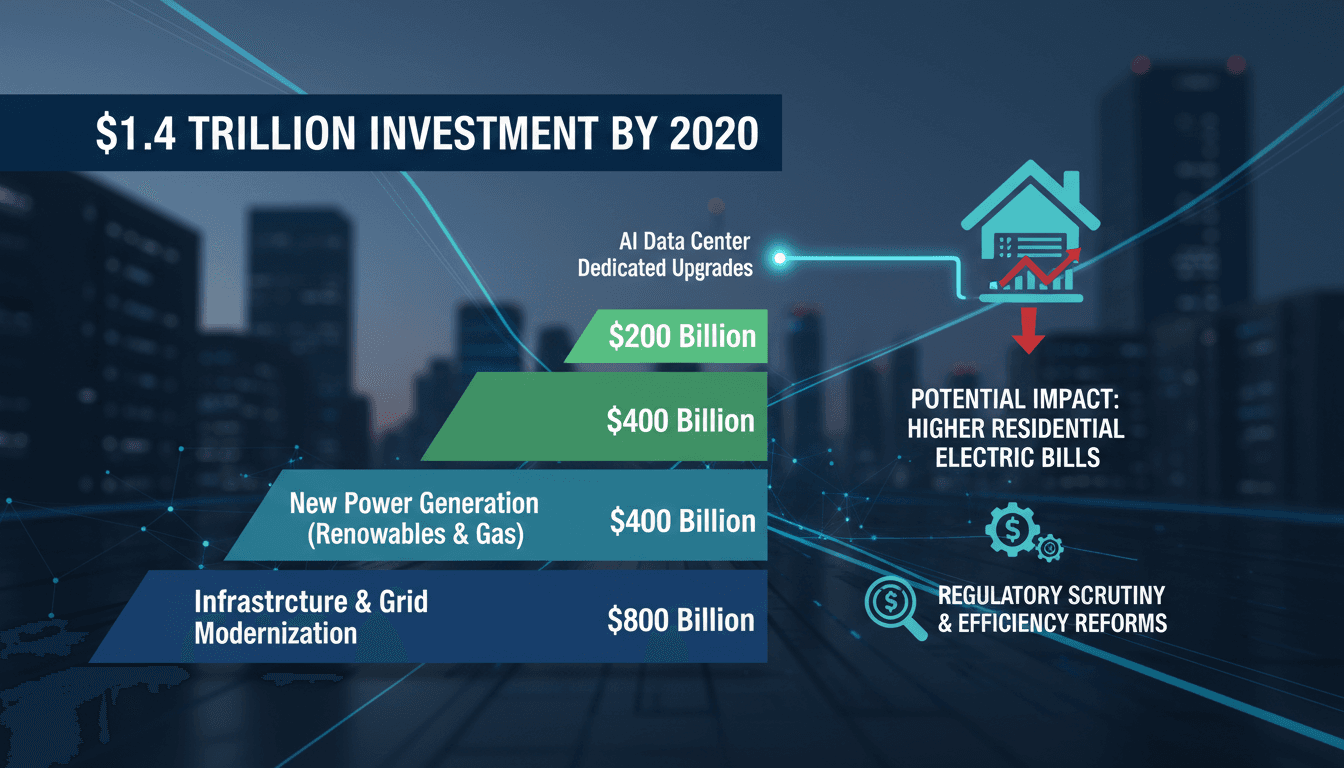
Here's what it means for you.
As electricity demand surges, your utility bills may rise, impacting your budget and energy choices.
Why it matters
This unprecedented capital expenditure signals a shift in how utilities respond to evolving energy demands, with potential implications for consumers nationwide.
What happened (in 30 seconds)
- PowerLines released a report projecting $1.4 trillion in capital expenditures by U.S. utilities through 2030 to meet rising electricity demand from AI data centers.
- This represents a 21% increase from previous five-year plans, indicating a significant shift in utility spending priorities.
- Residential electric bills could rise following a 40% increase since 2021, as utilities seek to recover costs associated with infrastructure upgrades.
The context you actually need
- Flat demand for decades: U.S. electricity demand had remained largely stable due to efficiency gains and offshoring, but recent surges from AI and electric vehicles are straining the grid.
- Aging infrastructure: Utilities face challenges from outdated systems, requiring substantial investment to modernize and maintain reliability.
- Regulatory environment: Utilities are incentivized to recover capital expenditures rather than operational costs, leading to increased spending amid inflation and supply chain issues.
What's really happening
The PowerLines report, released on April 13, 2026, analyzed filings from 51 investor-owned utilities, revealing a staggering minimum of $1.4 trillion in planned capital expenditures through 2030. This figure marks a 21% increase from prior projections of $1.1 trillion, reflecting a significant shift in utility spending driven primarily by the burgeoning demand from AI data centers. Notably, 32 of the utilities cited data centers as a key driver of this demand, with companies like American Electric Power (AEP) forecasting an 88% growth in data center load.
Historically, U.S. electricity demand has been relatively flat, largely due to efficiency improvements and the offshoring of manufacturing. However, the recent surge in demand from AI data centers, electric vehicles, and the reshoring of industry, coupled with extreme weather events, has put unprecedented pressure on an aging electrical grid. Utilities, incentivized to recover returns on capital expenditures rather than operational costs, are now compelled to increase their spending plans to ensure reliability and meet this new demand.
The implications of this spending spree are multifaceted. While utilities argue that these investments are essential for maintaining grid reliability and potentially lowering per-customer costs through load growth, critics, including PowerLines, are calling for efficiency reforms and greater oversight. The regulatory environment has also played a role, with regulators approving 64% of utility rate increase requests from 2021 to 2025, totaling $31 billion sought in 2025 alone. This trend raises concerns about the potential for increased residential electric bills, which have already risen by 40% since 2021.
Moreover, tech giants like Google, Microsoft, and Amazon have signed a White House 'ratepayer protection pledge' in March 2026, aiming to limit consumer bill impacts. However, the long-term sustainability of these investments remains uncertain, especially as social media discussions highlight the risks of ratepayer subsidies in states like Ohio and Virginia.
Who feels it first (and how)
- Residential consumers: Likely to see increased electric bills as utilities pass on costs associated with infrastructure upgrades.
- Tech companies: Major players in AI and cloud computing will drive demand for electricity, influencing utility spending and potentially their operational costs.
- Utility investors: Shareholders may benefit from increased capital expenditures if they lead to higher returns, but they also face risks if regulatory environments shift.
What to watch next
- Regulatory approvals: Monitor how regulators respond to utility spending requests and whether they will approve rate increases, impacting consumer bills.
- Infrastructure developments: Keep an eye on the pace of utility infrastructure upgrades and their effectiveness in meeting rising demand.
- Consumer sentiment: Watch for shifts in public opinion regarding utility spending and rate increases, which could influence future regulatory decisions.
Utilities plan to spend at least $1.4 trillion through 2030 to meet rising electricity demand.
Residential electric bills will continue to rise as utilities recover costs from infrastructure investments.
The long-term effectiveness of these investments in stabilizing the grid and their impact on consumer bills remains uncertain.
Frequently Asked Questions
- Why it matters?
- This unprecedented capital expenditure signals a shift in how utilities respond to evolving energy demands, with potential implications for consumers nationwide.
- What happened (in 30 seconds)?
- PowerLines released a report projecting $1.4 trillion in capital expenditures by U.S. utilities through 2030 to meet rising electricity demand from AI data centers. This represents a 21% increase from previous five-year plans, indicating a significant shift in utility spending priorities. Residential electric bills could rise following a 40% increase since 2021, as utilities seek to recover costs associated with infrastructure upgrades.
- What's really happening?
- The PowerLines report, released on April 13, 2026, analyzed filings from 51 investor-owned utilities, revealing a staggering minimum of $1.4 trillion in planned capital expenditures through 2030. This figure marks a 21% increase from prior projections of $1.1 trillion, reflecting a significant shift in utility spending driven primarily by the burgeoning demand from AI data centers. Notably, 32 of the utilities cited data centers as a key driver of this demand, with companies like American Electr
- Who feels it first (and how)?
- Residential consumers: Likely to see increased electric bills as utilities pass on costs associated with infrastructure upgrades. Tech companies: Major players in AI and cloud computing will drive demand for electricity, influencing utility spending and potentially their operational costs. Utility investors: Shareholders may benefit from increased capital expenditures if they lead to higher returns, but they also face risks if regulatory environments shift.
- What to watch next?
- Regulatory approvals: Monitor how regulators respond to utility spending requests and whether they will approve rate increases, impacting consumer bills. Infrastructure developments: Keep an eye on the pace of utility infrastructure upgrades and their effectiveness in meeting rising demand. Consumer sentiment: Watch for shifts in public opinion regarding utility spending and rate increases, which could influence future regulatory decisions.
Breaking news, politics, business, and entertainment from the U.S. and around the world.
"The New York Post is a tabloid-format newspaper known for its sensationalist headlines and conservative-leaning editorial tone."
— A47 Editor
$1.4 trillion utility spending spree to keep up with AI data centers could hike electric bills: study
US utilities are set to invest a record $1.4 trillion in the power grid to meet the increasing demands of data centers, particularly those driven by artificial intelligence. This significant expenditure is expected to lead to higher electricity bills...
Corporate leadership, finance, technology, and market trends.
"Fortune covers financial trends, leadership, and innovation with a pragmatic editorial approach."
— A47 Editor
U.S. utilities are planning a $1.4 trillion spending spree, up 30%, over the next five years amid the AI construction boom
U.S. utilities are set to embark on a significant $1.4 trillion spending spree over the next five years, marking a 30% increase in capital spending plans. This surge in investment is occurring alongside rising consumer rate hikes, although the two fa...
U.S. business news, corporate developments, and economy.
"The Wall Street Journal is respected for deep financial and economic reporting with a center-right editorial perspective."
— A47 Editor
Utilities Plan to Spend $1.4 Trillion Over Next Five Years to Power AI Boom
A recent report reveals that 51 investor-owned utilities plan to invest $1.4 trillion over the next five years to upgrade the aging power grid and accommodate the increasing electricity demand driven by artificial intelligence (AI) technologies.