
Al-Aqsa Mosque Compound Reopens After 40-Day Closure Amid US-Iran Conflict
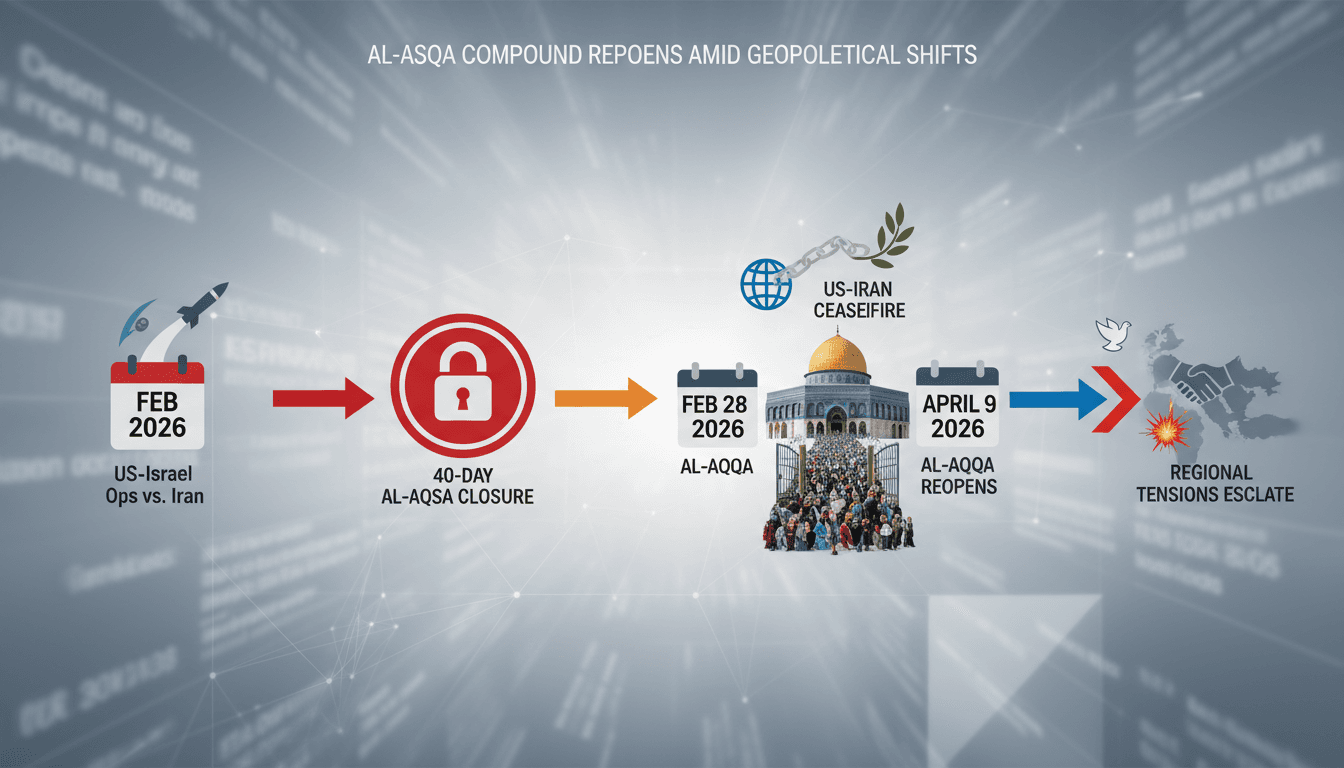
Here's what it means for you.
The reopening of a key religious site amid geopolitical tensions could influence regional stability and market dynamics.
Why it matters
This event highlights the intersection of religious access and international relations, impacting both local communities and global markets.
What happened (in 30 seconds)
- Al-Aqsa Mosque compound reopened on April 9, 2026, after a 40-day closure imposed by Israeli authorities.
- Approximately 3,000 Palestinian worshippers attended dawn prayers, facing heavy security measures and entry restrictions.
- The closure coincided with the onset of US-Iran military operations, marking significant geopolitical implications during Ramadan.
The context you actually need
- The closure began on February 28, 2026, amid heightened tensions due to US-Israeli military actions against Iran, citing security concerns.
- This was the first time since 1967 that Eid al-Fitr prayers were prevented at Al-Aqsa, a site of profound religious significance for Muslims.
- The site is managed by Jordan's Islamic Waqf, which underscores the complex interplay of religious authority and political control in the region.
What's really happening
The reopening of the Al-Aqsa Mosque compound is a pivotal moment that reflects broader geopolitical tensions and the delicate balance of power in the region. The closure, which lasted for 40 days, was unprecedented and coincided with the initiation of military operations against Iran by the US and Israel. This timing was not coincidental; it was framed by Israeli authorities as a necessary measure for public safety amid fears of missile threats and potential unrest.
The closure had significant implications for Palestinian worshippers, particularly during Ramadan, a month of heightened religious observance. Access restrictions were particularly stringent, allowing only limited groups—men over 55, women over 50, and children—to enter. This not only affected religious practices but also heightened feelings of exclusion and frustration among the Palestinian community.
Upon reopening, the mosque saw approximately 3,000 worshippers, a testament to the community's resilience and desire for spiritual connection despite the restrictions. However, the heavy presence of Israeli security forces during the reopening raised concerns about ongoing tensions and the potential for conflict. Reports indicated that some individuals were denied entry and others faced aggressive treatment at the gates, illustrating the fraught atmosphere surrounding the site.
The reopening also coincided with a two-week ceasefire announcement in the US-Iran conflict, which may have contributed to a temporary easing of regional tensions. This broader context is crucial, as it suggests that the reopening could be part of a larger diplomatic maneuvering aimed at stabilizing the situation. The interplay between religious access and geopolitical strategy highlights the complexities of the Israeli-Palestinian conflict and its ramifications for regional stability.
Moreover, the international response, particularly from Arab nations, has been one of condemnation regarding the closure. The UAE, among others, previously denounced the restrictions as violations of international law, indicating that the situation at Al-Aqsa is not just a local issue but a matter of regional and international concern. The reopening may serve as a momentary relief but also signals ongoing challenges that could affect diplomatic relations and economic conditions in the region.
Who feels it first (and how)
- Palestinian worshippers: Directly impacted by access restrictions and emotional toll from the closure.
- Israeli authorities: Managing security and public safety concerns amid heightened tensions.
- Regional governments: Monitoring the situation closely, as it affects diplomatic relations and regional stability.
- Global markets: Investors and analysts observing potential shifts in oil prices and geopolitical risks.
What to watch next
- Continued security measures: Monitor how Israeli authorities manage access to the mosque in the coming weeks, as this could indicate ongoing tensions or a shift towards normalization.
- US-Iran relations: Watch for developments in the ceasefire and any potential escalations, as these will directly impact regional stability and economic conditions.
- Public sentiment: Observe reactions from Palestinian communities and regional governments, as these sentiments could influence future diplomatic efforts and unrest.
The Al-Aqsa Mosque compound has reopened after a 40-day closure.
Ongoing security measures will remain in place, affecting access for worshippers.
The long-term impact of this reopening on US-Iran relations and regional stability.
Frequently Asked Questions
- Why it matters?
- This event highlights the intersection of religious access and international relations, impacting both local communities and global markets.
- What happened (in 30 seconds)?
- Al-Aqsa Mosque compound reopened on April 9, 2026, after a 40-day closure imposed by Israeli authorities. Approximately 3,000 Palestinian worshippers attended dawn prayers, facing heavy security measures and entry restrictions. The closure coincided with the onset of US-Iran military operations, marking significant geopolitical implications during Ramadan.
- What's really happening?
- The reopening of the Al-Aqsa Mosque compound is a pivotal moment that reflects broader geopolitical tensions and the delicate balance of power in the region. The closure, which lasted for 40 days, was unprecedented and coincided with the initiation of military operations against Iran by the US and Israel. This timing was not coincidental; it was framed by Israeli authorities as a necessary measure for public safety amid fears of missile threats and potential unrest. The closure had significant
- Who feels it first (and how)?
- Palestinian worshippers: Directly impacted by access restrictions and emotional toll from the closure. Israeli authorities: Managing security and public safety concerns amid heightened tensions. Regional governments: Monitoring the situation closely, as it affects diplomatic relations and regional stability. Global markets: Investors and analysts observing potential shifts in oil prices and geopolitical risks.
- What to watch next?
- Continued security measures: Monitor how Israeli authorities manage access to the mosque in the coming weeks, as this could indicate ongoing tensions or a shift towards normalization. US-Iran relations: Watch for developments in the ceasefire and any potential escalations, as these will directly impact regional stability and economic conditions. Public sentiment: Observe reactions from Palestinian communities and regional governments, as these sentiments could influence future diplomatic eff
UAE-based English-language newspaper covering regional politics, economics, and global affairs.
"The National reflects Emirati policy perspectives while maintaining international editorial standards."
— A47 Editor
Al Aqsa Mosque reopens after 40-day closure imposed by Israel
The Al Aqsa Mosque has reopened after a 40-day closure imposed by Israeli authorities, allowing worshippers to return to this significant religious site. The closure was part of heightened tensions in the region, which included a broader conflict inv...
English-language reporting on Saudi politics, policy, and society.
"Saudi Gazette reflects mainstream Saudi institutional perspectives."
— A47 Editor
Thousands pray at Al-Aqsa Mosque after Israel lifts 40-day ban
Al-Aqsa Mosque in occupied East Jerusalem reopened to Muslim worshippers after a 40-day closure imposed by Israel, allowing thousands to enter for prayers. The closure was part of heightened restrictions following the outbreak of the US-Israeli milit...