
Kuwaiti Authorities Detain U.S.-Kuwaiti Journalist Over Social Media Posts on Military Incident
Here's what it means for you.
As a global citizen, the implications of this case could affect how journalists operate in your region, influencing the flow of information.
Why it matters
The detention of a journalist underlines the fragility of press freedom in the Gulf region, impacting how information is disseminated and perceived globally.
What happened (in 30 seconds)
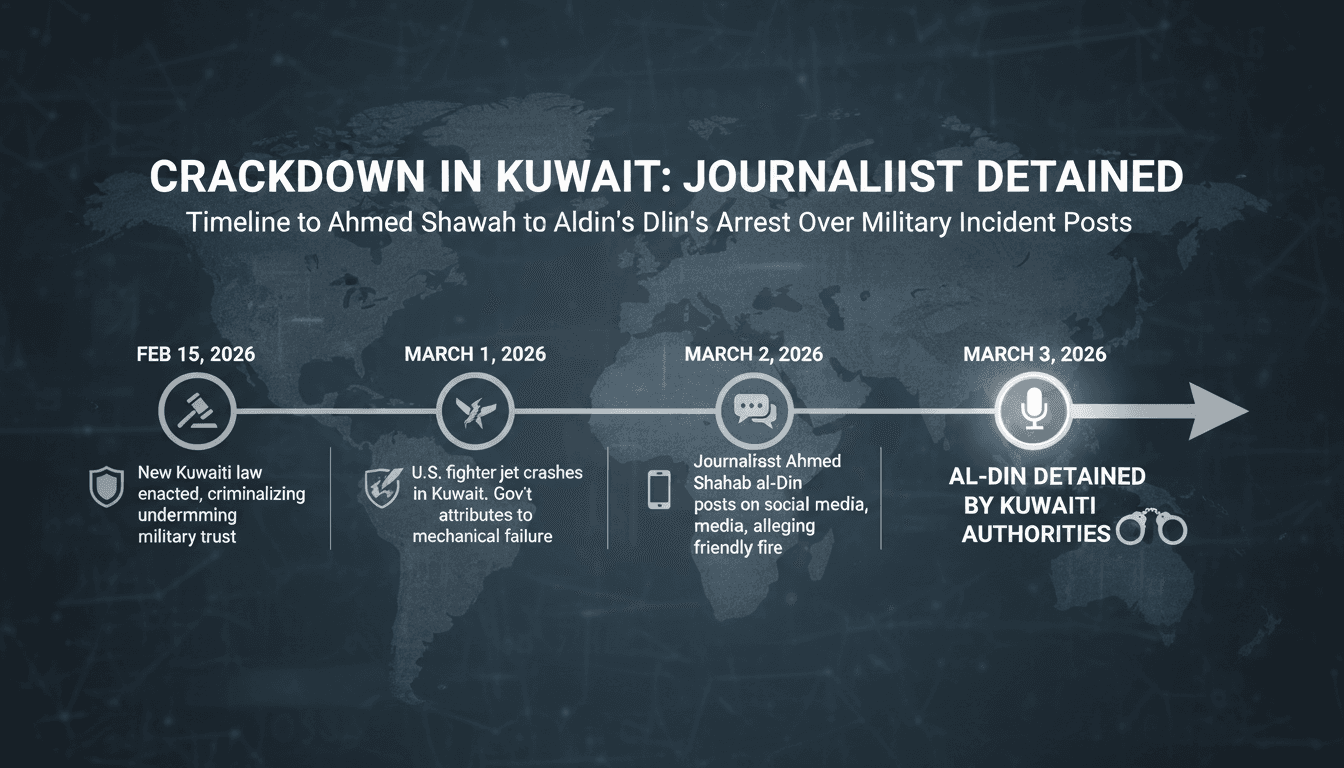
- On March 3, 2026, Kuwaiti authorities detained journalist Ahmed Shahab al-Din for social media posts about a U.S. fighter jet crash.
- He faces serious charges including spreading false information and endangering national security, amid rising U.S.-Iran tensions.
- As of April 15, 2026, al-Din remains in pre-trial detention, with press freedom organizations demanding his release.
The context you actually need
- The incident occurred during heightened tensions between the U.S. and Iran, which could influence regional security dynamics.
- Kuwait recently enacted Law No. 13, imposing severe penalties for publications that undermine military trust, reflecting a crackdown on dissent.
- Al-Din's case has drawn international attention, with organizations like the Committee to Protect Journalists advocating for his release, highlighting global concerns over press freedom.
What's really happening
The detention of Ahmed Shahab al-Din is emblematic of a broader trend in the Gulf Cooperation Council (GCC) states, where governments are increasingly tightening control over media narratives, especially in the context of national security. Al-Din's arrest follows a U.S. F-15E Strike Eagle crash, which he alleged was due to friendly fire from Kuwaiti air defenses. This assertion, made during a period of heightened U.S.-Iran tensions, struck a nerve with Kuwaiti authorities, who are sensitive to any implications that could undermine public trust in their military capabilities.
The enactment of Law No. 13 on March 15, 2026, further illustrates this tightening grip. This law penalizes any publications that could be seen as damaging to military institutions or public morale, creating a chilling effect on journalists and media outlets. The law's vague language allows for broad interpretation, which can lead to arbitrary detentions and self-censorship among journalists. Al-Din's case is not an isolated incident; it reflects a systemic issue where the state prioritizes control over transparency, particularly in matters related to national security.
The international community, including press freedom organizations, has responded with calls for al-Din's release, framing his detention as a violation of journalistic rights. The Committee to Protect Journalists has emphasized that journalism should not be criminalized, advocating for the dismissal of charges against him. However, the Kuwaiti government has remained largely silent on the matter, indicating a reluctance to engage with international criticism.
As tensions in the region continue to escalate, the implications of this case extend beyond al-Din himself. It raises questions about the future of press freedom in Kuwait and the GCC at large. Journalists operating in these environments may find themselves increasingly at risk, leading to a potential decline in the quality and quantity of information available to the public. This situation could also deter foreign journalists from covering sensitive topics in the region, further isolating it from global discourse.
Who feels it first (and how)
- Journalists: Increased risk of detention and censorship, leading to self-censorship.
- Media organizations: Potential for reduced coverage of sensitive topics, impacting their credibility and operations.
- General public: Limited access to diverse viewpoints and critical information, affecting informed decision-making.
What to watch next
- International responses: Monitor how global organizations and foreign governments react to al-Din's detention, which could influence Kuwait's diplomatic relations.
- Legal developments: Watch for updates on al-Din's trial and any potential changes to Law No. 13, which could signal shifts in press freedom policies.
- Regional media landscape: Observe how other journalists in the GCC respond to this case, as it may affect their reporting practices and willingness to cover sensitive issues.
Ahmed Shahab al-Din is currently detained and facing charges in Kuwait.
Increased scrutiny on press freedom in the GCC, with potential repercussions for journalists operating in the region.
The long-term impact of this case on Kuwait's international relations and domestic policies regarding media freedom.
Frequently Asked Questions
- Why it matters?
- The detention of a journalist underlines the fragility of press freedom in the Gulf region, impacting how information is disseminated and perceived globally.
- What happened (in 30 seconds)?
- On March 3, 2026, Kuwaiti authorities detained journalist Ahmed Shahab al-Din for social media posts about a U.S. fighter jet crash. He faces serious charges including spreading false information and endangering national security, amid rising U.S.-Iran tensions. As of April 15, 2026, al-Din remains in pre-trial detention, with press freedom organizations demanding his release.
- What's really happening?
- The detention of Ahmed Shahab al-Din is emblematic of a broader trend in the Gulf Cooperation Council (GCC) states, where governments are increasingly tightening control over media narratives, especially in the context of national security. Al-Din's arrest follows a U.S. F-15E Strike Eagle crash, which he alleged was due to friendly fire from Kuwaiti air defenses. This assertion, made during a period of heightened U.S.-Iran tensions, struck a nerve with Kuwaiti authorities, who are sensitive to
- Who feels it first (and how)?
- Journalists: Increased risk of detention and censorship, leading to self-censorship. Media organizations: Potential for reduced coverage of sensitive topics, impacting their credibility and operations. General public: Limited access to diverse viewpoints and critical information, affecting informed decision-making.
- What to watch next?
- International responses: Monitor how global organizations and foreign governments react to al-Din's detention, which could influence Kuwait's diplomatic relations. Legal developments: Watch for updates on al-Din's trial and any potential changes to Law No. 13, which could signal shifts in press freedom policies. Regional media landscape: Observe how other journalists in the GCC respond to this case, as it may affect their reporting practices and willingness to cover sensitive issues.
Jordanian news and regional updates.
"Roya News is a Jordanian outlet focused on breaking news and local affairs."
— A47 Editor
الكويت تحتجز الصحفي أحمد شهاب الدين على خلفية منشورات عبر وسائل التواصل الاجتماعي
Kuwaiti authorities have detained journalist Ahmad Shahabuddin due to his posts on social media, raising concerns about freedom of expression in the country. The detention highlights ongoing tensions between the government and media figures who expre...
Global coverage of politics, crises, and international affairs.
"HuffPost provides progressive-oriented reporting on international developments, often focusing on humanitarian and social justice issues."
— A47 Editor
Journalist Ahmed Shihab-Eldin Jailed In Kuwait Over Social Media Posts On Iran War: Reports
Ahmed Shihab-Eldin, an award-winning Kuwaiti American journalist, was reportedly jailed in Kuwait last month for social media posts related to the Iran war, facing prosecution in a special tribunal. His arrest has drawn significant attention due to i...
Regional coverage and analysis focused on politics, diplomacy, and business across the Middle East.
"Al-Monitor is known for analytical reporting on Middle East politics and policy developments."
— A47 Editor
American journalist Ahmed Shihab-Eldin detained in Kuwait: What to know
American journalist Ahmed Shihab-Eldin has been detained by Kuwaiti authorities amid a crackdown on alleged violations of the country's media law, a move that reflects ongoing tensions related to freedom of expression in the region.
International coverage from The Guardian's global desks.
"The Guardian is known for its progressive editorial stance and in-depth analysis."
— A47 Editor
Detention of journalist in Kuwait raises questions about crackdown on freedom of speech
Ahmed Shihab-Eldin, a prize-winning journalist, was arrested in Kuwait on March 3 after reporting on a friendly fire incident involving a US air force F-15 E Strike Eagle. His detention has raised concerns about the increasing crackdown on freedom of...