
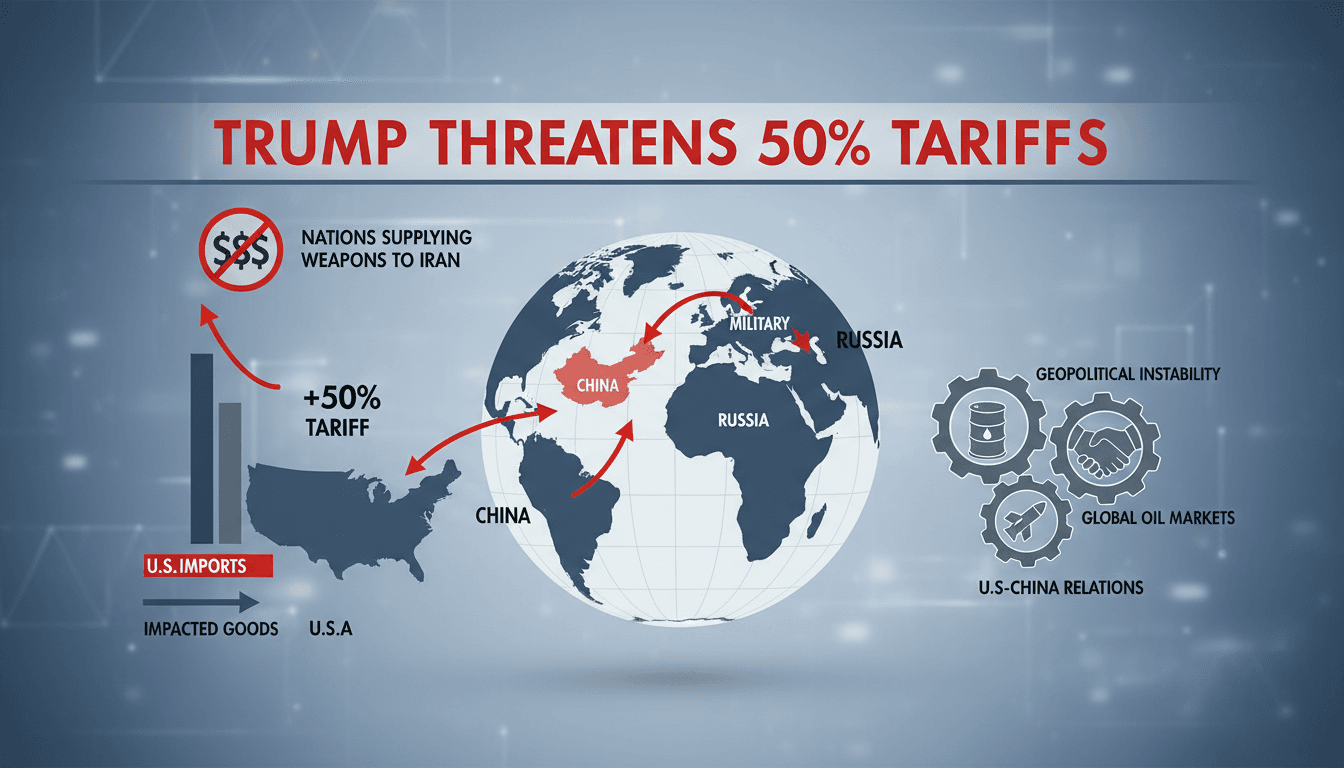
Trump Threatens 50% Tariffs on Nations Supplying Military Weapons to Iran
Here's what it means for you.
If you rely on global supply chains or are invested in energy markets, this tariff threat could reshape costs and availability.
Why it matters
This tariff threat could exacerbate global supply chain disruptions and elevate energy prices, impacting inflation and consumer costs.
What happened (in 30 seconds)
- On April 8, 2026, President Trump announced a 50% tariff on goods from countries supplying military weapons to Iran, targeting nations like China and Russia.
- The threat followed a fragile ceasefire between the U.S. and Iran, amid ongoing military tensions and accusations of arms supplies to Tehran.
- As of April 12, 2026, no tariffs had been enacted, but the situation escalated with failed ceasefire negotiations and renewed threats of military action.
The context you actually need
- The U.S. military campaign against Iranian missile sites had intensified, leading to a temporary ceasefire brokered by China and Pakistan.
- China and Russia have been accused of supplying Iran with advanced military technology, which is seen as a direct threat to U.S. interests in the region.
- The Strait of Hormuz, a critical shipping route for global oil, has been a focal point for tensions, with Iran's actions disrupting oil shipments and raising global energy prices.
What's really happening
The recent tariff threat from President Trump is not just a reaction to Iran's military capabilities but a strategic move aimed at reshaping the geopolitical landscape. The U.S. has been increasingly concerned about Iran's missile technology and its implications for regional stability, particularly in the context of the Strait of Hormuz, where a significant portion of the world's oil supply is transported.
By targeting countries like China and Russia, which have been accused of supplying military technology to Iran, Trump aims to deter further arms transfers that could enhance Iran's military capabilities. This tariff threat is part of a broader strategy to exert economic pressure on nations that are seen as undermining U.S. interests. The proposed 50% tariffs could significantly impact U.S. imports, particularly from China, which accounted for $308.4 billion in imports in 2025.
The potential tariffs come at a time when the U.S. is navigating complex diplomatic waters, having just brokered a ceasefire agreement that is now in jeopardy. The failure of ceasefire talks, coupled with ongoing military operations against Iranian targets, raises the stakes for all involved parties. Trump's rhetoric about "erasing Iranian civilization" if negotiations fail underscores the high tensions and the lengths to which the U.S. might go to protect its interests.
Moreover, the economic implications of these tariffs extend beyond just military suppliers. The heightened risk in the Strait of Hormuz could lead to increased shipping costs and oil prices, which would ripple through global markets. For Dubai, a hub for trade and energy, this could mean increased fuel costs and inflation, affecting both businesses and consumers. The interconnectedness of global supply chains means that any disruption in one area can have cascading effects elsewhere, making this tariff threat a significant point of concern for businesses and economies worldwide.
Who feels it first (and how)
- Energy sector: Companies relying on oil imports may face higher costs, impacting profit margins.
- Manufacturers: Industries dependent on components from China or Russia could see increased costs and supply delays.
- Consumers: Rising energy prices could lead to higher costs of living, particularly in regions reliant on oil imports.
What to watch next
- Ceasefire negotiations: The outcome of ongoing talks will determine whether the tariff threat escalates into actual policy.
- Oil prices: Fluctuations in oil prices will indicate market reactions to geopolitical tensions and tariff threats.
- U.S.-China relations: Any shifts in diplomatic relations could influence the implementation of tariffs and broader economic impacts.
The tariff threat is aimed primarily at China and Russia.
If ceasefire talks fail, the U.S. may escalate military actions and implement the tariffs.
The long-term economic impact on global supply chains and energy markets remains uncertain.
Frequently Asked Questions
- Why it matters?
- This tariff threat could exacerbate global supply chain disruptions and elevate energy prices, impacting inflation and consumer costs.
- What happened (in 30 seconds)?
- On April 8, 2026, President Trump announced a 50% tariff on goods from countries supplying military weapons to Iran, targeting nations like China and Russia. The threat followed a fragile ceasefire between the U.S. and Iran, amid ongoing military tensions and accusations of arms supplies to Tehran. As of April 12, 2026, no tariffs had been enacted, but the situation escalated with failed ceasefire negotiations and renewed threats of military action.
- What's really happening?
- The recent tariff threat from President Trump is not just a reaction to Iran's military capabilities but a strategic move aimed at reshaping the geopolitical landscape. The U.S. has been increasingly concerned about Iran's missile technology and its implications for regional stability, particularly in the context of the Strait of Hormuz, where a significant portion of the world's oil supply is transported. By targeting countries like China and Russia, which have been accused of supplying milit
- Who feels it first (and how)?
- Energy sector: Companies relying on oil imports may face higher costs, impacting profit margins. Manufacturers: Industries dependent on components from China or Russia could see increased costs and supply delays. Consumers: Rising energy prices could lead to higher costs of living, particularly in regions reliant on oil imports.
- What to watch next?
- Ceasefire negotiations: The outcome of ongoing talks will determine whether the tariff threat escalates into actual policy. Oil prices: Fluctuations in oil prices will indicate market reactions to geopolitical tensions and tariff threats. U.S.-China relations: Any shifts in diplomatic relations could influence the implementation of tariffs and broader economic impacts.
Arabic-language UAE newspaper coverage focused on domestic affairs, public institutions, business, society, and regional developments.
"Al Khaleej coverage generally reflects a mainstream UAE editorial lens with strong attention to public affairs, institutions, and regional developments."
— A47 Editor
ترامب يهدد الصين برسوم جمركية 50% في حال ساعدت إيران عسكرياً
U.S. President Donald Trump has threatened to impose a 50% tariff on China if it provides military assistance to Iran. This statement underscores the ongoing tensions between the U.S. and both China and Iran, particularly regarding military and econo...
Arabic-language digital news outlet covering UAE, regional, and international developments with broad general-news coverage.
"Al Ain News coverage typically blends UAE-focused reporting with wider Arab regional and international news."
— A47 Editor
ترامب يلوح بفرض رسوم جمركية على الصين في حال سلحت إيران
U.S. President Donald Trump has threatened to impose tariffs on countries supplying weapons to Iran, specifically mentioning China, following the failure of negotiations between the United States and Iran. This escalation indicates a potential shift ...