
Trump Administration Proposes Significant Reduction in Iran War Funding Request
Here's what it means for you.
If you’re in the energy sector, this funding shift could impact oil prices and market stability.
Why it matters
The adjustment in funding reflects a significant shift in U.S. military strategy and geopolitical dynamics, directly affecting global energy markets.
What happened (in 30 seconds)
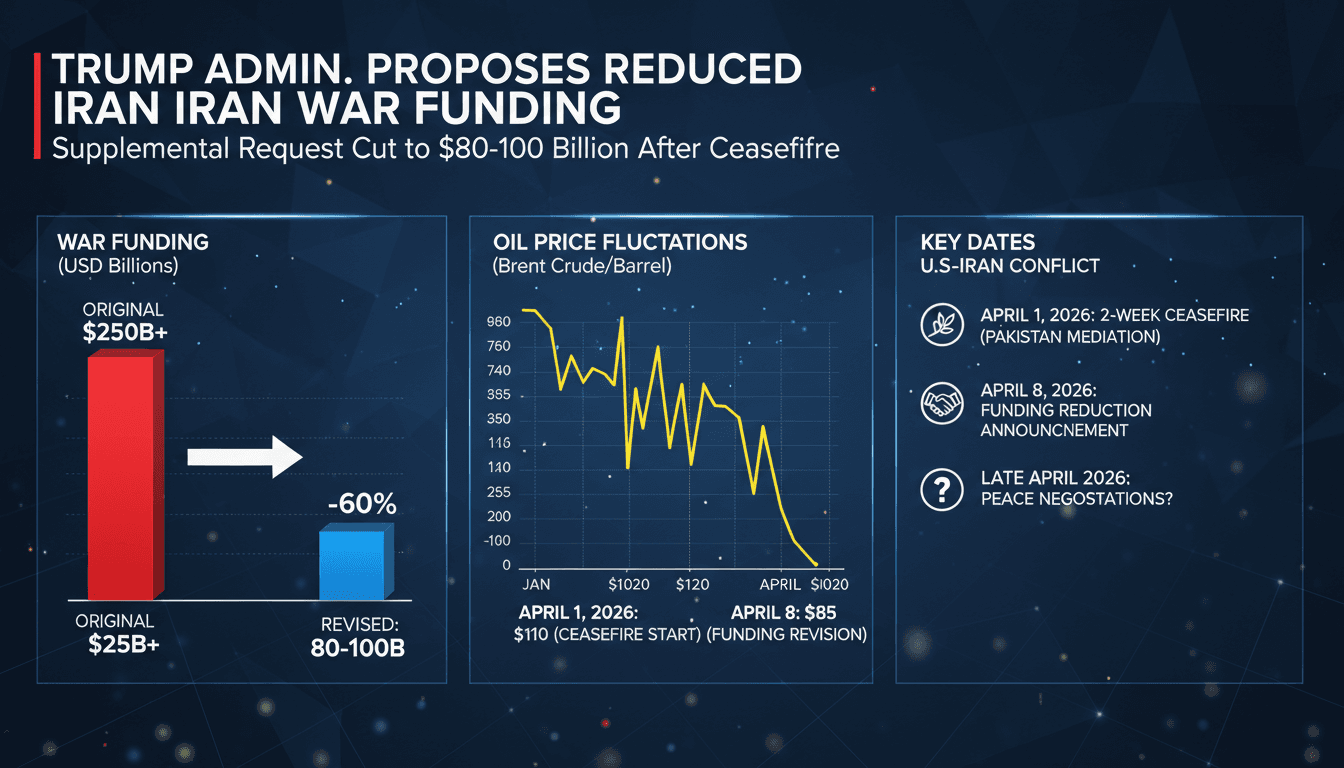
- On April 8, 2026, the Trump administration proposed to reduce its supplemental funding request for the U.S.-Iran war to between $80 billion and $100 billion.
- This reduction comes after a two-week ceasefire was announced, mediated by Pakistan, aimed at de-escalating tensions and reopening the Strait of Hormuz.
- Congressional opposition is growing against the initial funding proposal exceeding $200 billion, reflecting concerns over fiscal responsibility.
The context you actually need
- The U.S.-Iran war began on February 28, 2026, following extensive airstrikes by U.S. and Israeli forces on Iranian military targets.
- The Pentagon's initial funding request was driven by the need to sustain military operations amid escalating tensions and threats to energy security.
- Negotiations are set to begin on April 11 in Pakistan, indicating a potential shift toward diplomatic solutions in the region.
What's really happening
The proposed reduction in funding for the U.S.-Iran war signals a recalibration of military strategy amidst a backdrop of escalating geopolitical tensions. The war, which commenced on February 28, 2026, was ignited by U.S. and Israeli airstrikes targeting Iranian military infrastructure in response to Iran's closure of the Strait of Hormuz. This strategic waterway is crucial for global oil transport, and its closure raised alarms about potential disruptions in energy supplies.
Initially, the Pentagon sought over $200 billion to sustain military operations, reflecting the high stakes involved in the conflict. However, as the war progressed, the political landscape shifted. Congressional opposition emerged, particularly from Democrats and fiscal conservatives, who questioned the necessity and scale of such funding. This dissent is rooted in broader concerns about fiscal responsibility and the implications of prolonged military engagement.
The announcement of a two-week ceasefire on April 7, 2026, marked a pivotal moment. It was a direct response to the growing pressure from Congress and public sentiment against escalating military expenditures. The ceasefire, mediated by Pakistan, aims to facilitate negotiations that could lead to a more stable situation in the region. The Trump administration's decision to scale back the funding request aligns with these de-escalation efforts, indicating a willingness to pivot from a purely military approach to one that incorporates diplomatic avenues.
The financial implications of this funding reduction are significant. With the revised request of $80 billion to $100 billion, the administration is signaling a more cautious approach to military spending, which could have ripple effects on global markets. For instance, following the ceasefire announcement, oil prices dropped sharply, reflecting reduced fears of supply disruptions. This is particularly relevant for regions like Dubai, where the economy is closely tied to oil prices and energy stability.
Moreover, the involvement of Pakistan as a mediator highlights the shifting dynamics in international relations, with countries traditionally seen as regional players stepping into roles that could reshape future negotiations. The outcome of the upcoming talks will be crucial in determining not only the future of U.S.-Iran relations but also the broader geopolitical landscape in the Middle East.
Who feels it first (and how)
- Energy Sector Professionals: Fluctuations in oil prices directly impact jobs and investments in energy.
- Investors in Global Markets: Changes in military funding and ceasefire outcomes influence stock market stability and investment strategies.
- Residents of Dubai and the UAE: Local economies are sensitive to oil price changes, affecting everything from fuel costs to inflation.
What to watch next
- Ceasefire Negotiations: The outcomes of the talks in Pakistan on April 11 will be pivotal in shaping future U.S.-Iran relations and regional stability.
- Oil Price Trends: Continued monitoring of oil prices will indicate market reactions to geopolitical developments and funding adjustments.
- Congressional Reactions: Watch for further responses from Congress regarding military funding and potential shifts in public sentiment.
The Trump administration's funding request has been reduced to $80–100 billion.
The ceasefire will lead to further negotiations aimed at de-escalating tensions in the region.
The long-term implications of this funding reduction on U.S. military strategy and regional security remain uncertain.
Frequently Asked Questions
- Why it matters?
- The adjustment in funding reflects a significant shift in U.S. military strategy and geopolitical dynamics, directly affecting global energy markets.
- What happened (in 30 seconds)?
- On April 8, 2026, the Trump administration proposed to reduce its supplemental funding request for the U.S.-Iran war to between $80 billion and $100 billion. This reduction comes after a two-week ceasefire was announced, mediated by Pakistan, aimed at de-escalating tensions and reopening the Strait of Hormuz. Congressional opposition is growing against the initial funding proposal exceeding $200 billion, reflecting concerns over fiscal responsibility.
- What's really happening?
- The proposed reduction in funding for the U.S.-Iran war signals a recalibration of military strategy amidst a backdrop of escalating geopolitical tensions. The war, which commenced on February 28, 2026, was ignited by U.S. and Israeli airstrikes targeting Iranian military infrastructure in response to Iran's closure of the Strait of Hormuz. This strategic waterway is crucial for global oil transport, and its closure raised alarms about potential disruptions in energy supplies. Initially, the Pe
- Who feels it first (and how)?
- Energy Sector Professionals: Fluctuations in oil prices directly impact jobs and investments in energy. Investors in Global Markets: Changes in military funding and ceasefire outcomes influence stock market stability and investment strategies. Residents of Dubai and the UAE: Local economies are sensitive to oil price changes, affecting everything from fuel costs to inflation.
- What to watch next?
- Ceasefire Negotiations: The outcomes of the talks in Pakistan on April 11 will be pivotal in shaping future U.S.-Iran relations and regional stability. Oil Price Trends: Continued monitoring of oil prices will indicate market reactions to geopolitical developments and funding adjustments. Congressional Reactions: Watch for further responses from Congress regarding military funding and potential shifts in public sentiment.
Arabic-language UAE newspaper coverage focused on domestic affairs, public institutions, business, society, and regional developments.
"Al Khaleej coverage generally reflects a mainstream UAE editorial lens with strong attention to public affairs, institutions, and regional developments."
— A47 Editor
«واشنطن بوست»: إدارة ترامب ستخفض طلب تمويل حرب إيران إلى 100 مليار دولار
The Washington Post reported that the Trump administration is expected to reduce its funding request for the Iran war to $100 billion, according to U.S. officials and other informed sources. This adjustment reflects a significant change in the financ...
Macro commentary, policy analysis, growth/inflation themes, and global outlooks.
"Contextual macro coverage that complements day-to-day market headlines."
— A47 Editor
U.S. to scale back Iran war funding request to under $100 billion, WaPo reports
The U.S. government is reportedly planning to reduce its funding request for military operations in Iran to below $100 billion, according to a report by The Washington Post. This adjustment comes amid ongoing geopolitical tensions and financial marke...