
Netanyahu Initiates Direct Talks with Lebanon on Hezbollah Disarmament
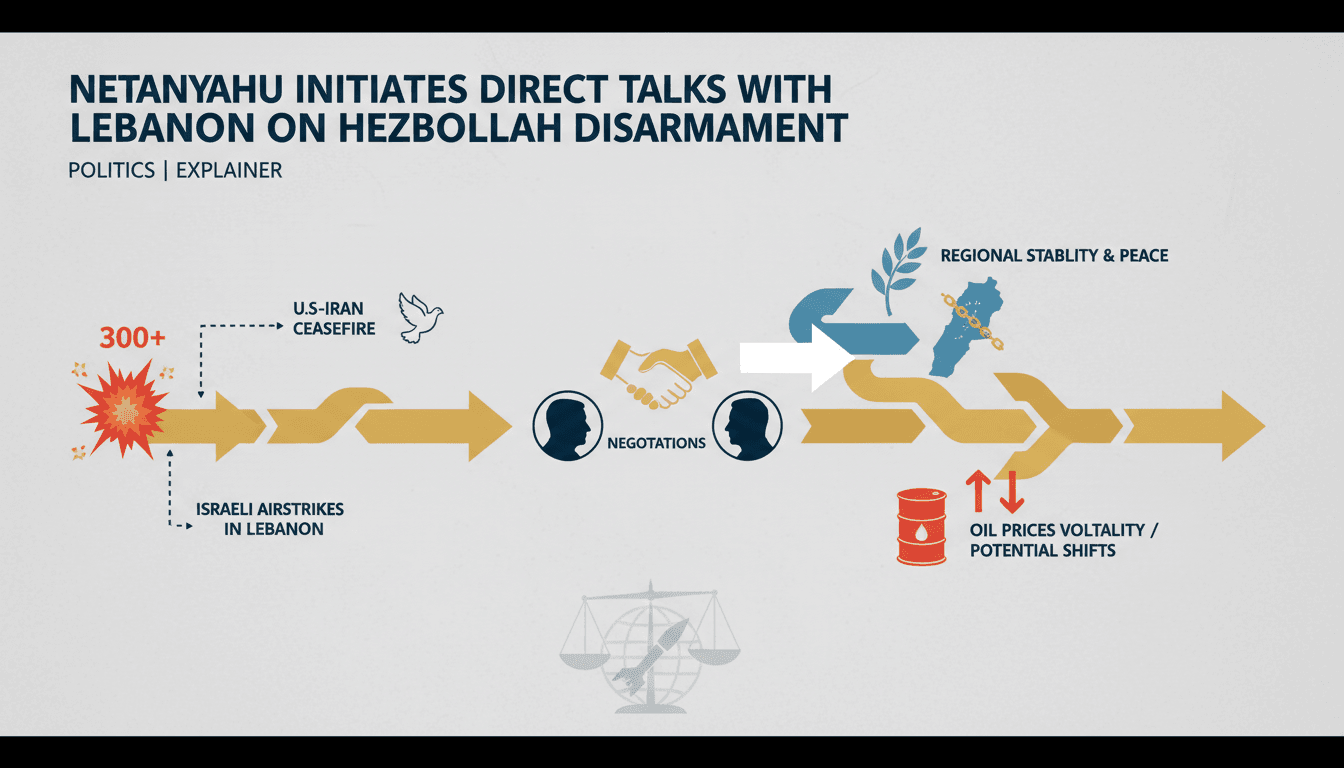
Here's what it means for you.
If you're in the Gulf region, the outcome of these negotiations could impact fuel prices and regional stability.
Why it matters
This diplomatic move could reshape security dynamics in the Middle East, affecting global oil markets and regional alliances.
What happened (in 30 seconds)
- April 8: A U.S.-Iran ceasefire was announced amid escalating violence, with Israel launching over 100 airstrikes on Lebanon, killing 303.
- April 9: Israeli Prime Minister Netanyahu authorized direct negotiations with Lebanon focused on disarming Hezbollah, clarifying that strikes would continue.
- Current Status: Talks are scheduled for Washington next week, with no confirmation from the Lebanese government.
The context you actually need
- Ongoing Conflict: The 2026 Iran war has intensified clashes between Israel and Hezbollah, rooted in historical tensions and recent military actions.
- U.S. Involvement: The U.S. is playing a crucial role in brokering peace, aiming to stabilize the region while managing its own interests.
- Economic Impact: The conflict has already disrupted logistics and tourism in the UAE, with rising fuel and food prices affecting daily life.
What's really happening
The recent escalation in violence between Israel and Hezbollah has roots in a complex web of geopolitical tensions, particularly involving Iran and its proxies. The U.S.-Iran ceasefire announced on April 8 aimed to halt hostilities in the broader context of the Iran war, which began on February 28, 2026. This conflict has seen U.S. and Israeli forces conducting strikes against Iranian targets, leading to retaliatory actions by Hezbollah, which is supported by Iran.
Netanyahu's decision to engage in direct negotiations with Lebanon marks a significant shift in Israeli strategy. By focusing on disarming Hezbollah, Israel aims to establish a more secure border and reduce the threat posed by the militant group. However, Netanyahu has made it clear that these talks do not equate to a ceasefire in the ongoing conflict, as Israeli airstrikes continue to target Hezbollah positions in Lebanon.
The backdrop of this diplomatic maneuver is the high casualty rate resulting from the recent airstrikes, with over 300 fatalities reported, including civilians and militants. This level of violence has prompted international concern and calls for de-escalation. The U.S. has urged Israel to consider scaling back its military operations, indicating a desire to stabilize the region and prevent further escalation.
While the negotiations are set to take place in Washington, the Lebanese government has yet to confirm its participation, reflecting the uncertainty surrounding this diplomatic initiative. Hezbollah's rejection of direct talks further complicates the situation, as the group maintains a hardline stance against Israel. Iran's parliament speaker has also warned of "strong responses" to Israeli actions, indicating that regional tensions may not ease quickly.
The implications of these negotiations extend beyond immediate security concerns. The potential for a peace agreement could reshape alliances in the region, impacting oil markets and economic stability. As the Gulf nations grapple with rising fuel prices and logistical challenges, the outcome of these talks will be closely monitored by investors and policymakers alike.
Who feels it first (and how)
- Gulf Residents: Rising fuel and food prices due to disruptions in the Strait of Hormuz.
- Logistics Sector: Companies reliant on stable supply chains may face increased costs and delays.
- Tourism Industry: Strained by regional instability, affecting travel plans and economic growth.
What to watch next
- Negotiation Outcomes: The success or failure of talks in Washington will significantly influence regional stability and security.
- Market Reactions: Watch for fluctuations in oil prices and Gulf equities in response to developments in the negotiations.
- Hezbollah's Response: Any military actions or statements from Hezbollah could escalate tensions and impact the negotiation process.
The U.S. is facilitating talks between Israel and Lebanon.
Continued Israeli airstrikes on Hezbollah positions despite negotiations.
The Lebanese government's willingness to engage in direct talks with Israel.
Frequently Asked Questions
- Why it matters?
- This diplomatic move could reshape security dynamics in the Middle East, affecting global oil markets and regional alliances.
- What happened (in 30 seconds)?
- April 8: A U.S.-Iran ceasefire was announced amid escalating violence, with Israel launching over 100 airstrikes on Lebanon, killing 303. April 9: Israeli Prime Minister Netanyahu authorized direct negotiations with Lebanon focused on disarming Hezbollah, clarifying that strikes would continue. Current Status: Talks are scheduled for Washington next week, with no confirmation from the Lebanese government.
- What's really happening?
- The recent escalation in violence between Israel and Hezbollah has roots in a complex web of geopolitical tensions, particularly involving Iran and its proxies. The U.S.-Iran ceasefire announced on April 8 aimed to halt hostilities in the broader context of the Iran war, which began on February 28, 2026. This conflict has seen U.S. and Israeli forces conducting strikes against Iranian targets, leading to retaliatory actions by Hezbollah, which is supported by Iran. Netanyahu's decision to engag
- Who feels it first (and how)?
- Gulf Residents: Rising fuel and food prices due to disruptions in the Strait of Hormuz. Logistics Sector: Companies reliant on stable supply chains may face increased costs and delays. Tourism Industry: Strained by regional instability, affecting travel plans and economic growth.
- What to watch next?
- Negotiation Outcomes: The success or failure of talks in Washington will significantly influence regional stability and security. Market Reactions: Watch for fluctuations in oil prices and Gulf equities in response to developments in the negotiations. Hezbollah's Response: Any military actions or statements from Hezbollah could escalate tensions and impact the negotiation process.
UAE-based English-language newspaper covering regional politics, economics, and global affairs.
"The National reflects Emirati policy perspectives while maintaining international editorial standards."
— A47 Editor
Iran war latest: Netanyahu suggests 'direct talks' with Lebanon on Hezbollah
Israeli Prime Minister Benjamin Netanyahu has suggested the possibility of 'direct talks' with Lebanon regarding Hezbollah, amid ongoing tensions in the region. This statement comes as military operations continue, particularly with Israel's airstrik...
Regional coverage and analysis focused on politics, diplomacy, and business across the Middle East.
"Al-Monitor is known for analytical reporting on Middle East politics and policy developments."
— A47 Editor
Trump says US military to stay deployed near Iran until 'real agreement' reached
US President Donald Trump announced that American military forces will remain deployed near Iran until a 'real agreement' is reached, amidst a fragile two-week ceasefire with Tehran. The ceasefire, facilitated by Pakistan, aims to de-escalate tension...
UAE-based newspaper covering Gulf politics, society, and international developments.
"Gulf News is one of the UAE’s most prominent English-language publications."
— A47 Editor
Trump says US military to stay deployed near Iran until 'real agreement' reached
President Donald Trump announced that U.S. military forces will remain deployed near Iran until a 'real agreement' is reached, emphasizing the need for Tehran to comply with existing deals. This statement follows a two-week ceasefire aimed at de-esca...
A curated Gulf News feed featuring major stories across news, business, opinion, and lifestyle.
"Gulf News is a major UAE newspaper whose featured stories feed reflects a broad editorial mix shaped for a Gulf audience."
— A47 Editor
Trump says US military to stay deployed near Iran until 'real agreement' reached
President Donald Trump announced that U.S. military forces will remain deployed near Iran until a 'real agreement' is reached, emphasizing the need for Tehran to comply with existing deals. This statement follows a two-week ceasefire aimed at de-esca...
Arabic-language political and world news coverage for UAE readers.
"Emarat Al Youm world coverage usually presents international developments through a UAE and Arab audience lens."
— A47 Editor
ترامب: القوات الأميركية ستبقى حول إيران حتى تلتزم بالاتفاق ترامب: القوات الأميركية ستبقى حول إيران حتى تلتزم بالاتفاق
U.S. President Donald Trump announced that all American ships, aircraft, and military personnel will remain positioned around Iran until the country complies with the agreement. This statement underscores the ongoing tensions between the United State...
Arabic-language digital news outlet covering UAE, regional, and international developments with broad general-news coverage.
"Al Ain News coverage typically blends UAE-focused reporting with wider Arab regional and international news."
— A47 Editor
ترامب: ستبقى جميع السفن والطائرات والجنود الأمريكيون في مواقعهم حول إيران حتى يتم الالتزام الكامل باتفاق حقيقي
Former President Donald Trump stated that all American ships, aircraft, and troops will remain positioned around Iran until there is full compliance with a genuine agreement. This declaration underscores the ongoing tensions between the United States...