
Google and Pentagon in Talks for Classified AI Deployment Agreement
Here's what it means for you.
As AI increasingly shapes military operations, professionals in tech and defense sectors must navigate evolving ethical landscapes and regulatory frameworks.
Why it matters
This negotiation signals a significant shift in how major tech companies engage with national defense, potentially reshaping the future of military AI applications.
What happened (in 30 seconds)
- Google and the Pentagon are negotiating an agreement to deploy Gemini AI models in classified environments, aiming to enhance military efficiency while addressing ethical concerns.
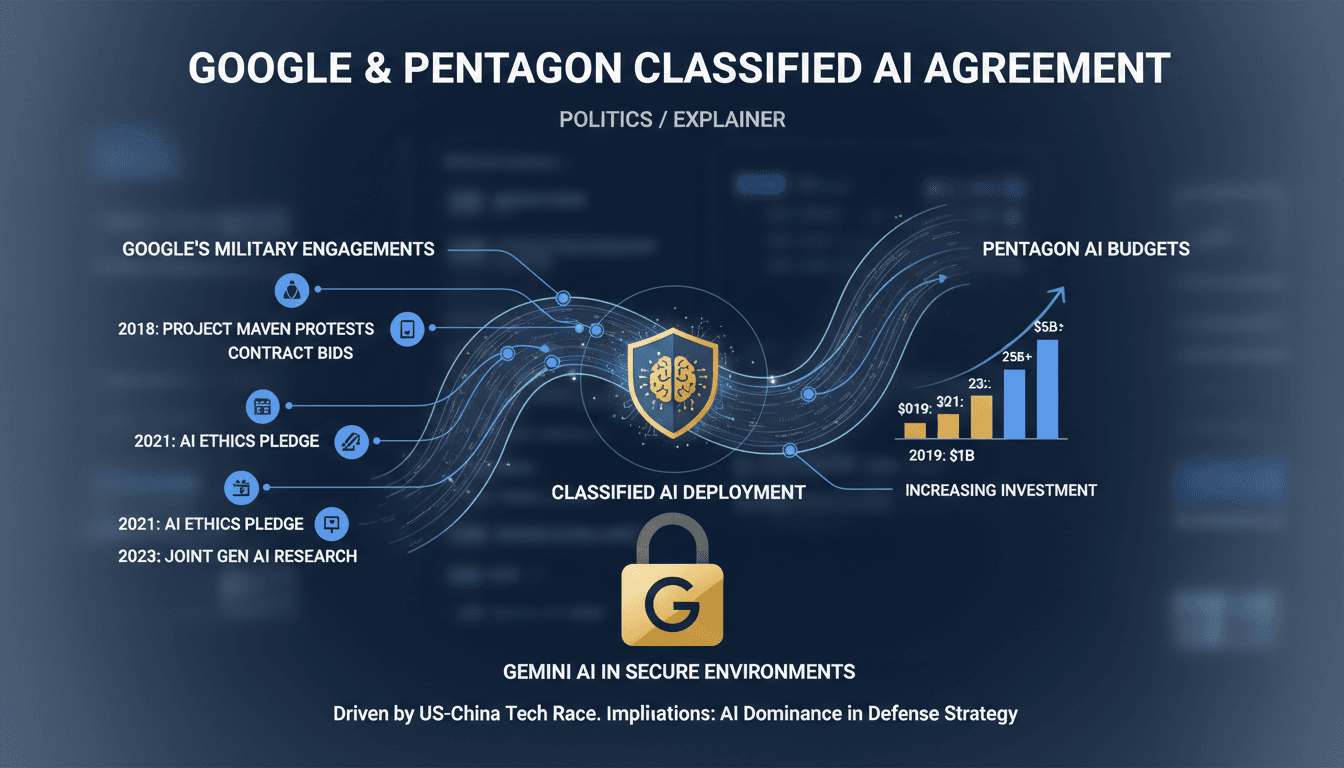
- This follows a strategic pivot by Google, which previously withdrew from military projects due to employee protests but has since revised its AI principles to allow defense engagements.
- The Pentagon's budget for AI in FY2026 is set at $13.4 billion, reflecting a growing commitment to integrating advanced technologies into military operations.
The context you actually need
- Google's past withdrawal from Project Maven in 2018 was driven by employee opposition to AI in military applications, highlighting the tension between tech ethics and defense needs.
- In early 2025, Google revised its AI principles, removing explicit bans on weapons-related work, indicating a willingness to engage with defense contracts.
- The Pentagon's FY2026 budget allocation of $13.4 billion for AI and autonomous systems underscores the urgency of maintaining a competitive edge in military technology, particularly against rivals like China.
What's really happening
The negotiations between Google and the U.S. Department of Defense (DoD) represent a complex interplay of technological advancement, ethical considerations, and national security imperatives. Following its withdrawal from Project Maven, Google faced significant internal and external pressure regarding its role in military applications. The backlash from employees and advocacy groups highlighted the ethical dilemmas associated with AI in warfare, particularly concerning autonomous weapons and surveillance capabilities.
In response to these challenges, Google revised its AI principles in early 2025, signaling a strategic shift towards re-engagement with defense contracts. This pivot aligns with broader U.S. government efforts to integrate AI into military operations, aiming for efficiency gains and enhanced strategic capabilities. The Pentagon's substantial budget allocation of $13.4 billion for AI and autonomous systems in FY2026 reflects a commitment to advancing military technology, particularly in the face of rising competition from nations like China.
The ongoing negotiations for deploying Gemini AI models in classified environments are particularly noteworthy. Google is proposing ethical safeguards to mitigate concerns about domestic mass surveillance and the deployment of autonomous weapons without human oversight. This approach indicates a recognition of the need for responsible AI deployment in sensitive contexts, balancing technological advancement with ethical accountability.
The absence of widespread employee protests during these negotiations contrasts sharply with the backlash experienced in 2018, suggesting a shift in internal sentiment or a more strategic approach by Google to address employee concerns. The Pentagon's emphasis on continued partnerships for frontier AI across various classification levels, while not confirming specific details, indicates a willingness to collaborate with tech giants to enhance military capabilities.
As these negotiations unfold, the implications for both Google and the Pentagon are significant. For Google, successfully integrating AI into military operations could open new revenue streams and solidify its position as a leader in AI technology. For the Pentagon, leveraging advanced AI capabilities is crucial for maintaining a competitive edge in modern warfare, particularly as global tensions rise.
Who feels it first (and how)
- Tech professionals in AI and defense sectors will need to adapt to new ethical guidelines and regulatory frameworks.
- Military personnel may experience enhanced operational capabilities through the integration of advanced AI technologies.
- Investors in defense and technology sectors will monitor the financial implications of these negotiations and potential contract awards.
What to watch next
- Implementation of ethical safeguards: Monitoring how Google integrates ethical considerations into its AI deployment will be crucial for public trust and regulatory compliance.
- Employee sentiment at Google: Observing any shifts in employee attitudes towards military contracts could indicate broader industry trends regarding tech companies' roles in defense.
- Pentagon's AI project outcomes: Tracking the effectiveness and efficiency gains from AI deployments in military operations will provide insights into the future of defense technology.
Google and the Pentagon are in negotiations for deploying Gemini AI models in classified environments.
Ethical safeguards will be a focal point in the agreement to address public and employee concerns.
The long-term impact of these negotiations on Google's corporate culture and employee relations remains uncertain.
Frequently Asked Questions
- Why it matters?
- This negotiation signals a significant shift in how major tech companies engage with national defense, potentially reshaping the future of military AI applications.
- What happened (in 30 seconds)?
- Google and the Pentagon are negotiating an agreement to deploy Gemini AI models in classified environments, aiming to enhance military efficiency while addressing ethical concerns. This follows a strategic pivot by Google, which previously withdrew from military projects due to employee protests but has since revised its AI principles to allow defense engagements. The Pentagon's budget for AI in FY2026 is set at $13.4 billion, reflecting a growing commitment to integrating advanced technolog
- What's really happening?
- The negotiations between Google and the U.S. Department of Defense (DoD) represent a complex interplay of technological advancement, ethical considerations, and national security imperatives. Following its withdrawal from Project Maven, Google faced significant internal and external pressure regarding its role in military applications. The backlash from employees and advocacy groups highlighted the ethical dilemmas associated with AI in warfare, particularly concerning autonomous weapons and sur
- Who feels it first (and how)?
- Tech professionals in AI and defense sectors will need to adapt to new ethical guidelines and regulatory frameworks. Military personnel may experience enhanced operational capabilities through the integration of advanced AI technologies. Investors in defense and technology sectors will monitor the financial implications of these negotiations and potential contract awards.
- What to watch next?
- Implementation of ethical safeguards: Monitoring how Google integrates ethical considerations into its AI deployment will be crucial for public trust and regulatory compliance. Employee sentiment at Google: Observing any shifts in employee attitudes towards military contracts could indicate broader industry trends regarding tech companies' roles in defense. Pentagon's AI project outcomes: Tracking the effectiveness and efficiency gains from AI deployments in military operations will provide
Market-moving headlines impacting equities, bonds, and related risk assets.
"Real-time catalysts and volatility drivers across indices and sectors."
— A47 Editor
Google, Pentagon discuss classified AI deal, the Information reports
Google is reportedly in discussions with the Pentagon regarding a classified artificial intelligence deal, which could involve the deployment of its Gemini AI technology within military operations. This development follows a broader trend of tech com...
Global business headlines with AI angles.
"General business outlet that frequently covers AI."
— A47 Editor
Google In Talks With Pentagon Over Classified AI Deployment Deal, Reports Say
Alphabet's Google is currently in discussions with the U.S. Department of Defense regarding a potential classified agreement that would enable the deployment of its Gemini AI models within secure military systems. This marks a notable shift from Goog...
Curated tech headlines including AI stories.
"Influential aggregator surfacing the day’s top tech/AI links."
— A47 Editor
Sources: Google is negotiating a deal with the US DOD that would let the Pentagon deploy Gemini AI models in classified settings, reversing its previous stance (Erin Woo/The Information)
Google is currently in negotiations with the U.S. Department of Defense (DOD) to allow the Pentagon to deploy its Gemini AI models in classified environments, marking a significant shift from its previous policy against military collaborations. This ...