
Israeli Airstrikes in Lebanon Result in High Casualties and International Condemnation
Here's what it means for you.
If you’re in the Middle East, heightened tensions could disrupt travel and economic stability.
Why it matters
The escalation of violence in Lebanon threatens to destabilize the broader Middle East, impacting global markets and security.
What happened (in 30 seconds)
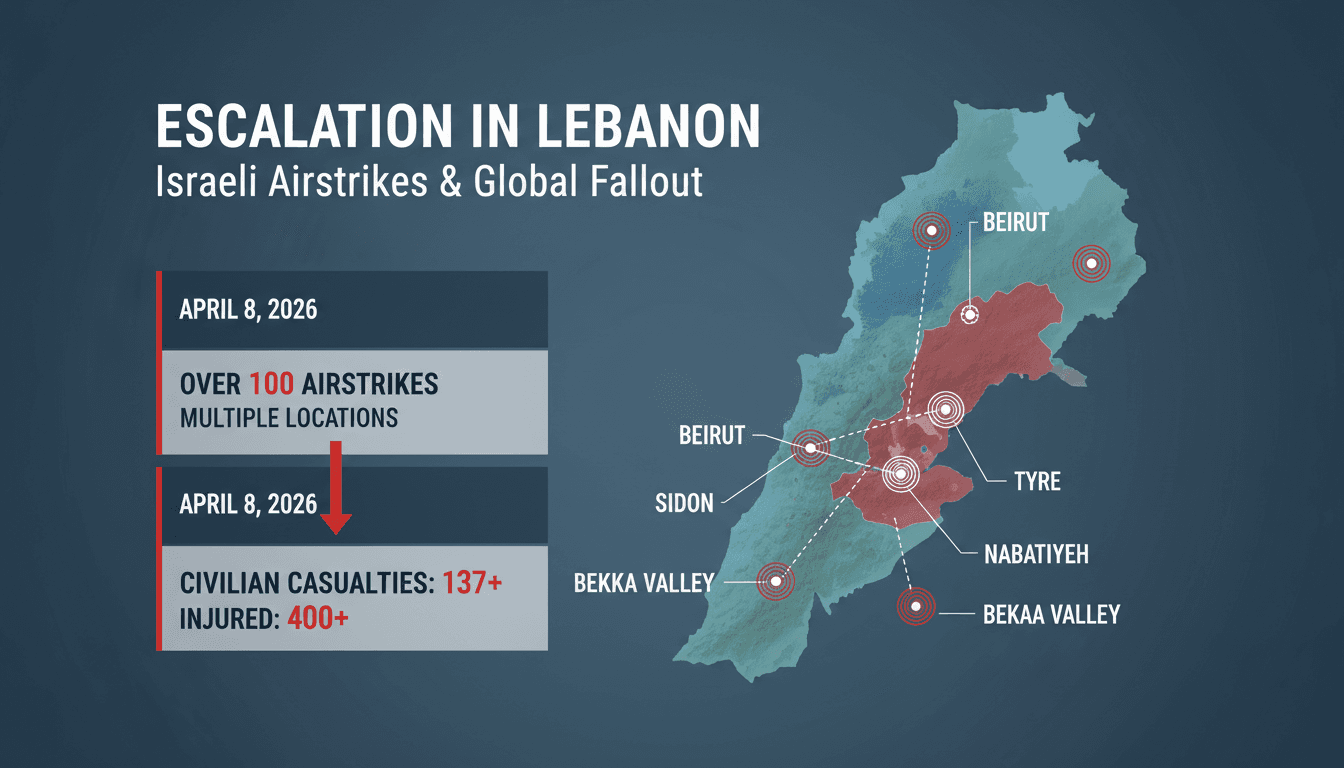
- On April 8, 2026, Israeli forces launched over 100 airstrikes across Lebanon, marking a significant escalation in hostilities.
- Casualties are rising, with reports indicating at least 112 deaths and over 722 injuries, as emergency services continue to respond.
- Lebanese officials condemned the strikes as a "new massacre," urging international intervention and holding Israel accountable for the violations of a 15-month ceasefire.
The context you actually need
- Ceasefire violations: The airstrikes occurred 15 months after a ceasefire intended to halt cross-border hostilities from the 2024 Israel-Hezbollah conflict, which has been repeatedly undermined.
- Geopolitical volatility: Both Israel and Lebanon have engaged in retaliatory actions, with Israel citing Hezbollah's rearmament and Lebanon responding to rocket fire, contributing to a precarious situation.
- International scrutiny: The Lebanese Presidency has called for global intervention, emphasizing the need for diplomatic pressure on Israel to prevent further escalation.
What's really happening
The recent airstrikes by Israel on Lebanon represent a significant shift in the already fragile status quo established by the ceasefire agreement. This agreement was meant to stabilize the region following the 2024 conflict between Israel and Hezbollah, but ongoing violations from both sides have eroded trust and security. The Israeli Defense Forces (IDF) justified their actions by claiming they were targeting Hezbollah's military capabilities, which they allege threaten Israeli security. However, the scale of the airstrikes—over 100 in one day—has drawn widespread condemnation from Lebanese officials and international observers, who label these actions as disproportionate and in violation of international law.
The Lebanese government, led by President Joseph Aoun, has responded by reaffirming its commitment to diplomatic negotiations, despite Israel's refusal to engage. This highlights a critical dynamic: while Lebanon seeks to stabilize its internal situation and maintain international support, Israel appears to be escalating its military posture, potentially to deter Hezbollah and assert its dominance in the region.
The humanitarian impact is severe, with initial reports indicating at least 112 deaths and over 722 injuries, numbers that may continue to rise as emergency services assess the full extent of the damage. The Lebanese Civil Defense has reported even higher casualty figures, emphasizing the dire situation on the ground. This escalation not only affects those directly involved but also has broader implications for regional stability, economic conditions, and international relations.
As the situation develops, the international community is being urged to intervene. The Lebanese Presidency's call for action reflects a growing concern that without external pressure, the cycle of violence may continue, leading to further humanitarian crises and destabilization. The potential for increased military engagement raises questions about the future of Lebanon's political landscape and its relationships with neighboring countries, including Syria and Iran, which may influence Hezbollah's actions.
Who feels it first (and how)
- Lebanese civilians: Directly impacted by airstrikes, facing loss of life and injuries.
- Healthcare sector: Overwhelmed with casualties, requiring international aid and support.
- Regional businesses: Potential disruptions in trade and travel due to heightened tensions.
- Expatriate communities: Lebanese expatriates in the UAE and elsewhere may experience anxiety and financial impacts from instability in Lebanon.
What to watch next
- International diplomatic responses: Watch for statements or actions from global powers regarding intervention or support for Lebanon, which could influence regional stability.
- Market reactions: Monitor oil prices and shipping routes, especially through the Strait of Hormuz, as tensions could affect global supply chains.
- Humanitarian aid initiatives: Look for developments in international aid efforts directed towards Lebanon, which may impact the country's recovery and stability.
The airstrikes have resulted in significant casualties and condemnation from Lebanese officials.
Continued international scrutiny and calls for intervention will persist as the situation evolves.
The long-term impact on Lebanon's political stability and the effectiveness of diplomatic negotiations remains uncertain.
Frequently Asked Questions
- Why it matters?
- The escalation of violence in Lebanon threatens to destabilize the broader Middle East, impacting global markets and security.
- What happened (in 30 seconds)?
- On April 8, 2026, Israeli forces launched over 100 airstrikes across Lebanon, marking a significant escalation in hostilities. Casualties are rising, with reports indicating at least 112 deaths and over 722 injuries, as emergency services continue to respond. Lebanese officials condemned the strikes as a "new massacre," urging international intervention and holding Israel accountable for the violations of a 15-month ceasefire.
- What's really happening?
- The recent airstrikes by Israel on Lebanon represent a significant shift in the already fragile status quo established by the ceasefire agreement. This agreement was meant to stabilize the region following the 2024 conflict between Israel and Hezbollah, but ongoing violations from both sides have eroded trust and security. The Israeli Defense Forces (IDF) justified their actions by claiming they were targeting Hezbollah's military capabilities, which they allege threaten Israeli security. Howeve
- Who feels it first (and how)?
- Lebanese civilians: Directly impacted by airstrikes, facing loss of life and injuries. Healthcare sector: Overwhelmed with casualties, requiring international aid and support. Regional businesses: Potential disruptions in trade and travel due to heightened tensions. Expatriate communities: Lebanese expatriates in the UAE and elsewhere may experience anxiety and financial impacts from instability in Lebanon.
- What to watch next?
- International diplomatic responses: Watch for statements or actions from global powers regarding intervention or support for Lebanon, which could influence regional stability. Market reactions: Monitor oil prices and shipping routes, especially through the Strait of Hormuz, as tensions could affect global supply chains. Humanitarian aid initiatives: Look for developments in international aid efforts directed towards Lebanon, which may impact the country's recovery and stability.
Arabic-language coverage of political affairs and current events.
"Okaz political coverage typically follows mainstream Saudi framing on national and regional affairs."
— A47 Editor
مجزرة إسرائيلية في لبنان.. والرئاسة تحمّل المجتمع الدولي المسؤولية
The Lebanese presidency has confirmed a new massacre committed by Israel, with the Lebanese Health Minister Rakan Nasser Al-Din reporting over 112 fatalities and 722 injuries from more than 100 Israeli airstrikes. The Lebanese Civil Defense claims th...
Arabic-language UAE newspaper coverage focused on domestic affairs, public institutions, business, society, and regional developments.
"Al Khaleej coverage generally reflects a mainstream UAE editorial lens with strong attention to public affairs, institutions, and regional developments."
— A47 Editor
لبنان.. مئات القتلى والجرحى جراء الغارات الإسرائيلية
The Lebanese Minister of Health, Rakan Nasser al-Din, announced that over 89 people have been killed and more than 720 others injured in initial reports following Israeli airstrikes in Lebanon. This escalation marks a significant increase in violence...