
Bank of Korea Holds Interest Rate Steady Amid Geopolitical Tensions and Economic Uncertainty
Here's what it means for you.
If you rely on South Korean exports or are involved in the semiconductor industry, the current economic climate could impact your business operations and financial planning.
Why it matters
The Bank of Korea's decision to maintain interest rates signals a cautious approach amid rising global uncertainties, affecting both domestic and international markets.
What happened (in 30 seconds)
- The Bank of Korea held the benchmark interest rate steady at 2.50 percent on April 10, 2026, amid escalating geopolitical tensions.
- The growth forecast for 2026 was downgraded below 2.0 percent, influenced by rising crude oil prices and a weakening won.
- A supplementary budget of 26.2 trillion won ($17.72 billion) was proposed to mitigate rising fuel costs for households and businesses.
The context you actually need
- In February 2026, the Bank of Korea projected a 2.0 percent GDP growth, buoyed by strong semiconductor exports, which have since faced headwinds.
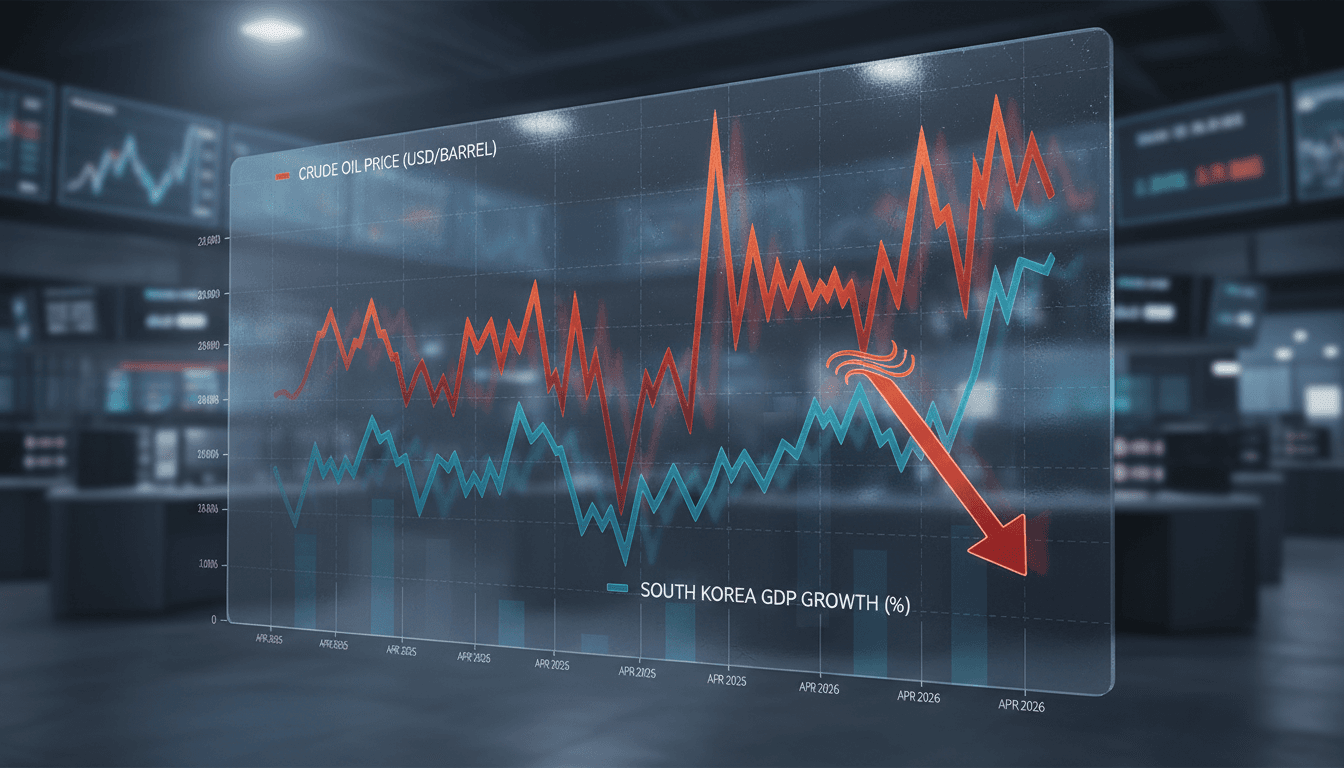
- Middle East tensions, particularly the Iranian war, have caused crude oil prices to more than double, exacerbating inflation and import costs for South Korea.
- The weakening South Korean won has further complicated the economic landscape, leading to increased costs for imported goods and services.
What's really happening
The Bank of Korea's decision to maintain the interest rate at 2.50 percent reflects a strategic choice to navigate a highly uncertain economic environment. The central bank's monetary policy board unanimously agreed on this stance, aligning with expectations from economists surveyed by Reuters. The backdrop of escalating geopolitical tensions, particularly the Iranian war, has led to a significant surge in crude oil prices, which more than doubled in March. This spike in oil prices not only raises inflationary pressures but also increases the cost of imports, particularly for a country like South Korea that relies heavily on energy imports.
As a result, the Bank of Korea has downgraded its growth forecast for 2026 below the previously projected 2.0 percent. The central bank's revised outlook is heavily influenced by the fluctuations in the semiconductor market, which had previously been a strong pillar of growth. The semiconductor industry is particularly sensitive to global supply chain disruptions, and any adverse developments could further dampen growth prospects.
In response to these challenges, President Lee Jae Myung has proposed a supplementary budget of 26.2 trillion won ($17.72 billion) aimed at alleviating the financial burden on households and corporations facing rising fuel costs. This budget is intended to provide immediate relief and stimulate economic activity, but its effectiveness will depend on the broader economic context and the duration of the geopolitical tensions.
Market reactions have been telling; South Korean three-year Treasury futures rose by 0.19 points to 104.57 following the announcement, indicating investor expectations for a sustained neutral policy from the Bank of Korea. Analysts, including Choi Yong-go from Shinhan Securities, have pointed out that the strength of South Korea's exports and the proposed supplementary budget could act as buffers against the risks posed by the Middle East situation. However, the consensus among experts remains that the Bank of Korea is likely to maintain its current stance through 2026, given the prevailing uncertainties.
Who feels it first (and how)
- Exporters in the semiconductor industry: They may face reduced demand due to global supply chain disruptions and rising costs.
- Households reliant on fuel: Increased fuel costs will directly impact household budgets, especially for low- to middle-income families.
- Businesses dependent on imports: Companies that rely on imported goods will see rising costs, affecting their pricing strategies and profit margins.
- Investors in South Korean bonds: They may experience fluctuations in bond prices based on interest rate stability and economic forecasts.
What to watch next
- Crude oil prices: Monitoring fluctuations will be crucial, as sustained high prices could further impact inflation and economic growth.
- South Korean won exchange rate: A continued depreciation could exacerbate import costs and inflation, influencing consumer spending.
- Geopolitical developments in the Middle East: Any escalation or resolution could significantly alter economic forecasts and market stability.
The Bank of Korea has maintained the interest rate at 2.50 percent.
The growth forecast for 2026 will remain below 2.0 percent if current geopolitical tensions persist.
The long-term effects of the supplementary budget on economic recovery and household financial stability.
Frequently Asked Questions
- Why it matters?
- The Bank of Korea's decision to maintain interest rates signals a cautious approach amid rising global uncertainties, affecting both domestic and international markets.
- What happened (in 30 seconds)?
- The Bank of Korea held the benchmark interest rate steady at 2.50 percent on April 10, 2026, amid escalating geopolitical tensions. The growth forecast for 2026 was downgraded below 2.0 percent, influenced by rising crude oil prices and a weakening won. A supplementary budget of 26.2 trillion won ($17.72 billion) was proposed to mitigate rising fuel costs for households and businesses.
- What's really happening?
- The Bank of Korea's decision to maintain the interest rate at 2.50 percent reflects a strategic choice to navigate a highly uncertain economic environment. The central bank's monetary policy board unanimously agreed on this stance, aligning with expectations from economists surveyed by Reuters. The backdrop of escalating geopolitical tensions, particularly the Iranian war, has led to a significant surge in crude oil prices, which more than doubled in March. This spike in oil prices not only rais
- Who feels it first (and how)?
- Exporters in the semiconductor industry: They may face reduced demand due to global supply chain disruptions and rising costs. Households reliant on fuel: Increased fuel costs will directly impact household budgets, especially for low- to middle-income families. Businesses dependent on imports: Companies that rely on imported goods will see rising costs, affecting their pricing strategies and profit margins. Investors in South Korean bonds: They may experience fluctuations in bond prices b
- What to watch next?
- Crude oil prices: Monitoring fluctuations will be crucial, as sustained high prices could further impact inflation and economic growth. South Korean won exchange rate: A continued depreciation could exacerbate import costs and inflation, influencing consumer spending. Geopolitical developments in the Middle East: Any escalation or resolution could significantly alter economic forecasts and market stability.
Arabic-language UAE newspaper coverage focused on domestic affairs, public institutions, business, society, and regional developments.
"Al Khaleej coverage generally reflects a mainstream UAE editorial lens with strong attention to public affairs, institutions, and regional developments."
— A47 Editor
كوريا الجنوبية تثبت الفائدة وتحذر من مسار نمو شديد الغموض
The Bank of Korea maintained its key interest rate on Friday, signaling concerns over a highly uncertain growth trajectory amid escalating conflicts in the Middle East that threaten to disrupt economic growth and exacerbate inflation.
Social/economic commentary and analysis relevant to business and markets.
"WSJ blends data-driven economic insight with commentary on policy and society."
— A47 Editor
Bank of Korea Keeps Rates Unchanged as Mideast Uncertainty Persists
The Bank of Korea has decided to keep its base interest rate unchanged at 2.50% for the seventh consecutive meeting, reflecting ongoing geopolitical uncertainties, particularly in the Middle East. This decision comes ahead of a leadership transition ...
Macro commentary, policy analysis, growth/inflation themes, and global outlooks.
"Contextual macro coverage that complements day-to-day market headlines."
— A47 Editor
South Korean central bank stands pat as Middle East war fuels inflation, growth risks
The South Korean central bank has opted to maintain its current interest rate amid rising inflation and growth risks linked to the ongoing conflict in the Middle East. This decision comes as the geopolitical tensions have begun to impact energy price...