
Global Airlines Implement Flight Cancellations and Fee Increases Amid Rising Fuel Costs from US-Israel-Iran Conflict
Here's what it means for you.
If you’re planning to travel soon, expect higher fares and potential flight disruptions.
Why it matters
The surge in fuel costs is reshaping airline operations and travel affordability globally.
What happened (in 30 seconds)
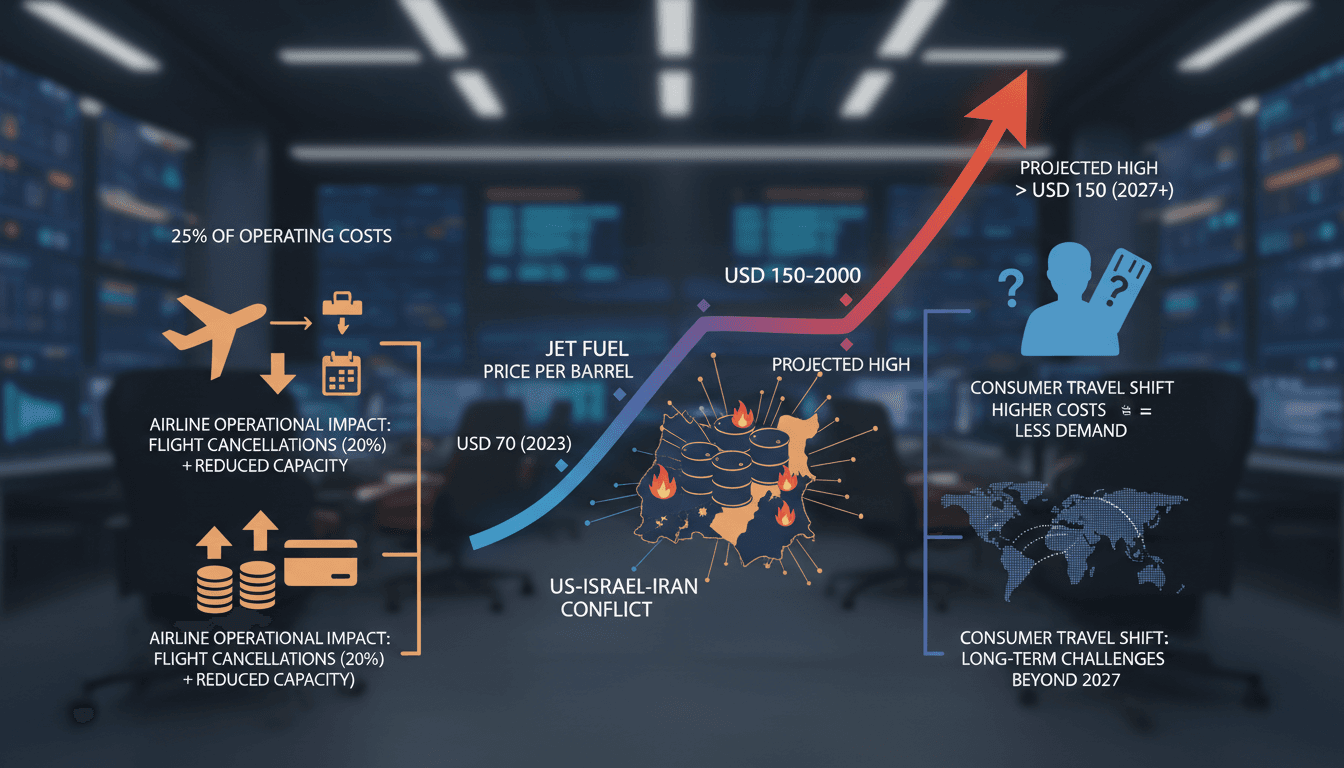
- Airlines worldwide are implementing flight reductions and fare hikes due to jet fuel prices doubling to USD 150-200 per barrel.
- Major carriers like Delta, United, and Cathay Pacific have announced operational adjustments, including capacity cuts and increased fees.
- Travelers are facing disrupted plans and higher costs, particularly during peak travel seasons.
The context you actually need
- Fuel costs typically account for about 25% of airline operating expenses, making carriers highly sensitive to price fluctuations.
- The US-Israeli conflict with Iran has escalated tensions in the Middle East, disrupting airspace and threatening oil supply routes like the Strait of Hormuz.
- Airlines' limited hedging strategies have left them vulnerable to spot market volatility, exacerbating the impact of rising fuel prices.
What's really happening
The aviation industry is currently navigating a turbulent landscape marked by soaring fuel prices, primarily driven by geopolitical instability in the Middle East. As of early April 2026, jet fuel prices have surged from pre-conflict levels of USD 85-90 per barrel to between USD 150-200 per barrel. This dramatic increase has forced airlines to make difficult operational decisions, including reducing flight capacities and raising fares.
The crisis began in March 2026, with initial airspace closures and fuel spikes. Hong Kong Airlines was one of the first to react, raising surcharges by up to 35% on March 12. Other carriers quickly followed suit; IndiGo imposed fees starting March 14, and by late March, Delta had reduced its capacity by 3.5 points. The financial implications are significant, with American Airlines anticipating a USD 400 million hit in the first quarter alone.
As the situation evolved, airlines like SAS and Cathay Pacific announced substantial flight cancellations and fee increases. SAS canceled 1,000 flights, while Cathay Pacific raised fees by 34% starting April 1. The ongoing volatility in oil prices has led to a suspension of financial forecasts by many airlines, as they grapple with the uncertainty of future fuel costs.
The International Air Transport Association (IATA) has warned that the recovery of jet fuel supply could take months following the reopening of the Strait of Hormuz. In response, various governments have implemented measures to mitigate the impact on consumers. For instance, the UAE has introduced mechanisms to curb unjustified price hikes, while Vietnam is seeking fuel tax waivers.
Airlines are now adjusting their outlooks, with Delta projecting a USD 2 billion hit from fuel costs. Market shifts include not only reduced capacities but also increased baggage fees—Delta, Southwest, and United have all raised fees by USD 10. Fare increases of 10-20% are expected to persist into the summer months, making travel more expensive for consumers.
Who feels it first (and how)
- Frequent travelers: Those who travel for business or leisure will see immediate impacts in the form of higher ticket prices and potential cancellations.
- Airline employees: Staff may face job insecurity due to reduced flight capacities and operational cutbacks.
- Travel agencies: Agencies may experience decreased bookings and increased customer complaints, affecting their revenue.
- Middle Eastern economies: Countries reliant on tourism and air travel may see economic repercussions from reduced travel demand.
What to watch next
- Fuel price trends: Monitoring jet fuel prices will be crucial, as sustained high prices could lead to further airline adjustments.
- Government interventions: Watch for potential regulatory actions aimed at stabilizing fares and protecting consumers from excessive price hikes.
- Airline financial reports: Upcoming earnings reports will provide insights into how airlines are managing the crisis and their strategies moving forward.
Airlines are raising fares and cutting flight capacities in response to rising fuel costs.
Continued volatility in fuel prices will lead to further operational adjustments and fare increases.
The long-term impact on consumer travel behavior and airline profitability remains uncertain.
Frequently Asked Questions
- Why it matters?
- The surge in fuel costs is reshaping airline operations and travel affordability globally.
- What happened (in 30 seconds)?
- Airlines worldwide are implementing flight reductions and fare hikes due to jet fuel prices doubling to USD 150-200 per barrel. Major carriers like Delta, United, and Cathay Pacific have announced operational adjustments, including capacity cuts and increased fees. Travelers are facing disrupted plans and higher costs, particularly during peak travel seasons.
- What's really happening?
- The aviation industry is currently navigating a turbulent landscape marked by soaring fuel prices, primarily driven by geopolitical instability in the Middle East. As of early April 2026, jet fuel prices have surged from pre-conflict levels of USD 85-90 per barrel to between USD 150-200 per barrel. This dramatic increase has forced airlines to make difficult operational decisions, including reducing flight capacities and raising fares. The crisis began in March 2026, with initial airspace closu
- Who feels it first (and how)?
- Frequent travelers: Those who travel for business or leisure will see immediate impacts in the form of higher ticket prices and potential cancellations. Airline employees: Staff may face job insecurity due to reduced flight capacities and operational cutbacks. Travel agencies: Agencies may experience decreased bookings and increased customer complaints, affecting their revenue. Middle Eastern economies: Countries reliant on tourism and air travel may see economic repercussions from reduced trave
- What to watch next?
- Fuel price trends: Monitoring jet fuel prices will be crucial, as sustained high prices could lead to further airline adjustments. Government interventions: Watch for potential regulatory actions aimed at stabilizing fares and protecting consumers from excessive price hikes. Airline financial reports: Upcoming earnings reports will provide insights into how airlines are managing the crisis and their strategies moving forward.
Pan-Arab news coverage spanning politics, business, sports, and regional affairs.
"Asharq Al-Awsat reflects a broad Arab editorial perspective with strong attention to regional geopolitics."
— A47 Editor
بين إلغاء الرحلات ورفع الرسوم... كيف تواجه شركات الطيران صعود تكاليف الوقود؟
The rise in aircraft fuel prices, attributed to the U.S.-Israeli conflict with Iran, has disrupted the global aviation industry, forcing airlines to increase ticket prices. This situation reflects the broader economic impact of geopolitical tensions ...
Business, markets, economy, and corporate news with strong UAE and regional relevance.
"Emirates 24|7 business coverage tends to center UAE markets, property, regulation, and regional economic developments."
— A47 Editor
US-Iran war: What airlines are doing as fuel costs surge US-Iran war: What airlines are doing as fuel costs surge
A surge in jet fuel prices, driven by the ongoing US-Israeli conflict with Iran, has significantly impacted the global aviation industry, prompting airlines to raise fares and adjust their financial forecasts. Jet fuel prices have recently escalated ...
Corporate news, economic trends, and markets with UK and global scope.
"BBC News is widely regarded as reputable and impartial, with a public service mandate."
— A47 Editor
Airlines cut flights and hike fares as fuel prices surge
Airlines have significantly reduced flight services and increased ticket prices due to a surge in jet fuel costs, which have been exacerbated by the ongoing conflict in Iran. This situation has forced airlines to make difficult operational adjustment...