
Court of Appeal Orders Retrial for Benjamin Field After Quashing Murder Conviction
Here's what it means for you.
The outcome of this high-profile case could reshape legal standards around drug-spiking and consent in the UK.
Why it matters
This case highlights critical flaws in jury instructions that could impact future murder convictions involving drug-induced actions.
What happened (in 30 seconds)
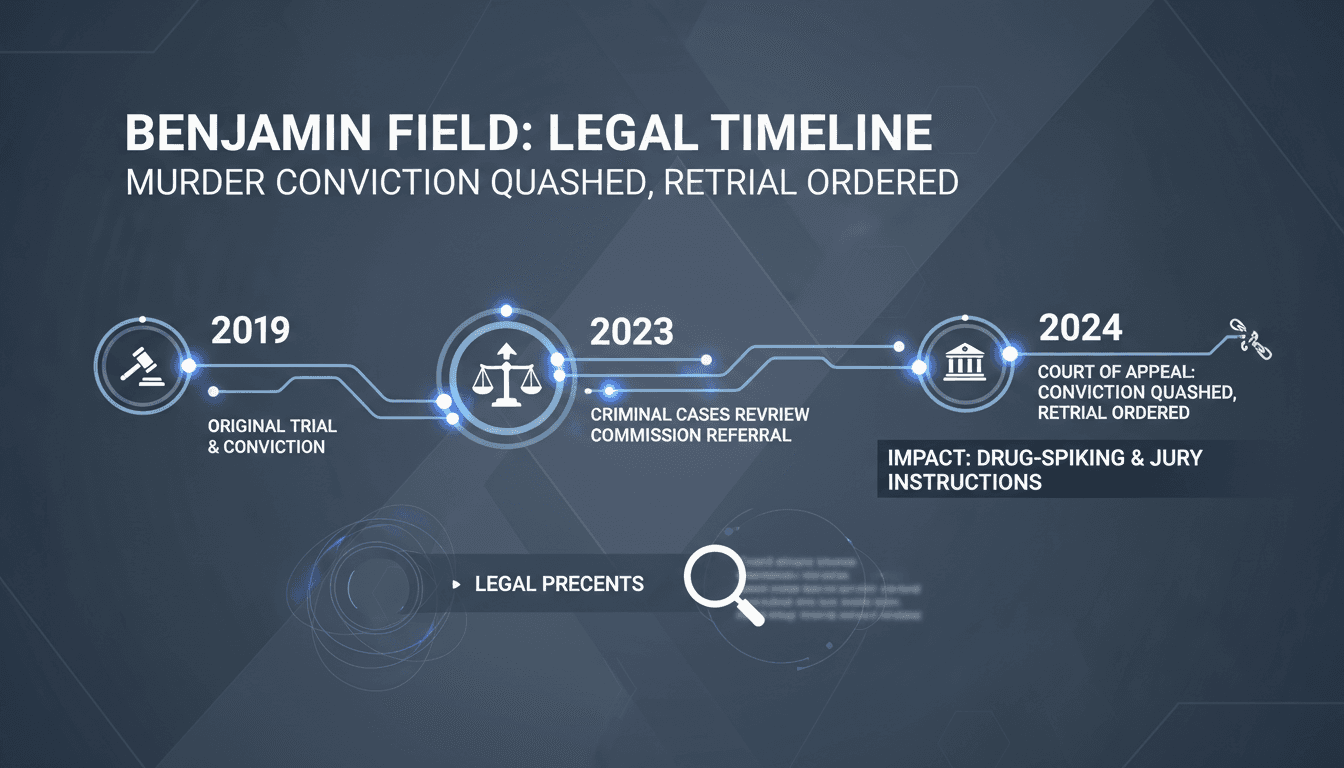
- The Court of Appeal quashed Benjamin Field's 2019 murder conviction for the death of Peter Farquhar, citing unsafe jury directions.
- Field was sentenced to life imprisonment with a minimum term of 36 years for manipulating and ultimately killing Farquhar through fraudulent means.
- A retrial has been ordered, with Field remaining in custody as the Crown Prosecution Service considers an appeal to the Supreme Court.
The context you actually need
- Field befriended Farquhar in 2011, posing as a lover while manipulating him to gain access to his estate.
- The initial conviction was based on evidence that Farquhar's death was alcohol-related, but new insights into drug spiking have emerged.
- Field's tactics included drugging both Farquhar and another victim, Ann Moore-Martin, raising questions about the legal definitions of consent and culpability.
What's really happening
The quashing of Benjamin Field's conviction for the murder of Peter Farquhar underscores significant legal and ethical dilemmas surrounding drug-induced actions and consent. Initially sentenced to life imprisonment in 2019, Field's conviction was overturned due to flawed jury instructions regarding the voluntariness of Farquhar's consumption of spiked whisky. This pivotal ruling raises questions about how juries are instructed to consider the implications of drugging victims and the extent to which individuals can be held accountable for actions taken under the influence of substances.
Field's case is particularly notable because it involves a calculated manipulation of vulnerable individuals. By posing as a lover and faking an engagement, Field exploited Farquhar's trust to gain access to his estate. The systematic discrediting of Farquhar through drugging not only led to his death but also painted a troubling picture of how predatory behavior can go unchecked within societal structures. The Court of Appeal's decision to order a retrial reflects a growing recognition of the need for legal frameworks to adapt to the complexities of modern criminal behavior, particularly in cases involving elder abuse and financial exploitation.
The implications of this case extend beyond the immediate parties involved. Legal professionals, law enforcement, and policymakers must grapple with the ramifications of the ruling. If the Supreme Court ultimately upholds the appeal, it could set a precedent that alters how drug-induced actions are prosecuted in the UK. This could lead to a reevaluation of existing laws and potentially inspire legislative changes aimed at better protecting vulnerable populations from similar predatory tactics.
Moreover, the case has garnered significant media attention, including dramatization in a BBC series, which has heightened public awareness of the issues at play. As the legal proceedings unfold, the broader societal implications of consent, manipulation, and accountability will remain in the spotlight, prompting discussions about how best to safeguard against such abuses in the future.
Who feels it first (and how)
- Legal professionals: They will need to adapt to potential changes in jury instructions and legal precedents.
- Elderly populations: Increased awareness and scrutiny of elder abuse cases may lead to better protective measures.
- Victim advocacy groups: They may see a surge in support and calls for reform in laws surrounding consent and drugging.
What to watch next
- Supreme Court appeal outcome: This will determine the future of drug-spiking cases and how consent is interpreted legally.
- Legislative changes: Watch for potential reforms aimed at protecting vulnerable individuals from manipulation and abuse.
- Public response: Increased media coverage and public discourse may influence societal attitudes toward elder abuse and consent.
Field's conviction has been quashed, and a retrial has been ordered.
The Crown Prosecution Service will appeal to the Supreme Court, impacting future legal standards.
The long-term effects on public policy and legal frameworks surrounding drug-induced actions remain to be seen.
Frequently Asked Questions
- Why it matters?
- This case highlights critical flaws in jury instructions that could impact future murder convictions involving drug-induced actions.
- What happened (in 30 seconds)?
- The Court of Appeal quashed Benjamin Field's 2019 murder conviction for the death of Peter Farquhar, citing unsafe jury directions. Field was sentenced to life imprisonment with a minimum term of 36 years for manipulating and ultimately killing Farquhar through fraudulent means. A retrial has been ordered, with Field remaining in custody as the Crown Prosecution Service considers an appeal to the Supreme Court.
- What's really happening?
- The quashing of Benjamin Field's conviction for the murder of Peter Farquhar underscores significant legal and ethical dilemmas surrounding drug-induced actions and consent. Initially sentenced to life imprisonment in 2019, Field's conviction was overturned due to flawed jury instructions regarding the voluntariness of Farquhar's consumption of spiked whisky. This pivotal ruling raises questions about how juries are instructed to consider the implications of drugging victims and the extent to wh
- Who feels it first (and how)?
- Legal professionals: They will need to adapt to potential changes in jury instructions and legal precedents. Elderly populations: Increased awareness and scrutiny of elder abuse cases may lead to better protective measures. Victim advocacy groups: They may see a surge in support and calls for reform in laws surrounding consent and drugging.
- What to watch next?
- Supreme Court appeal outcome: This will determine the future of drug-spiking cases and how consent is interpreted legally. Legislative changes: Watch for potential reforms aimed at protecting vulnerable individuals from manipulation and abuse. Public response: Increased media coverage and public discourse may influence societal attitudes toward elder abuse and consent.
United Kingdom-focused news including local politics, business, and social issues.
"BBC News is widely regarded as a reputable international news organization, known for its impartial tone and public service mandate."
— A47 Editor
Churchwarden jailed for murdering pensioner has conviction quashed
Benjamin Field, a former church warden, has had his life sentence for the murder of 69-year-old university lecturer Peter Farquhar quashed by the Court of Appeal, which has ordered a retrial. Field was originally convicted in 2019 for the murder that...
International coverage from The Guardian's global desks.
"The Guardian is known for its progressive editorial stance and in-depth analysis."
— A47 Editor
Church warden jailed for life for murder of lecturer has conviction quashed
Benjamin Field, a former church warden, has had his life sentence for the murder of university lecturer Peter Farquhar quashed by the Court of Appeal, which has ordered a retrial. Field was originally convicted in 2019 for the murder of the 69-year-o...
UK politics, business, and social stories.
"Sky News is a UK-based 24-hour channel known for fast-breaking news and political coverage."
— A47 Editor
Church warden serving life for murder of university lecturer has conviction quashed
The Court of Appeal has quashed the life sentence of a former church warden, who was convicted for the murder of university lecturer Peter Farquhar. The case involved allegations of fraud by Ben Field, who was implicated in the circumstances surround...