
Saudi Arabia Intercepts Multiple Ballistic Missiles and Drones Amid Regional Tensions
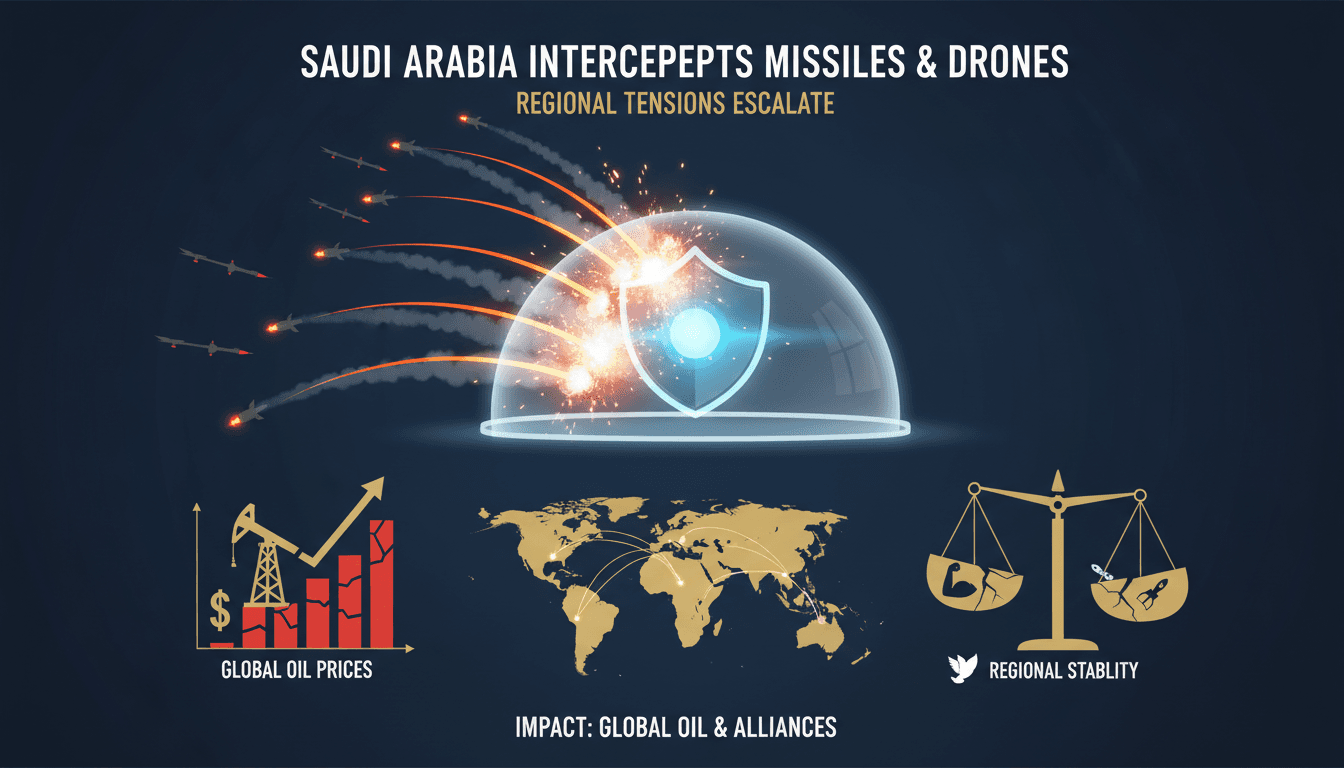
Here's what it means for you.
Increased military tensions in the Gulf could impact global oil prices and energy markets, affecting your costs.
Why it matters
The ongoing conflict and missile threats in the region have significant implications for energy security and market stability.
What happened (in 30 seconds)
- On April 8, 2026, Saudi air defenses intercepted and destroyed five ballistic missiles and nine drones targeting the Eastern Province.
- This follows a series of attacks on April 7, where 11 ballistic missiles and 22 drones were intercepted, indicating escalating aggression.
- No casualties were reported, but debris from interceptions fell near energy facilities, raising concerns about infrastructure safety.
The context you actually need
- Iranian aggression has intensified with missile and drone attacks on Gulf states, particularly following U.S.-Israeli strikes on Iranian targets.
- Saudi Arabia's air defenses routinely intercept threats from Yemen-based Houthi forces, which are backed by Iran and target critical energy infrastructure.
- A tenuous ceasefire was announced by U.S. President Trump shortly after the interceptions, yet attacks have persisted, highlighting the fragile nature of regional peace.
What's really happening
The recent interceptions by Saudi Arabia's air defenses are a critical response to escalating threats from Iranian-backed forces, particularly the Houthis in Yemen. This situation is rooted in a complex web of geopolitical tensions, where the U.S. and its allies are engaged in a broader strategy to counter Iranian influence in the region. The missile and drone attacks are not just isolated incidents; they reflect a systematic approach by Iran to project power and destabilize Gulf states, particularly Saudi Arabia, which is a key U.S. ally and a major player in global oil markets.
The interceptions highlight the effectiveness of Saudi air defense systems, which have been bolstered in recent years with advanced technology, including U.S.-supplied missile defense systems. However, the persistent threats indicate that the Houthis and their Iranian backers are adapting their tactics, potentially leading to more sophisticated and frequent attacks. The debris falling near energy facilities raises alarms about the vulnerability of critical infrastructure, which could have dire consequences for global oil supply and prices.
The regional oil markets are already experiencing volatility, with prices fluctuating in response to these tensions. Investors are closely monitoring the situation, as any disruption in Saudi oil production could have immediate repercussions on global energy prices, affecting everything from fuel costs to inflation rates worldwide. The situation is compounded by the broader geopolitical landscape, where U.S.-Iran relations remain fraught, and any miscalculation could lead to further escalations.
Moreover, the ongoing conflict impacts not just military and energy sectors, but also economic stability in the region. Countries heavily reliant on oil exports, like Saudi Arabia, could face economic challenges if attacks continue to threaten production capabilities. This creates a ripple effect, influencing global markets and potentially leading to higher costs for consumers everywhere.
Who feels it first (and how)
- Energy sector professionals: Fluctuating oil prices could affect job stability and investment in energy projects.
- Consumers globally: Increased oil prices may lead to higher transportation and utility costs.
- Investors: Volatility in oil markets could impact stock portfolios and investment strategies.
- Regional governments: Increased military spending and security measures may strain national budgets.
What to watch next
- Oil price movements: Watch for fluctuations in crude oil prices as tensions escalate; this directly impacts global economies.
- U.S.-Iran negotiations: The effectiveness of the ceasefire and any diplomatic efforts could shape future regional stability.
- Military developments: Monitor advancements in missile technology and defense systems in the region, which could alter the balance of power.
Saudi Arabia has effective air defense systems that can intercept aerial threats.
Continued Iranian aggression and Houthi attacks will persist, leading to further interceptions.
The long-term impact of these tensions on global oil prices and economic stability remains uncertain.
Frequently Asked Questions
- Why it matters?
- The ongoing conflict and missile threats in the region have significant implications for energy security and market stability.
- What happened (in 30 seconds)?
- On April 8, 2026, Saudi air defenses intercepted and destroyed five ballistic missiles and nine drones targeting the Eastern Province. This follows a series of attacks on April 7, where 11 ballistic missiles and 22 drones were intercepted, indicating escalating aggression. No casualties were reported, but debris from interceptions fell near energy facilities, raising concerns about infrastructure safety.
- What's really happening?
- The recent interceptions by Saudi Arabia's air defenses are a critical response to escalating threats from Iranian-backed forces, particularly the Houthis in Yemen. This situation is rooted in a complex web of geopolitical tensions, where the U.S. and its allies are engaged in a broader strategy to counter Iranian influence in the region. The missile and drone attacks are not just isolated incidents; they reflect a systematic approach by Iran to project power and destabilize Gulf states, particu
- Who feels it first (and how)?
- Energy sector professionals: Fluctuating oil prices could affect job stability and investment in energy projects. Consumers globally: Increased oil prices may lead to higher transportation and utility costs. Investors: Volatility in oil markets could impact stock portfolios and investment strategies. Regional governments: Increased military spending and security measures may strain national budgets.
- What to watch next?
- Oil price movements: Watch for fluctuations in crude oil prices as tensions escalate; this directly impacts global economies. U.S.-Iran negotiations: The effectiveness of the ceasefire and any diplomatic efforts could shape future regional stability. Military developments: Monitor advancements in missile technology and defense systems in the region, which could alter the balance of power.
Regional and international reporting focused on Middle Eastern politics, diplomacy, and economics.
"Asharq Al-Awsat is a Saudi-owned international newspaper reflecting mainstream Gulf political perspectives."
— A47 Editor
Saudi Arabia Intercepts 5 Ballistic Missiles and 9 Drones in Recent Hours
In recent hours, Saudi Arabian air defenses successfully intercepted five ballistic missiles and nine drones, reflecting the kingdom's ongoing military operations to counter aerial threats. This operation highlights the effectiveness of Saudi Arabia'...
UAE-based English-language newspaper covering regional politics, economics, and global affairs.
"The National reflects Emirati policy perspectives while maintaining international editorial standards."
— A47 Editor
UAE intercepts 17 ballistic missiles and 35 drones, says Defence Ministry
On April 8, 2026, the United Arab Emirates (UAE) intercepted 17 ballistic missiles and 35 drones, as reported by the Defence Ministry. This operation reflects the UAE's ongoing commitment to safeguarding its airspace amid escalating military tensions...
English-language reporting on Saudi politics, policy, and society.
"Saudi Gazette reflects mainstream Saudi institutional perspectives."
— A47 Editor
Saudi air defenses intercept 5 ballistic missiles, down 4 drones
Saudi air defenses successfully intercepted five ballistic missiles and four drones over the Eastern Province between Tuesday and Wednesday, as reported by the Ministry of Defense. This operation was confirmed by Maj. Gen. Turki Al-Maliki, who noted ...
English-language reporting focused on Saudi Arabia and regional affairs.
"Saudi Gazette provides English-language coverage that often aligns with mainstream Saudi news priorities."
— A47 Editor
Saudi air defenses intercept 5 ballistic missiles, down 4 drones
Saudi air defenses successfully intercepted five ballistic missiles and four drones over the Eastern Province between Tuesday and Wednesday, as reported by the Ministry of Defense. This operation highlights the ongoing military readiness of Saudi Ara...