
Keir Starmer Announces Multinational Naval Mission for Strait of Hormuz Security
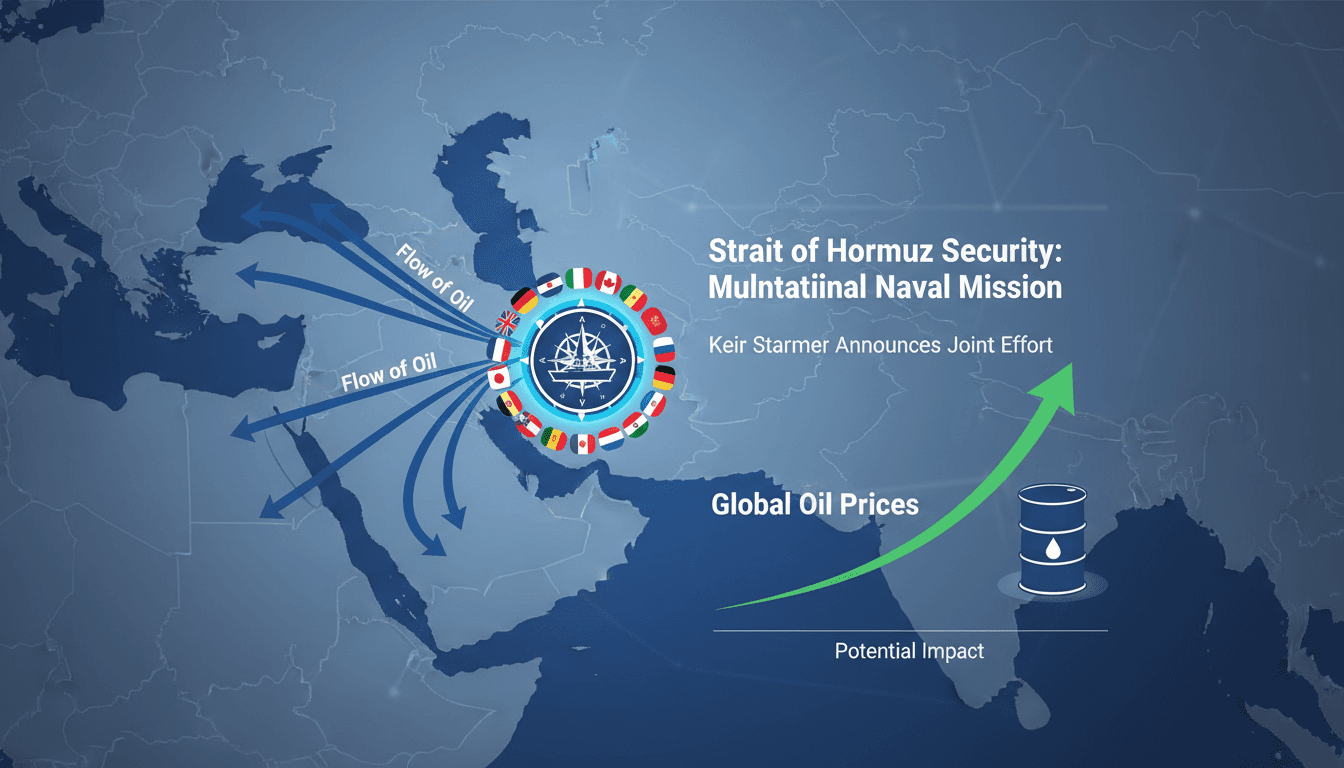
Here's what it means for you.
If you rely on global oil markets, the success of this mission could stabilize prices and impact your fuel costs.
Why it matters
The Strait of Hormuz is a critical chokepoint for global oil transit, influencing energy prices and economic stability worldwide.
What happened (in 30 seconds)
- Keir Starmer announced that over 12 countries are ready to contribute to a multinational naval mission for the Strait of Hormuz.
- The Paris summit on April 17, 2026, included representatives from 49 countries, focusing on securing navigation after a recent US-Iran ceasefire.
- Oil prices dropped below $90 per barrel following the reopening of the strait, easing fuel costs for consumers.
The context you actually need
- The Strait of Hormuz facilitates about 20% of global oil and liquefied natural gas transit, making it vital for energy security.
- The 2026 crisis began with Iran's blockade, which pushed oil prices above $120 per barrel, affecting economies reliant on oil imports.
- European nations are now seeking a neutral approach to ensure safe passage, distancing themselves from US-led military strategies.
What's really happening
The recent announcement by UK Prime Minister Keir Starmer regarding a multinational naval mission in the Strait of Hormuz marks a significant shift in international maritime security dynamics. The mission aims to ensure safe navigation through this critical waterway, which has been a flashpoint for geopolitical tensions, particularly between the US and Iran. The backdrop of this initiative is the 2026 Strait of Hormuz crisis, which began when Iran imposed a blockade in response to US military actions, severely disrupting shipping and causing oil prices to soar.
The Paris summit, co-chaired by Starmer and French President Emmanuel Macron, brought together representatives from 49 countries, signaling a broad international consensus on the need for a coordinated response to protect maritime trade. The participation of over a dozen countries in the proposed mission reflects a collective recognition of the strait's strategic importance. This initiative is not merely about military presence; it is also about establishing a framework for safe navigation that is independent of US influence, which has historically dominated the region's security landscape.
The reopening of the strait after the US-Iran ceasefire has already led to a notable decline in oil prices, dropping below $90 per barrel. This price reduction is crucial for economies like Dubai's, where fuel costs directly impact consumer spending and overall economic health. The UAE's projected growth of 5.3% hinges on stable oil prices, making the success of this mission vital for regional economic stability.
Moreover, the mission's focus on mine clearance and navigation protection indicates a shift towards a more collaborative and less confrontational approach to maritime security. This could pave the way for increased trade and investment in the region, as shippers regain confidence in the safety of their routes. However, the mission's success will depend on the commitment of participating nations and the ability to navigate the complex geopolitical landscape, particularly with Iran's warnings against ongoing US blockades.
In summary, the multinational mission represents a strategic pivot towards collective security in the Strait of Hormuz, with implications for global oil markets and regional economic stability. The outcome of this initiative could redefine international maritime norms and influence energy prices for consumers worldwide.
Who feels it first (and how)
- Oil consumers: Lower fuel prices could lead to reduced costs at the pump.
- Shipping companies: Increased confidence in safe navigation may boost shipping volumes and lower insurance costs.
- Investors in energy markets: Stabilized oil prices could lead to more predictable returns in energy investments.
What to watch next
- Military conference in London: Scheduled for next week, this will outline the mission's specifics and could influence market confidence.
- Oil price fluctuations: Watch for changes in oil prices as the mission progresses and geopolitical tensions evolve.
- Iran's response: Any aggressive actions or statements from Iran could impact the mission's effectiveness and global oil supply.
The Strait of Hormuz is crucial for global oil transit.
Oil prices will stabilize if the mission is successful.
The long-term geopolitical implications of this multinational mission.
Frequently Asked Questions
- Why it matters?
- The Strait of Hormuz is a critical chokepoint for global oil transit, influencing energy prices and economic stability worldwide.
- What happened (in 30 seconds)?
- Keir Starmer announced that over 12 countries are ready to contribute to a multinational naval mission for the Strait of Hormuz. The Paris summit on April 17, 2026, included representatives from 49 countries, focusing on securing navigation after a recent US-Iran ceasefire. Oil prices dropped below $90 per barrel following the reopening of the strait, easing fuel costs for consumers.
- What's really happening?
- The recent announcement by UK Prime Minister Keir Starmer regarding a multinational naval mission in the Strait of Hormuz marks a significant shift in international maritime security dynamics. The mission aims to ensure safe navigation through this critical waterway, which has been a flashpoint for geopolitical tensions, particularly between the US and Iran. The backdrop of this initiative is the 2026 Strait of Hormuz crisis, which began when Iran imposed a blockade in response to US military ac
- Who feels it first (and how)?
- Oil consumers: Lower fuel prices could lead to reduced costs at the pump. Shipping companies: Increased confidence in safe navigation may boost shipping volumes and lower insurance costs. Investors in energy markets: Stabilized oil prices could lead to more predictable returns in energy investments.
- What to watch next?
- Military conference in London: Scheduled for next week, this will outline the mission's specifics and could influence market confidence. Oil price fluctuations: Watch for changes in oil prices as the mission progresses and geopolitical tensions evolve. Iran's response: Any aggressive actions or statements from Iran could impact the mission's effectiveness and global oil supply.
Arabic-language coverage of international news and geopolitics.
"RT Arabic is a Russian state-funded outlet often criticized for promoting Kremlin-aligned narratives."
— A47 Editor
ستارمر: أكثر من من 12 دولة عرضت المشاركة في فتح هرمز
British Prime Minister Keir Starmer announced that over 12 countries have expressed their willingness to participate in a multinational maritime mission led by Britain and France to secure navigation in the Strait of Hormuz. This initiative aims to e...
Arabic-language political and world news coverage for UAE readers.
"Emarat Al Youm world coverage usually presents international developments through a UAE and Arab audience lens."
— A47 Editor
رئيس الوزراء البريطاني: أكثر من 12 دولة مستعدة لتأمين هرمز رئيس الوزراء البريطاني: أكثر من 12 دولة مستعدة لتأمين هرمز
British Prime Minister Keir Starmer announced that more than 12 countries are willing to contribute to a multinational mission aimed at securing the Strait of Hormuz. This initiative reflects a collaborative effort to enhance maritime security in a s...
Arabic-language UAE newspaper coverage focused on domestic affairs, public institutions, business, society, and regional developments.
"Al Khaleej coverage generally reflects a mainstream UAE editorial lens with strong attention to public affairs, institutions, and regional developments."
— A47 Editor
ستارمر: 12 دولة مستعدة لتأمين مضيق هرمز
British Prime Minister Keir Starmer announced on Friday that more than twelve countries have offered to contribute to a multinational mission aimed at securing the Strait of Hormuz. This initiative highlights the growing international concern over ma...