
Escalating Violence and Public Backlash Against AI in the United States
Here's what it means for you.
As AI technologies evolve, the growing public backlash could reshape job markets and regulatory landscapes, impacting your professional environment.
Why it matters
The escalating opposition to AI in the U.S. signals a potential shift in how technology is integrated into society, affecting economic stability and innovation.
What happened (in 30 seconds)
- Arson attack: On April 11, 2026, a Molotov cocktail was thrown at OpenAI CEO Sam Altman's home, highlighting rising anti-AI sentiment.
- Public protests: Local communities are increasingly opposing AI data centers, citing concerns over energy consumption and job displacement.
- Widening divide: Polls show over 50% of Americans view AI as harmful, contrasting sharply with expert optimism about its benefits.
The context you actually need
- Historical backdrop: Concerns about AI began surfacing during the 2023 Hollywood strikes and intensified with warnings from academics about potential risks.
- Concrete grievances: By 2025-2026, fears about job displacement and resource strain became tangible, leading to protests and violence.
- Regulatory response: Local governments in over 10 states have imposed moratoriums on data center projects, blocking $64 billion in investments.
What's really happening
The backlash against artificial intelligence in the United States has escalated dramatically since early 2026, driven by a confluence of economic, social, and environmental factors. The incident involving Daniel Moreno-Gama, who attacked Sam Altman's residence, serves as a stark illustration of the growing frustration among the public. This frustration is not merely anecdotal; it reflects a broader sentiment that has been brewing since the early 2020s.
As AI technologies have advanced, they have begun to disrupt traditional labor markets. The Class of 2026, for instance, is entering a job market that is increasingly contracting due to AI-augmented hiring practices. This has led to heightened anxiety among young job seekers, who find themselves competing against algorithms that can perform tasks more efficiently and at a lower cost. The result is a palpable sense of unease, particularly among those who feel their career prospects are being undermined by technology.
Moreover, the environmental impact of AI has become a focal point for community opposition. Data centers, which are essential for AI operations, consume vast amounts of energy and resources, straining local utilities and contributing to environmental degradation. This has led to protests in various states, where residents are voicing their concerns about noise, energy consumption, and the overall sustainability of these projects. The backlash has been so significant that it has resulted in the blocking or delaying of $64 billion worth of data center projects across the country.
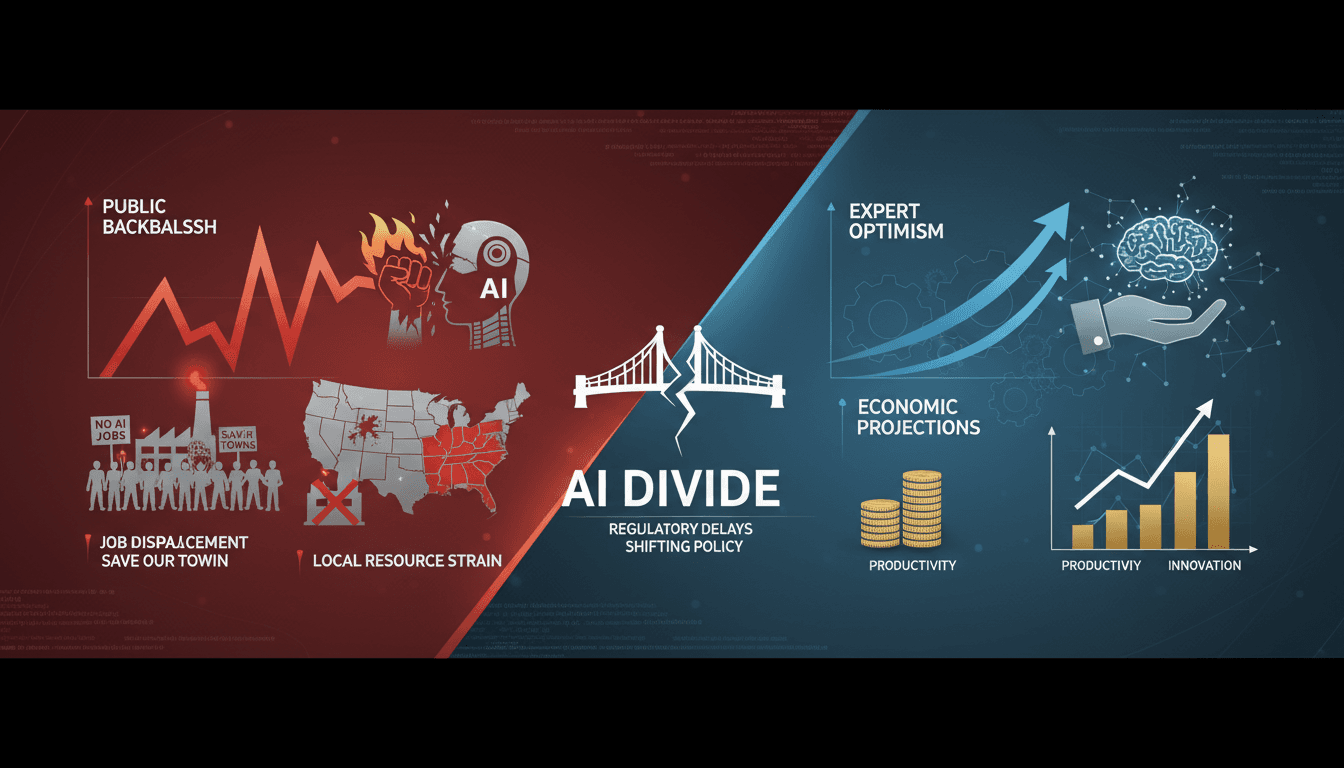
The divergence between public sentiment and expert opinion is striking. While many AI experts remain optimistic about the technology's potential to drive innovation and economic growth, public polls indicate that over 50% of Americans view AI as likely harmful. This 50-point divide between expert enthusiasm and public anxiety underscores a critical disconnect that could have long-term implications for the industry.
In response to the backlash, tech executives have expressed alarm over the violence and unrest. Sam Altman has acknowledged the shortcomings in the narrative surrounding AI, while other industry leaders have adopted varying messaging strategies. Dario Amodei emphasizes safety, while Sundar Pichai advocates for a more gradual approach to AI integration. This lack of a unified message may further exacerbate public distrust and hinder the industry's ability to navigate the current landscape.
Who feels it first (and how)
- Job seekers: Young professionals entering the workforce face increased competition from AI tools.
- Local communities: Residents near proposed data centers experience disruptions and environmental concerns.
- Tech executives: Leaders in the AI industry must navigate public sentiment and regulatory challenges.
What to watch next
- Regulatory changes: Monitor local and state government actions regarding data center moratoriums, as these could impact future AI projects.
- Public sentiment shifts: Keep an eye on polling data to gauge changes in public perception of AI and its societal implications.
- Industry responses: Watch how tech companies adjust their messaging and strategies in response to the backlash, as this could influence investment and innovation.
The backlash against AI is escalating, with incidents of violence and public protests.
Regulatory restrictions on AI data centers will continue to grow, impacting project timelines and investments.
The long-term effects of public sentiment on AI innovation and job markets remain uncertain.
Frequently Asked Questions
- Why it matters?
- The escalating opposition to AI in the U.S. signals a potential shift in how technology is integrated into society, affecting economic stability and innovation.
- What happened (in 30 seconds)?
- Arson attack: On April 11, 2026, a Molotov cocktail was thrown at OpenAI CEO Sam Altman's home, highlighting rising anti-AI sentiment. Public protests: Local communities are increasingly opposing AI data centers, citing concerns over energy consumption and job displacement. Widening divide: Polls show over 50% of Americans view AI as harmful, contrasting sharply with expert optimism about its benefits.
- What's really happening?
- The backlash against artificial intelligence in the United States has escalated dramatically since early 2026, driven by a confluence of economic, social, and environmental factors. The incident involving Daniel Moreno-Gama, who attacked Sam Altman's residence, serves as a stark illustration of the growing frustration among the public. This frustration is not merely anecdotal; it reflects a broader sentiment that has been brewing since the early 2020s. As AI technologies have advanced, they hav
- Who feels it first (and how)?
- Job seekers: Young professionals entering the workforce face increased competition from AI tools. Local communities: Residents near proposed data centers experience disruptions and environmental concerns. Tech executives: Leaders in the AI industry must navigate public sentiment and regulatory challenges.
- What to watch next?
- Regulatory changes: Monitor local and state government actions regarding data center moratoriums, as these could impact future AI projects. Public sentiment shifts: Keep an eye on polling data to gauge changes in public perception of AI and its societal implications. Industry responses: Watch how tech companies adjust their messaging and strategies in response to the backlash, as this could influence investment and innovation.
Technology business and AI-related headlines.
"Data-driven tech newsroom with global scope."
— A47 Editor
Why the AI Backlash Is Getting Worse
A Texas man, Daniel Moreno-Gama, has been charged with attempted murder after allegedly throwing a Molotov cocktail at the home of Sam Altman, CEO of OpenAI, in San Francisco. This violent incident occurred on April 10, 2026, and was captured on surv...
Technology business news, market impacts, and innovation trends.
"Bloomberg is a premier financial and tech news provider, respected for its in-depth reporting and analytical rigor."
— A47 Editor
Why the AI Backlash Is Getting Worse
A Texas man, Daniel Moreno-Gama, has been charged with attempted murder after allegedly throwing a Molotov cocktail at the home of Sam Altman, CEO of OpenAI, in San Francisco. This violent incident occurred on April 10, 2026, and was captured on surv...
Capitol Hill news, legislation, and policy insight.
"The Hill specializes in U.S. politics and policy, with a focus on Capitol Hill developments and a reputation for insider reporting."
— A47 Editor
AI tensions boil over
Tensions surrounding artificial intelligence escalated dramatically following two violent incidents involving OpenAI CEO Sam Altman, including an attack on his home with a Molotov cocktail. The suspect, a 20-year-old man named Daniel Moreno-Gama, rep...
Corporate leadership, finance, technology, and market trends.
"Fortune covers financial trends, leadership, and innovation with a pragmatic editorial approach."
— A47 Editor
Anti-AI sentiment is on the rise—and it’s starting to turn violent
Anti-AI sentiment is escalating, with reports indicating that this backlash is beginning to manifest in violent actions, reflecting a growing distrust in the technology that the AI industry has long warned could be dangerous.