
U.S. Confirms Significant Degradation of Iranian Military Capabilities Amid Ceasefire Agreement
Here's what it means for you.
The recent military developments in the Middle East could influence global oil prices and regional stability, impacting your cost of living and investment strategies.
Why it matters
The U.S. military's actions against Iran have significant implications for global oil markets and regional security dynamics.
What happened (in 30 seconds)
- U.S. Defense Secretary Pete Hegseth confirmed the severe degradation of Iran's military capabilities during Operation Epic Fury on April 8, 2026.
- A two-week ceasefire was agreed upon, with U.S. forces poised to resume operations if Iran violates the terms.
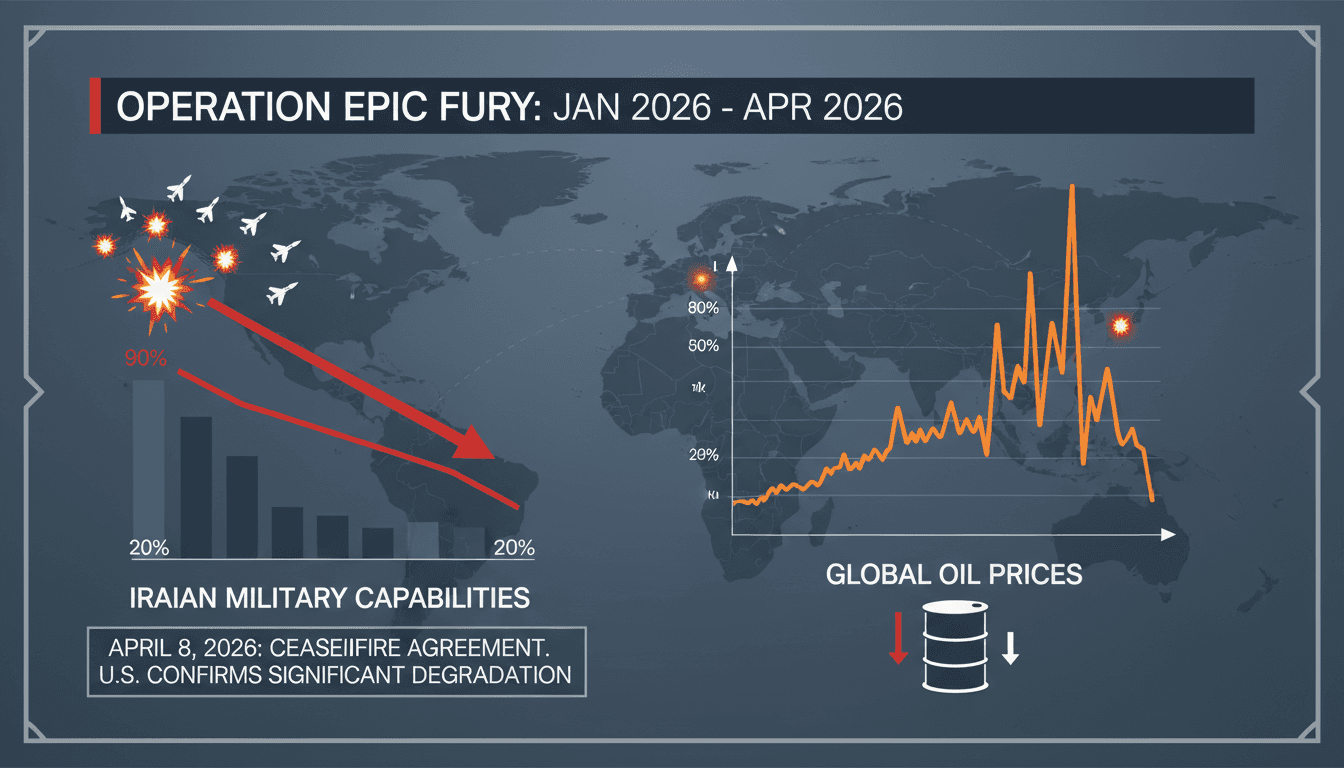
- Iran's military capabilities were significantly reduced, with a reported 90% drop in ballistic missile and drone attacks since the conflict began.
The context you actually need
- Operation Epic Fury was launched on February 28, 2026, targeting key Iranian military assets to curb its regional influence.
- Iran retaliated with missile strikes, escalating tensions and leading to U.S. rescues of downed pilots, indicating ongoing risks in the region.
- The ceasefire has led to temporary relief in oil prices, benefiting markets in Dubai and the broader UAE.
What's really happening
The recent military actions by the U.S. against Iran mark a critical juncture in Middle Eastern geopolitics. Operation Epic Fury, initiated on February 28, 2026, aimed to dismantle Iran's military infrastructure, particularly the Islamic Revolutionary Guard Corps (IRGC), which has been pivotal in projecting Iran's power across the region. The U.S. targeted command-and-control centers, air defenses, missile sites, and naval assets, effectively crippling Iran's ability to threaten its neighbors and disrupt shipping routes, especially in the strategically vital Strait of Hormuz.
As a result of these operations, U.S. Defense Secretary Pete Hegseth announced a "decisive military victory," highlighting a 90% reduction in Iranian ballistic missile and drone attacks. This reduction is significant, as it not only diminishes Iran's immediate military threat but also alters the balance of power in the region. The U.S. has made it clear that while a ceasefire is in place, it remains vigilant and ready to resume military operations should Iran breach the agreement.
The implications of these developments extend beyond military strategy. The ceasefire has led to a notable drop in oil prices, providing relief to consumers and businesses in regions like Dubai, where previous tensions had driven prices above $130 per barrel. This economic shift is crucial for the UAE, which relies heavily on oil revenues. The market's positive response indicates a temporary stabilization, but the underlying tensions remain.
Moreover, the Pentagon's emphasis on monitoring compliance with the ceasefire suggests that the U.S. is prepared for a prolonged engagement in the region. Intelligence disputes regarding the extent of Iran's military degradation could lead to further escalations if misunderstandings arise. The situation is fluid, and while the current ceasefire may provide a temporary respite, the potential for renewed conflict looms large, influenced by both regional actors and global market dynamics.
Who feels it first (and how)
- Oil consumers: Fluctuations in oil prices directly affect fuel costs and overall living expenses.
- Investors in the UAE: Market recoveries may present new opportunities, but ongoing tensions could introduce volatility.
- Military personnel and contractors: Continued U.S. presence and operations in the region impact job security and deployment schedules.
What to watch next
- Ceasefire compliance: Monitoring Iran's adherence to the ceasefire will be crucial in determining the likelihood of renewed hostilities.
- Oil price trends: Watch for fluctuations in oil prices as they respond to geopolitical developments, which could affect global markets.
- Regional alliances: Changes in relationships among Gulf states and Iran could reshape the strategic landscape, influencing security and economic policies.
The U.S. has significantly degraded Iranian military capabilities, impacting its regional influence.
Oil prices will remain volatile as geopolitical tensions fluctuate.
The long-term effectiveness of the ceasefire and its impact on U.S.-Iran relations.
Frequently Asked Questions
- Why it matters?
- The U.S. military's actions against Iran have significant implications for global oil markets and regional security dynamics.
- What happened (in 30 seconds)?
- U.S. Defense Secretary Pete Hegseth confirmed the severe degradation of Iran's military capabilities during Operation Epic Fury on April 8, 2026. A two-week ceasefire was agreed upon, with U.S. forces poised to resume operations if Iran violates the terms. Iran's military capabilities were significantly reduced, with a reported 90% drop in ballistic missile and drone attacks since the conflict began.
- What's really happening?
- The recent military actions by the U.S. against Iran mark a critical juncture in Middle Eastern geopolitics. Operation Epic Fury, initiated on February 28, 2026, aimed to dismantle Iran's military infrastructure, particularly the Islamic Revolutionary Guard Corps (IRGC), which has been pivotal in projecting Iran's power across the region. The U.S. targeted command-and-control centers, air defenses, missile sites, and naval assets, effectively crippling Iran's ability to threaten its neighbors an
- Who feels it first (and how)?
- Oil consumers: Fluctuations in oil prices directly affect fuel costs and overall living expenses. Investors in the UAE: Market recoveries may present new opportunities, but ongoing tensions could introduce volatility. Military personnel and contractors: Continued U.S. presence and operations in the region impact job security and deployment schedules.
- What to watch next?
- Ceasefire compliance: Monitoring Iran's adherence to the ceasefire will be crucial in determining the likelihood of renewed hostilities. Oil price trends: Watch for fluctuations in oil prices as they respond to geopolitical developments, which could affect global markets. Regional alliances: Changes in relationships among Gulf states and Iran could reshape the strategic landscape, influencing security and economic policies.
Pan-Arab news coverage spanning politics, business, sports, and regional affairs.
"Asharq Al-Awsat reflects a broad Arab editorial perspective with strong attention to regional geopolitics."
— A47 Editor
قادة «البنتاغون» يؤكّدون تدمير قدرات إيران العسكرية... ويهدّدون باستئناف العمليات
U.S. Defense Secretary Pete Hegseth warned that the United States is prepared to seize uranium owned by Iran if the country refuses to hand it over, indicating a significant escalation in tensions between the two nations. This statement follows asser...
Arabic-language UAE newspaper coverage focused on domestic affairs, public institutions, business, society, and regional developments.
"Al Khaleej coverage generally reflects a mainstream UAE editorial lens with strong attention to public affairs, institutions, and regional developments."
— A47 Editor
وزير الحرب الأمريكي: إيران توسلت من أجل وقف إطلاق النار
U.S. Secretary of War Pete Hegseth stated on Wednesday that the United States has achieved a decisive military victory over Iran, indicating a significant shift in the ongoing conflict. He claimed that Iran has pleaded for a ceasefire, suggesting a c...
Arabic-language UAE newspaper coverage focused on domestic affairs, public institutions, business, society, and regional developments.
"Al Khaleej coverage generally reflects a mainstream UAE editorial lens with strong attention to public affairs, institutions, and regional developments."
— A47 Editor
هيغسيث: الصناعات الدفاعية الإيرانية دمرت تماماً.. واستخدمنا 10% فقط من قوتنا
U.S. Defense Secretary Pete Hegseth stated that Iranian defense industries have been completely destroyed, emphasizing that only 10% of their military capabilities have been utilized. This declaration highlights the perceived decline of Iran's defens...