
Metropolitan Police Investigate Iranian Proxy Links to Arson Attacks on Jewish Sites in London
Here's what it means for you.
If you’re in London or connected to its communities, the implications of these attacks could affect your sense of security and the dynamics of local policing.
Why it matters
This investigation highlights the increasing use of proxy groups in geopolitical conflicts, which can directly impact community safety and social cohesion.
What happened (in 30 seconds)
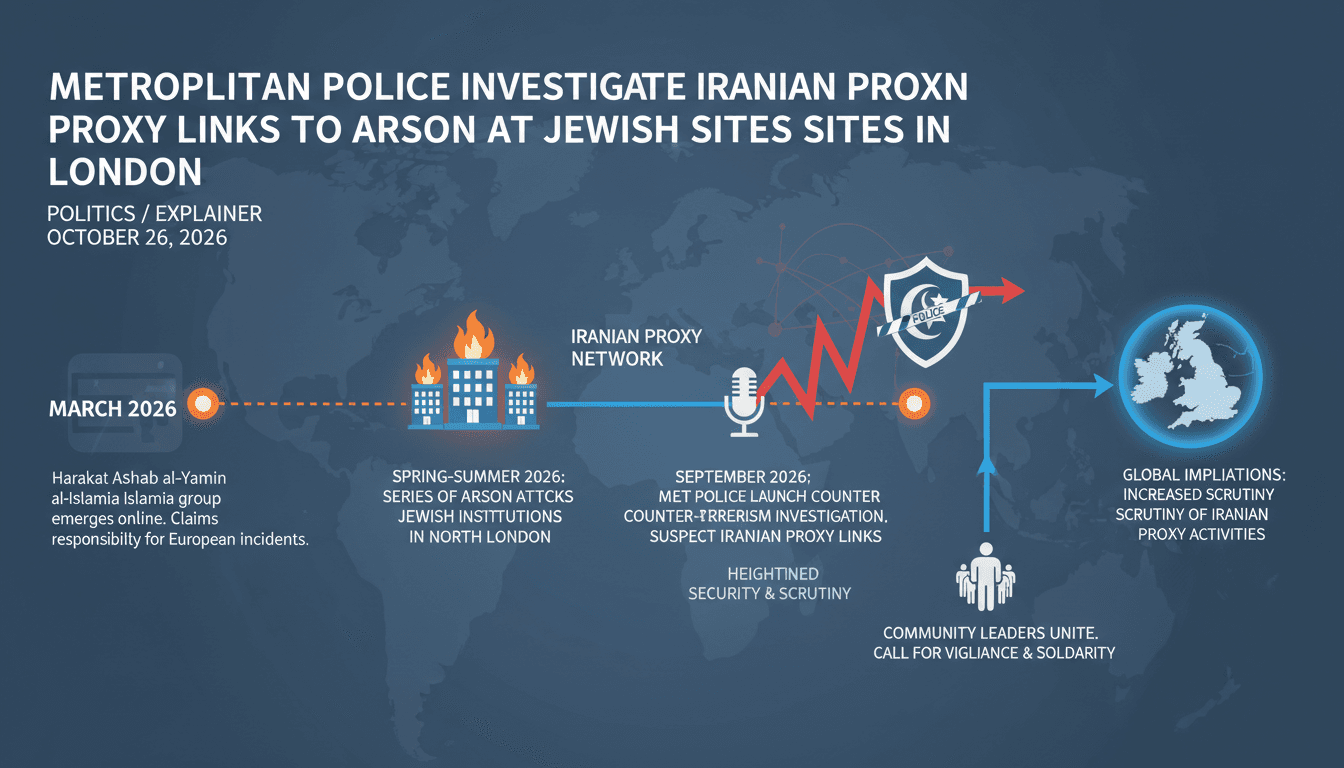
- April 19, 2026: The Metropolitan Police launched a counter-terrorism investigation into arson attacks on Jewish sites in North London, potentially linked to Iranian proxies.
- Multiple incidents: In less than a week, three arson or attempted arson attacks occurred, causing minor damage but raising significant alarm.
- Official response: Authorities, including Prime Minister Keir Starmer and Chief Rabbi Ephraim Mirvis, condemned the attacks, emphasizing the need for justice and increased security measures.
The context you actually need
- Emergence of Harakat Ashab al-Yamin al-Islamia: This group claimed responsibility for the attacks, marking its online presence in March 2026 and indicating a broader trend of proxy violence in Europe.
- Iran's history of proxy warfare: UK authorities have documented Iran's use of criminal proxies to target dissidents and Jewish communities, with MI5 disrupting over 20 plots in the past year.
- Escalating tensions: The backdrop of rising Middle Eastern tensions has created an environment where such proxy actions are increasingly likely, affecting local communities far from the conflict zones.
What's really happening
The recent arson attacks in North London are not isolated incidents but part of a broader strategy employed by Iran through proxy groups like Harakat Ashab al-Yamin al-Islamia. This group has emerged as a significant player in the landscape of proxy violence, claiming responsibility for attacks on Jewish sites across Europe. The pattern of these attacks reflects a calculated approach by Iran to exert influence and intimidate communities abroad without direct involvement, thereby maintaining plausible deniability.
The Metropolitan Police's counter-terrorism investigation underscores the seriousness of the situation. By targeting Jewish institutions, these attacks aim to instill fear and disrupt community cohesion. The choice of targets is not random; it aligns with a historical context where Jewish communities have been focal points for anti-Iranian sentiment, particularly in the UK. The attacks, while causing minor physical damage, have significant psychological implications, potentially leading to increased tensions between communities and a heightened sense of vulnerability among Jewish residents.
The UK government’s response, led by Prime Minister Keir Starmer, has been swift and firm. By labeling the attacks as "abhorrent," the government aims to reassure the public and signal that such acts will not be tolerated. Increased visible policing and the deployment of armed units in affected areas are immediate measures taken to restore a sense of safety. However, these actions also reflect a broader trend of heightened security measures in urban areas facing similar threats, which can lead to a normalization of police presence and potential civil liberties concerns.
Moreover, the involvement of MI5 in disrupting over 20 Iran-backed plots in the previous year indicates a systemic issue that extends beyond these recent attacks. It suggests a well-established network of proxy operations that could pose ongoing risks to various communities. The implications of this are profound, as they not only affect the targeted groups but also have ripple effects on community relations, public safety policies, and the overall social fabric of urban areas.
As the investigation unfolds, the potential for further incidents remains a concern, particularly if the underlying motivations of these proxy groups are not addressed. The situation calls for a nuanced understanding of the geopolitical dynamics at play and their local manifestations, which could shape community interactions and safety protocols in the future.
Who feels it first (and how)
- Jewish communities: Increased fear and anxiety regarding safety and potential future attacks.
- Local law enforcement: Heightened pressure to ensure community safety and manage public order.
- Policymakers: Need to address the implications of proxy violence on domestic security and community relations.
- Residents of North London: Affected by increased police presence and potential changes in community dynamics.
What to watch next
- Increased security measures: Watch for changes in policing strategies and community safety protocols in response to these incidents, which could set a precedent for future actions.
- Community relations: Monitor how these events affect inter-community relations, particularly between Jewish and Muslim communities in London, as tensions may rise.
- Proxy group activities: Keep an eye on the activities of Harakat Ashab al-Yamin al-Islamia and similar groups, as their actions could indicate broader geopolitical shifts and their local impacts.
The Metropolitan Police are actively investigating the arson attacks and their potential links to Iranian proxies.
Increased security measures and visible policing will continue in North London as authorities respond to community concerns.
The long-term impact on community relations and the effectiveness of counter-terrorism strategies in preventing future incidents remains uncertain.
Frequently Asked Questions
- Why it matters?
- This investigation highlights the increasing use of proxy groups in geopolitical conflicts, which can directly impact community safety and social cohesion.
- What happened (in 30 seconds)?
- April 19, 2026: The Metropolitan Police launched a counter-terrorism investigation into arson attacks on Jewish sites in North London, potentially linked to Iranian proxies. Multiple incidents: In less than a week, three arson or attempted arson attacks occurred, causing minor damage but raising significant alarm. Official response: Authorities, including Prime Minister Keir Starmer and Chief Rabbi Ephraim Mirvis, condemned the attacks, emphasizing the need for justice and increased security
- What's really happening?
- The recent arson attacks in North London are not isolated incidents but part of a broader strategy employed by Iran through proxy groups like Harakat Ashab al-Yamin al-Islamia. This group has emerged as a significant player in the landscape of proxy violence, claiming responsibility for attacks on Jewish sites across Europe. The pattern of these attacks reflects a calculated approach by Iran to exert influence and intimidate communities abroad without direct involvement, thereby maintaining plau
- Who feels it first (and how)?
- Jewish communities: Increased fear and anxiety regarding safety and potential future attacks. Local law enforcement: Heightened pressure to ensure community safety and manage public order. Policymakers: Need to address the implications of proxy violence on domestic security and community relations. Residents of North London: Affected by increased police presence and potential changes in community dynamics.
- What to watch next?
- Increased security measures: Watch for changes in policing strategies and community safety protocols in response to these incidents, which could set a precedent for future actions. Community relations: Monitor how these events affect inter-community relations, particularly between Jewish and Muslim communities in London, as tensions may rise. Proxy group activities: Keep an eye on the activities of Harakat Ashab al-Yamin al-Islamia and similar groups, as their actions could indicate broader
Global news coverage with extensive reporting on Middle Eastern conflicts and geopolitics.
"Al Jazeera is a Qatar-based broadcaster known for wide regional coverage and alternative perspectives."
— A47 Editor
Met Police investigate potential Iran links to London arson attacks
The Metropolitan Police are investigating potential links to Iran following a series of arson attacks in London, including a recent incident at the Kenton United Synagogue, which caused minor damage. This attack is part of a troubling trend of violen...
Comprehensive coverage of Middle Eastern and global issues.
"Al Jazeera is a prominent voice from the Global South, especially the Middle East, with an emphasis on underreported stories."
— A47 Editor
Met Police investigate potential Iran links to London arson attacks
The Metropolitan Police are investigating potential links to Iran following a series of arson attacks in London, including a recent incident at the Kenton United Synagogue, which caused minor damage. This attack is part of a troubling trend of violen...
United Kingdom-focused news including local politics, business, and social issues.
"BBC News is widely regarded as a reputable international news organization, known for its impartial tone and public service mandate."
— A47 Editor
Police treating arson attack as antisemitic hate crime
Police are investigating an arson attack in north-west London, where a man attempted to ignite a plastic bag containing flammable fluid. This incident is being treated as an antisemitic hate crime, highlighting ongoing concerns about safety in the co...
Top international stories selected by The Guardian editors.
"The Guardian is known for its progressive editorial stance and in-depth analysis."
— A47 Editor
Counter-terror police investigate arson attack in north-west London
Counter-terrorism police are investigating an arson attack on a business in Hendon, north-west London, which occurred on Friday. The police noted similarities with other recent incidents, including attacks on a nearby synagogue and Jewish ambulance c...