
U.S. Court Orders Pentagon to Reinstate New York Times Reporters' Press Credentials
Here's what it means for you.
If you're in media or related sectors, this ruling underscores the importance of press freedom and could influence how you approach reporting on government activities.
Why it matters
This ruling highlights ongoing tensions between national security policies and press freedoms, which could reshape media access to government information.
What happened (in 30 seconds)
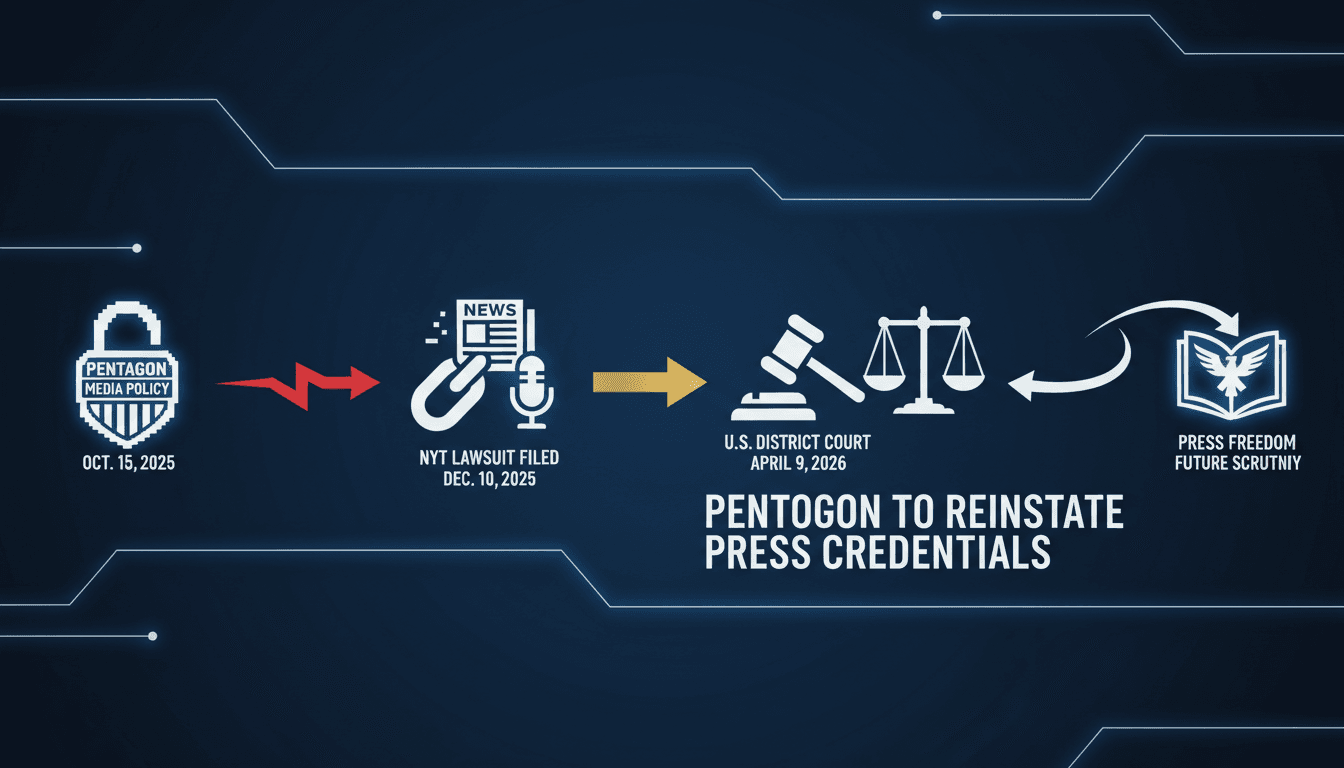
- April 9, 2026: U.S. District Judge Paul Friedman ordered the Pentagon to restore press credentials to seven New York Times reporters.
- March 20, 2026: Judge Friedman ruled that the Pentagon's restrictive press policy was unconstitutional, rejecting the Department of Defense's appeal.
- October 2025: The Pentagon enacted a policy limiting journalists' access and requiring them to avoid independent reporting methods, leading to the lawsuit.
The context you actually need
- October 2025: Under Secretary Pete Hegseth, the Pentagon introduced a policy that restricted journalists from soliciting unauthorized information, which many outlets, including the New York Times, found untenable.
- December 2025: The New York Times filed a lawsuit alleging violations of the First and Fifth Amendments, representing seven reporters whose credentials were revoked.
- March 2026: The court ruled against the Pentagon's policy, emphasizing the need for press access to ensure transparency and accountability in government operations.
What's really happening
The recent ruling by Judge Paul Friedman is a significant moment in the ongoing struggle for press freedom in the U.S. The Pentagon's initial policy, enacted in late 2025, was framed as a necessary measure for national security in a post-2024 election landscape marked by heightened tensions. However, the policy's requirement for journalists to avoid independent reporting methods effectively silenced dissenting voices and limited the scope of media coverage to official statements only. This restriction raised alarms among press freedom advocates and legal experts, who viewed it as a blatant violation of constitutional rights.
The New York Times, representing the interests of seven affected reporters, filed a lawsuit in December 2025, arguing that the Pentagon's actions infringed upon their First Amendment rights to free speech and the Fifth Amendment's due process protections. Judge Friedman’s ruling on March 20, 2026, was a pivotal moment, as it not only restored the reporters' credentials but also rejected the Pentagon's appeal to maintain the restrictive policy. The judge's decision underscored the judiciary's role in upholding constitutional rights against executive overreach.
Following the ruling, the Pentagon attempted to implement an "interim" policy that still restricted journalists' access, leading to accusations of non-compliance from the New York Times. This prompted Judge Friedman to issue a second order on April 9, 2026, mandating immediate restoration of press credentials. The Pentagon's failure to comply with the court's previous injunction raises questions about its commitment to transparency and accountability.
The implications of this ruling extend beyond the immediate restoration of credentials. It signals a potential shift in how government agencies interact with the media, particularly in a climate where national security concerns are often cited to justify restrictive measures. The ruling may embolden other media organizations to challenge similar policies, fostering a more robust environment for press freedom. However, the Pentagon's historical patterns suggest that it may seek to appeal the ruling, which could lead to further legal battles over press access.
Who feels it first (and how)
- Journalists: Immediate restoration of access allows for more comprehensive reporting on military and defense issues.
- Media Organizations: A win for the New York Times could inspire other outlets to challenge restrictive policies.
- Government Officials: Increased scrutiny from the press may lead to more accountability in government actions and decisions.
What to watch next
- Pentagon's Compliance: Monitor how the Pentagon responds to the court's ruling and whether it will comply without further restrictions. This matters because non-compliance could lead to additional legal challenges.
- Potential Appeals: Watch for any announcements regarding appeals from the Pentagon, as this could prolong the legal battle and impact future press policies.
- Broader Media Reactions: Keep an eye on how other media organizations react to this ruling, as it may influence their reporting strategies and legal approaches to access issues.
The Pentagon's initial policy restricted press access and led to a lawsuit from the New York Times.
The Pentagon may appeal the ruling, which could lead to further legal disputes regarding press access.
The long-term impact on press freedom and government transparency remains uncertain, depending on future policies and judicial rulings.
Frequently Asked Questions
- Why it matters?
- This ruling highlights ongoing tensions between national security policies and press freedoms, which could reshape media access to government information.
- What happened (in 30 seconds)?
- April 9, 2026: U.S. District Judge Paul Friedman ordered the Pentagon to restore press credentials to seven New York Times reporters. March 20, 2026: Judge Friedman ruled that the Pentagon's restrictive press policy was unconstitutional, rejecting the Department of Defense's appeal. October 2025: The Pentagon enacted a policy limiting journalists' access and requiring them to avoid independent reporting methods, leading to the lawsuit.
- What's really happening?
- The recent ruling by Judge Paul Friedman is a significant moment in the ongoing struggle for press freedom in the U.S. The Pentagon's initial policy, enacted in late 2025, was framed as a necessary measure for national security in a post-2024 election landscape marked by heightened tensions. However, the policy's requirement for journalists to avoid independent reporting methods effectively silenced dissenting voices and limited the scope of media coverage to official statements only. This restr
- Who feels it first (and how)?
- Journalists: Immediate restoration of access allows for more comprehensive reporting on military and defense issues. Media Organizations: A win for the New York Times could inspire other outlets to challenge restrictive policies. Government Officials: Increased scrutiny from the press may lead to more accountability in government actions and decisions.
- What to watch next?
- Pentagon's Compliance: Monitor how the Pentagon responds to the court's ruling and whether it will comply without further restrictions. This matters because non-compliance could lead to additional legal challenges. Potential Appeals: Watch for any announcements regarding appeals from the Pentagon, as this could prolong the legal battle and impact future press policies. Broader Media Reactions: Keep an eye on how other media organizations react to this ruling, as it may influence their report
Right-of-center views on political news.
"The Washington Times is a conservative-leaning newspaper known for its political coverage and advocacy of right-of-center viewpoints."
— A47 Editor
Judge orders Pentagon to let New York Times reporters back in
A federal judge has ordered the Pentagon to allow New York Times reporters back into the building, ruling that the Pentagon's attempt to block access was unlawful. This decision follows a series of legal challenges regarding press access to military ...
U.S. business news, corporate developments, and economy.
"The Wall Street Journal is respected for deep financial and economic reporting with a center-right editorial perspective."
— A47 Editor
Judge Rejects Pentagon’s Revised Press Policy
A federal judge has rejected the Pentagon's revised press policy, which was introduced following a previous ruling that deemed the Pentagon's earlier restrictions on press access unconstitutional. This decision restores press credentials that had bee...
Insights and news on social issues, policy, and political movements across the United States.
"The Wall Street Journal is known for its deep political coverage, especially at the intersection of policy, regulation, and social dynamics."
— A47 Editor
The Defense Department violated a court order to restore Pentagon access for journalists, a federal judge ruled on Thursday, a setback for the Trump administration
A federal judge ruled that the Defense Department violated a court order to restore press access to the Pentagon, a decision that follows previous rulings deeming the department's restrictions unconstitutional. This ruling highlights ongoing tensions...
Capitol Hill news, legislation, and policy insight.
"The Hill specializes in U.S. politics and policy, with a focus on Capitol Hill developments and a reputation for insider reporting."
— A47 Editor
Judge orders Pentagon to restore press access
A U.S. District Judge Paul Friedman has ordered the Pentagon to restore press access for credentialed journalists, following a ruling that the Department of Defense's restrictions were unconstitutional. This decision comes after the Pentagon's attemp...