
Delta Air Lines Halts Q2 2026 Capacity Growth Amid Rising Jet Fuel Costs Linked to Iran Conflict
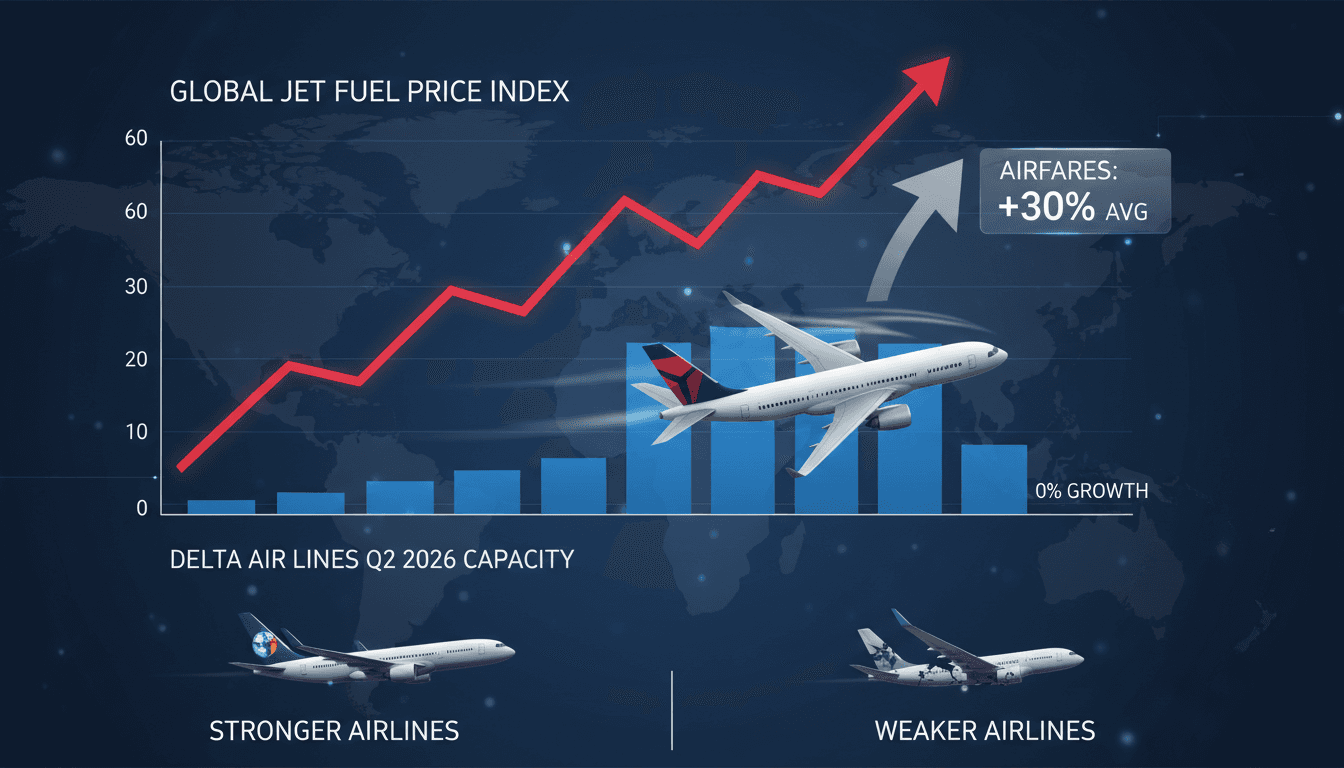
Here's what it means for you.
If you travel frequently, expect higher airfare as airlines adjust to soaring fuel costs.
Why it matters
The airline industry's capacity adjustments signal broader economic impacts stemming from geopolitical tensions.
What happened (in 30 seconds)
- Delta Air Lines announced it will remove all planned capacity growth for Q2 2026 due to skyrocketing jet fuel prices.
- Jet fuel costs have nearly doubled since late February 2026, primarily linked to the ongoing conflict in Iran.
- Adjusted earnings per share for Delta are forecasted between $1.00 and $1.50, falling short of analysts' expectations.
The context you actually need
- Fuel costs account for about 25% of airline operating expenses, making them a critical factor in profitability.
- U.S. airlines have collectively reduced planned domestic capacity growth by over 0.5 percentage points since mid-March 2026 to manage fuel consumption.
- Fare increases and ancillary fee hikes are being implemented across the industry as airlines grapple with rising operational costs.
What's really happening
The recent surge in jet fuel prices is a direct consequence of escalating geopolitical tensions in the Middle East, particularly the conflict involving Iran. Since late February 2026, prices have nearly doubled, significantly impacting the airline industry's operational costs. Delta Air Lines, among other U.S. carriers, has responded by revising its growth strategy, halting planned capacity increases for the second quarter of 2026. This decision reflects a broader trend within the airline sector, where companies are adjusting to the new economic realities driven by fluctuating fuel prices.
The airline industry operates on thin margins, and fuel costs can dramatically affect profitability. Delta's forecast of adjusted earnings per share (EPS) between $1.00 and $1.50 for Q2 2026 is below analysts' expectations, indicating that the company is bracing for a challenging financial quarter. The anticipated additional fuel costs exceed $2 billion compared to the previous year, a staggering figure that underscores the financial strain airlines are facing.
In response to these pressures, Delta plans to recover 40-50% of the increased fuel costs through fare hikes and ancillary fees. This strategy is not unique to Delta; other U.S. carriers, including United and American Airlines, have already begun raising checked baggage fees and adjusting service models to account for sustained high oil prices. The industry is experiencing a significant shift, where only the most resilient players will thrive, as weaker airlines may struggle to adapt or even exit the market.
Moreover, the impact of these fuel price increases is not confined to the U.S. Airlines globally are feeling the pinch, leading to fare increases on international routes as well. For travelers in regions like Dubai, this means higher airfare on popular routes to cities such as London and New York, as airlines adjust pricing to cover their rising costs. The situation is compounded by regional disruptions, including airspace closures and flight cancellations, further complicating travel plans for consumers.
Who feels it first (and how)
- Frequent travelers: Higher airfare and potential service changes will directly impact travel budgets.
- Airline employees: Job security may be threatened as companies reassess growth and operational strategies.
- Tourism sectors: Destinations reliant on air travel could see reduced visitor numbers due to increased costs.
- Investors: Shareholders in airlines may experience volatility as companies navigate these challenges.
What to watch next
- Fuel price trends: Monitoring global oil prices will be crucial, as sustained high prices could lead to further airline capacity reductions.
- Airfare adjustments: Keep an eye on fare increases across major routes, which could indicate how airlines are managing their operational costs.
- Market consolidation: Watch for potential mergers or acquisitions in the airline industry as weaker players may be forced to exit.
Jet fuel prices have surged due to geopolitical tensions, impacting airline operations.
Airlines will continue to raise fares and fees to offset rising costs.
The long-term effects on airline capacity and market structure remain uncertain as the situation evolves.
Frequently Asked Questions
- Why it matters?
- The airline industry's capacity adjustments signal broader economic impacts stemming from geopolitical tensions.
- What happened (in 30 seconds)?
- Delta Air Lines announced it will remove all planned capacity growth for Q2 2026 due to skyrocketing jet fuel prices. Jet fuel costs have nearly doubled since late February 2026, primarily linked to the ongoing conflict in Iran. Adjusted earnings per share for Delta are forecasted between $1.00 and $1.50, falling short of analysts' expectations.
- What's really happening?
- The recent surge in jet fuel prices is a direct consequence of escalating geopolitical tensions in the Middle East, particularly the conflict involving Iran. Since late February 2026, prices have nearly doubled, significantly impacting the airline industry's operational costs. Delta Air Lines, among other U.S. carriers, has responded by revising its growth strategy, halting planned capacity increases for the second quarter of 2026. This decision reflects a broader trend within the airline sector
- Who feels it first (and how)?
- Frequent travelers: Higher airfare and potential service changes will directly impact travel budgets. Airline employees: Job security may be threatened as companies reassess growth and operational strategies. Tourism sectors: Destinations reliant on air travel could see reduced visitor numbers due to increased costs. Investors: Shareholders in airlines may experience volatility as companies navigate these challenges.
- What to watch next?
- Fuel price trends: Monitoring global oil prices will be crucial, as sustained high prices could lead to further airline capacity reductions. Airfare adjustments: Keep an eye on fare increases across major routes, which could indicate how airlines are managing their operational costs. Market consolidation: Watch for potential mergers or acquisitions in the airline industry as weaker players may be forced to exit.
Market-moving headlines impacting equities, bonds, and related risk assets.
"Real-time catalysts and volatility drivers across indices and sectors."
— A47 Editor
Delta hits brakes on growth plans as fuel spike reshapes airline economics
Delta Airlines has announced a halt to its growth plans due to a significant spike in fuel prices, which is reshaping the economic landscape of the airline industry. This decision reflects the challenges airlines face as operational costs rise, impac...
U.S. business news, corporate developments, and economy.
"The Wall Street Journal is respected for deep financial and economic reporting with a center-right editorial perspective."
— A47 Editor
Facing Soaring Fuel Costs, Delta Tells Customers to Plan for Pricier Flights
Delta Airlines has announced that customers should prepare for higher flight prices due to soaring fuel costs, as stated by CEO Ed Bastian. Despite these challenges, demand for both business and leisure travel remains robust across various regions.