
Allegations of US and EU Interference in Upcoming Hungarian Parliamentary Election Intensify
Here's what it means for you.
The outcome of Hungary's election could reshape EU relations and influence global economic ties.
Why it matters
This election is pivotal not just for Hungary but also for the EU's approach to member states that challenge its core values.
What happened (in 30 seconds)
- The election is set for April 12, 2026, featuring a contest between incumbent Viktor Orbán and challenger Péter Magyar.
- Allegations of foreign interference have emerged, particularly from the US and EU, complicating the election landscape.
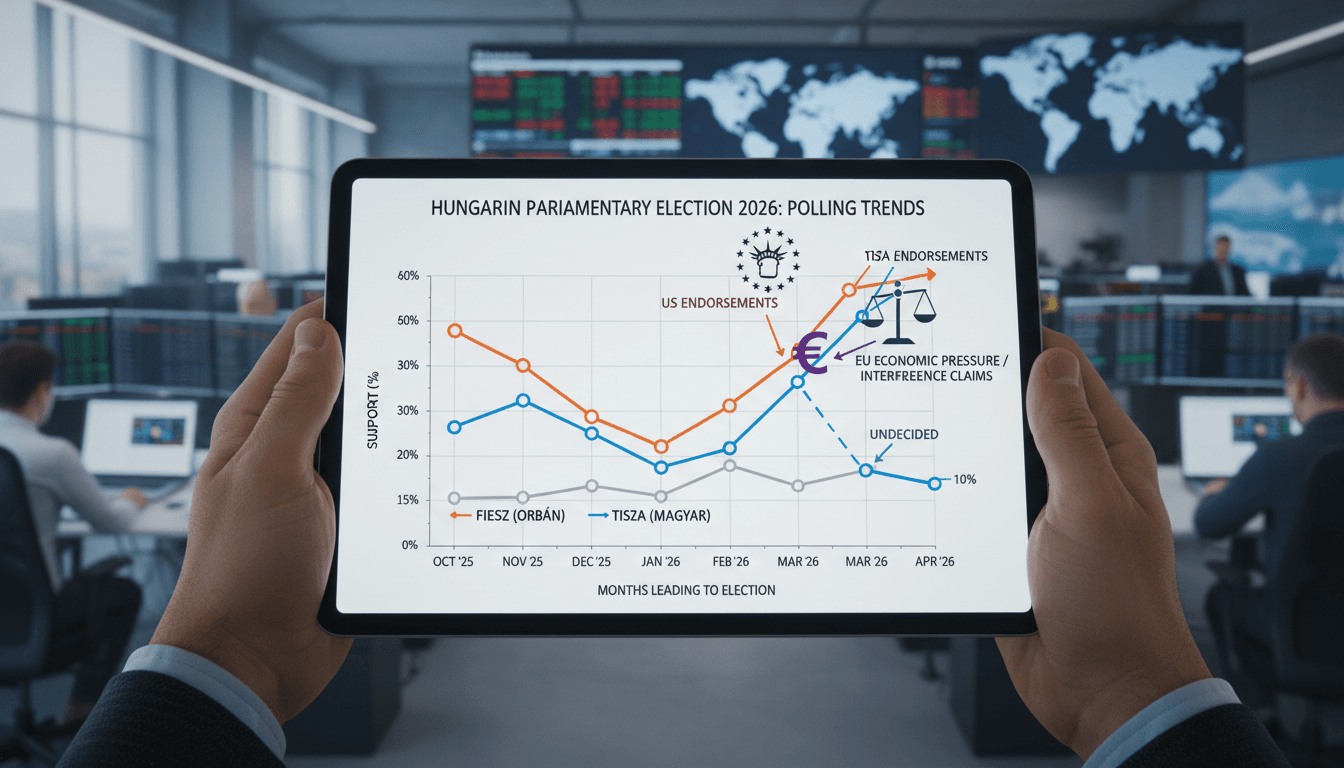
- Recent polls show Fidesz leading Tisza by 8–13 points, although earlier surveys indicated a tighter race.
The context you actually need
- Viktor Orbán has been in power since 2010, implementing controversial policies that have strained Hungary's relationship with the EU.
- Péter Magyar, a former ally of Orbán, formed the Tisza Party in response to domestic scandals and rising economic discontent.
- US support for Orbán has increased, contrasting with EU criticisms, particularly regarding Hungary's stance on Ukraine and rule-of-law issues.
What's really happening
The 2026 Hungarian parliamentary election is unfolding against a backdrop of significant political tension, both domestically and internationally. Viktor Orbán's Fidesz–KDNP alliance has governed Hungary for 16 years, implementing policies that have drawn the ire of the European Union. These policies include undermining judicial independence and media freedom, which have led to the withholding of billions in EU funds. The stakes are high as the election approaches, with allegations of foreign interference from both the United States and the European Union intensifying the political atmosphere.
Péter Magyar, who launched the Tisza Party in late 2023, has emerged as a formidable challenger to Orbán. His rise is fueled by public discontent over economic issues and a series of scandals involving Orbán's allies. The Tisza Party gained traction in the 2024 EU and local elections, indicating a shift in public sentiment. Recent polls suggest that Fidesz holds a lead, but the margin is narrowing, reflecting a volatile political landscape.
The U.S. has taken a keen interest in the election, with Vice President JD Vance publicly supporting Orbán and criticizing the EU for alleged election interference. This support aligns with a broader U.S. strategy under the Trump administration, which has shifted toward backing "sovereign" nations like Hungary. This geopolitical dynamic complicates the election, as Magyar has condemned foreign meddling from Washington, Moscow, and Brussels, framing the contest as a battle for Hungary's sovereignty.
The implications of this election extend beyond Hungary's borders. If Orbán wins, it could solidify his authoritarian governance style and further strain Hungary's relationship with the EU, which is already fraught with tension over rule-of-law standards and responses to the Ukraine crisis. Conversely, a victory for Magyar could signal a shift towards greater alignment with EU values and a more cooperative stance on international issues, particularly regarding Ukraine.
As the election date approaches, the atmosphere is charged with uncertainty. Allegations of Russian disinformation and Ukrainian threats against Orbán have emerged, further complicating the narrative. Financial markets in Hungary have shown low volatility, but pre-election uncertainty remains high. Orbán's framing of the election as a defense of national sovereignty against external pressures resonates with a significant portion of the electorate, adding another layer to this complex electoral battle.
Who feels it first (and how)
- Hungarian voters: Directly impacted by the election outcome and its implications for domestic policies.
- EU officials: Will need to navigate the consequences of either a continued Orbán regime or a potential shift in governance.
- U.S. policymakers: The election results could influence U.S. foreign policy in Eastern Europe, particularly regarding support for Ukraine.
What to watch next
- Poll fluctuations: Watch for changes in polling data as the election date approaches; they could indicate shifting public sentiment.
- International reactions: Monitor how the EU and U.S. respond to the election results, particularly regarding Hungary's future relationship with the bloc.
- Economic indicators: Keep an eye on Hungary's financial markets and currency stability as the election unfolds, which could reflect investor confidence.
The election is scheduled for April 12, 2026, and features a contest between Orbán and Magyar.
Allegations of foreign interference will continue to shape the narrative leading up to the election.
The ultimate impact of the election outcome on Hungary's relationship with the EU and the U.S. remains uncertain.
Frequently Asked Questions
- Why it matters?
- This election is pivotal not just for Hungary but also for the EU's approach to member states that challenge its core values.
- What happened (in 30 seconds)?
- The election is set for April 12, 2026, featuring a contest between incumbent Viktor Orbán and challenger Péter Magyar. Allegations of foreign interference have emerged, particularly from the US and EU, complicating the election landscape. Recent polls show Fidesz leading Tisza by 8–13 points, although earlier surveys indicated a tighter race.
- What's really happening?
- The 2026 Hungarian parliamentary election is unfolding against a backdrop of significant political tension, both domestically and internationally. Viktor Orbán's Fidesz–KDNP alliance has governed Hungary for 16 years, implementing policies that have drawn the ire of the European Union. These policies include undermining judicial independence and media freedom, which have led to the withholding of billions in EU funds. The stakes are high as the election approaches, with allegations of foreign in
- Who feels it first (and how)?
- Hungarian voters: Directly impacted by the election outcome and its implications for domestic policies. EU officials: Will need to navigate the consequences of either a continued Orbán regime or a potential shift in governance. U.S. policymakers: The election results could influence U.S. foreign policy in Eastern Europe, particularly regarding support for Ukraine.
- What to watch next?
- Poll fluctuations: Watch for changes in polling data as the election date approaches; they could indicate shifting public sentiment. International reactions: Monitor how the EU and U.S. respond to the election results, particularly regarding Hungary's future relationship with the bloc. Economic indicators: Keep an eye on Hungary's financial markets and currency stability as the election unfolds, which could reflect investor confidence.
News and current affairs from across Europe.
"The Guardian is known for its progressive editorial stance and in-depth analysis."
— A47 Editor
JD Vance’s claims about Orbán, the EU and Hungary fact-checked
During a recent visit to Budapest, U.S. Vice President JD Vance expressed strong support for Hungarian Prime Minister Viktor Orbán, accusing the European Union of attempting to undermine Hungary's economy and energy independence ahead of the country'...
European current affairs, EU politics, and regional developments.
"France 24 is viewed as a globally focused outlet with balanced coverage and a European perspective."
— A47 Editor
Trump, Vance support for Hungary's Orban is not 'meddling' in upcoming vote, says US envoy
U.S. President Donald Trump and Vice President JD Vance have expressed their support for Hungarian Prime Minister Viktor Orban, with Vance visiting Budapest to bolster Orban's campaign ahead of the parliamentary elections. The U.S. ambassador to the ...
European current affairs, EU politics, and regional developments.
"France 24 is viewed as a globally focused outlet with balanced coverage and a European perspective."
— A47 Editor
Europe's future on the ballot? Hungary's Orban in tight re-election race
In Hungary, Prime Minister Viktor Orban is facing a tight re-election race, with U.S. Vice President JD Vance actively campaigning for him in Budapest. Orban, trailing in the polls, is under scrutiny for his ties to Russia, especially after a phone c...
European current affairs, EU politics, and regional developments.
"France 24 is viewed as a globally focused outlet with balanced coverage and a European perspective."
— A47 Editor
JD Vance accuses Brussels of foreign election interference ahead of Hungary’s high-stakes vote
U.S. Vice President JD Vance held a press conference in Budapest to support Hungarian Prime Minister Viktor Orban ahead of a crucial parliamentary election, accusing EU bureaucrats of undermining Hungary's economy and interfering in the electoral pro...