
YouTube Enhances AI Likeness Detection for Celebrities and Talent Agencies
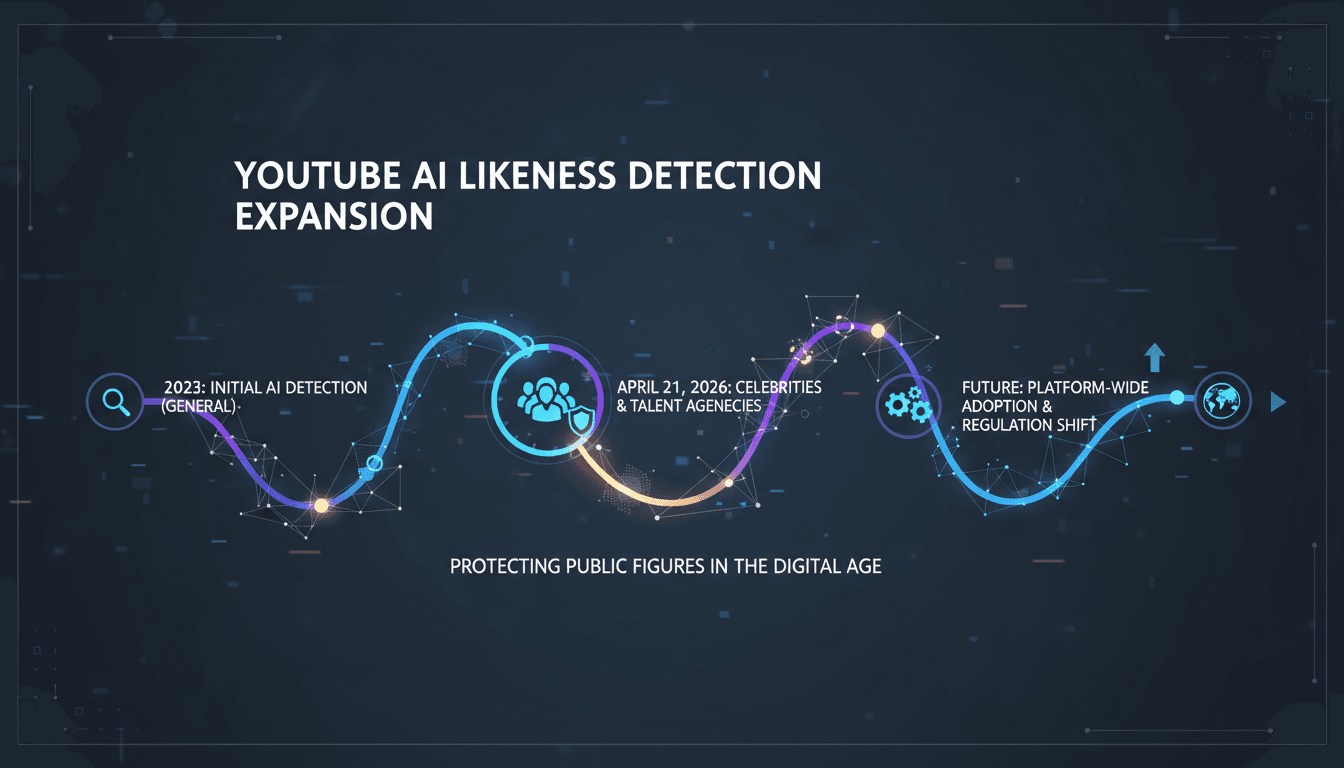
Here's what it means for you.
If you're a content creator or consumer, this technology could reshape how you engage with digital media and protect your online identity.
Why it matters
This expansion addresses the growing threat of deepfakes, enhancing digital security for public figures and potentially influencing content creation norms.
What happened (in 30 seconds)
- YouTube announced on April 21, 2026, the expansion of its AI likeness detection technology to celebrities and talent agencies.
- The tool scans newly uploaded videos for visual matches to enrolled individuals' faces, allowing rights holders to request removals for privacy violations.
- This update follows a pilot program initiated in late 2024, aimed at combating the misuse of AI-generated deepfakes.
The context you actually need
- Rising deepfake threats: The proliferation of AI-generated content has raised concerns about personal reputation, particularly in entertainment and politics.
- Previous rollouts: The technology was first tested with Creative Artists Agency (CAA) and expanded to various creators and civic leaders before reaching celebrities.
- Industry alignment: YouTube's initiative aligns with broader efforts, including support for the NO FAKES Act, aimed at regulating unauthorized AI recreations.
What's really happening
YouTube's expansion of its AI likeness detection technology is a strategic response to the increasing misuse of deepfake technology, which poses significant risks to personal and professional reputations. The tool operates similarly to YouTube's existing Content ID system, which protects copyright holders by identifying and managing unauthorized use of their content. By scanning newly uploaded videos for visual matches to enrolled individuals' faces, the technology empowers rights holders—such as celebrities, athletes, and musicians—to take action against privacy violations or unauthorized AI-generated representations.
The pilot program, which began in late 2024, was crucial for refining the technology and establishing partnerships with major talent agencies like CAA, UTA, and WME. This collaborative approach not only enhances the tool's effectiveness but also builds trust among stakeholders in the entertainment industry. The gradual rollout to various groups, including top creators and civic leaders, demonstrates YouTube's commitment to addressing the deepfake issue comprehensively.
As the technology becomes fully operational, it is expected to evolve further, with plans for audio support later in 2026. This could lead to a more robust framework for identifying and managing not just visual likenesses but also audio impersonations, thereby broadening the scope of protection for public figures.
The implications of this technology extend beyond mere protection; they signal a shift in how digital content is created and consumed. Content creators may need to adapt their strategies to navigate a landscape where AI-generated content is scrutinized more closely. Additionally, the expansion could influence consumer behavior, as audiences become more aware of the potential for deepfakes and the measures in place to combat them.
Ultimately, YouTube's initiative reflects a growing recognition of the need for digital security in an era where technology can easily blur the lines between reality and fabrication. As the platform continues to refine its tools and expand its reach, the entertainment industry and its stakeholders will need to stay vigilant and proactive in safeguarding their identities and reputations.
Who feels it first (and how)
- Celebrities and public figures: They will benefit from enhanced protection against unauthorized likeness use.
- Talent agencies: Agencies will need to adapt to new protocols for managing likeness rights.
- Content creators: They may face stricter guidelines and increased scrutiny regarding AI-generated content.
- Consumers: Increased awareness of deepfake technology could change viewing habits and trust in digital media.
What to watch next
- Adoption rates: Monitor how quickly celebrities and agencies enroll in the program, as this will indicate the technology's acceptance and effectiveness.
- Legislative developments: Watch for any new regulations or laws that may emerge in response to the deepfake issue, particularly those that could impact content creation.
- Technological advancements: Keep an eye on updates regarding audio detection capabilities, as this could further enhance the tool's utility and scope.
The technology is live and accessible to enrolled participants.
Increased enrollment from celebrities and agencies as awareness of deepfake risks grows.
The long-term impact on content creation practices and consumer trust in digital media.
Frequently Asked Questions
- Why it matters?
- This expansion addresses the growing threat of deepfakes, enhancing digital security for public figures and potentially influencing content creation norms.
- What happened (in 30 seconds)?
- YouTube announced on April 21, 2026, the expansion of its AI likeness detection technology to celebrities and talent agencies. The tool scans newly uploaded videos for visual matches to enrolled individuals' faces, allowing rights holders to request removals for privacy violations. This update follows a pilot program initiated in late 2024, aimed at combating the misuse of AI-generated deepfakes.
- What's really happening?
- YouTube's expansion of its AI likeness detection technology is a strategic response to the increasing misuse of deepfake technology, which poses significant risks to personal and professional reputations. The tool operates similarly to YouTube's existing Content ID system, which protects copyright holders by identifying and managing unauthorized use of their content. By scanning newly uploaded videos for visual matches to enrolled individuals' faces, the technology empowers rights holders—such a
- Who feels it first (and how)?
- Celebrities and public figures: They will benefit from enhanced protection against unauthorized likeness use. Talent agencies: Agencies will need to adapt to new protocols for managing likeness rights. Content creators: They may face stricter guidelines and increased scrutiny regarding AI-generated content. Consumers: Increased awareness of deepfake technology could change viewing habits and trust in digital media.
- What to watch next?
- Adoption rates: Monitor how quickly celebrities and agencies enroll in the program, as this will indicate the technology's acceptance and effectiveness. Legislative developments: Watch for any new regulations or laws that may emerge in response to the deepfake issue, particularly those that could impact content creation. Technological advancements: Keep an eye on updates regarding audio detection capabilities, as this could further enhance the tool's utility and scope.
Startup news with frequent AI coverage.
"Covers launches, funding, and product updates in AI."
— A47 Editor
YouTube expands its AI likeness detection technology to celebrities
YouTube has expanded its AI likeness detection technology specifically for celebrities, enabling them and their representatives to identify and remove deepfake content that misuses their images. This move is part of YouTube's ongoing efforts to comba...
Curated tech headlines including AI stories.
"Influential aggregator surfacing the day’s top tech/AI links."
— A47 Editor
YouTube makes its deepfake detection tool available to anyone at high risk of having their likeness abused, expanding it from public officials and politicians (Alex Weprin/The Hollywood Reporter)
YouTube has expanded its deepfake detection tool, making it accessible to individuals at high risk of having their likeness misused, beyond just public officials and politicians. This tool requires users to upload a digital replica, which will help f...