
Project World Expands Human Verification Services with Tinder Partnership
Here's what it means for you.
As digital interactions increasingly blur the lines between human and AI, understanding verification technologies becomes crucial for maintaining online safety and authenticity.
Why it matters
The rise of AI-generated content necessitates robust verification systems to protect user identities and enhance trust in digital platforms.
What happened (in 30 seconds)
- On April 17, 2026, Sam Altman's Project World announced the scaling of its human verification services, starting with Tinder.
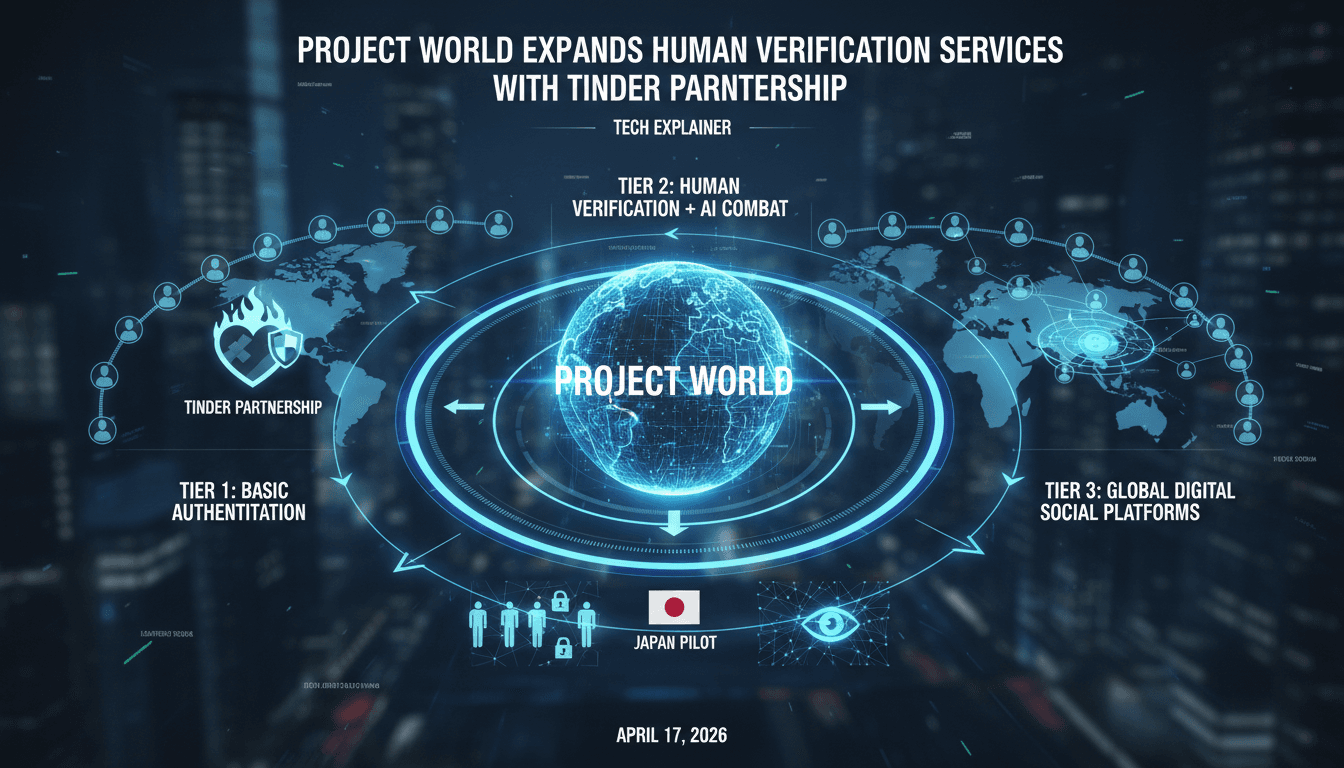
- The technology uses iris-scanning Orbs and tiered verification methods to differentiate humans from AI bots, ensuring user anonymity.
- Following a successful pilot in Japan, the initiative aims for a global rollout, addressing the growing challenges posed by AI-generated content.
The context you actually need
- Project World, founded in 2019, initially focused on creating anonymous World IDs using biometric data, pivoting to human verification amid rising AI concerns.
- The technology employs zero-knowledge proofs, allowing users to verify their identity without revealing personal information, thus enhancing privacy.
- Partnerships with major platforms like Zoom and DocuSign indicate a broader trend towards integrating verification systems across various sectors to combat deepfakes and bots.
What's really happening
Project World, originally known as Worldcoin, has evolved significantly since its inception in 2019. Initially, it aimed to create a biometric identity system that incentivized users with cryptocurrency distributions. However, as AI-generated content became more prevalent, the focus shifted towards privacy-preserving human verification. This pivot is crucial as it addresses the urgent need for distinguishing between real users and AI bots in digital interactions.
The technology at the heart of this initiative involves iris-scanning Orbs, which are designed to capture biometric data securely. This data is then processed using tiered verification methods, including NFC ID checks and device-local selfies. The highest level of verification comes from the Orb scan, which provides the most robust proof of identity. This multi-tiered approach allows users to choose their preferred level of verification based on their privacy concerns and the context of their interactions.
The integration with Tinder marks a significant milestone for Project World, as it represents the first major platform to adopt this technology following a successful pilot in Japan. By implementing profile badges that indicate verified users, Tinder aims to enhance user trust and safety, particularly in an era where deepfakes and AI-generated profiles pose significant risks. This partnership is not just about Tinder; it sets a precedent for other platforms to follow suit, potentially reshaping how online interactions are conducted across various sectors.
Moreover, the announcement has sparked discussions on social media regarding the implications of such verification technologies. While many users express concerns about privacy and the potential for misuse, others recognize the necessity of these systems in combating the rise of AI-generated content. The market response has been mixed, with the Worldcoin token experiencing a decline, reflecting investor uncertainty about the long-term viability of the project.
As Project World continues its global rollout, the implications for user privacy, digital identity, and the overall landscape of online interactions will be profound. The success of this initiative could lead to widespread adoption of similar technologies across various platforms, fundamentally altering how we engage in the digital space.
Who feels it first (and how)
- Online dating platforms: Users will experience enhanced safety and trust through verified profiles.
- Content creators and influencers: They may face increased scrutiny as verification becomes standard, impacting their authenticity.
- Privacy advocates: They will monitor the implications of biometric data usage and its effects on user anonymity.
- Tech companies: They will need to adapt to new verification standards to remain competitive and secure.
What to watch next
- User adoption rates: Monitoring how quickly users embrace verification technologies will indicate market readiness for such systems.
- Partnership expansions: The addition of more platforms adopting similar verification methods will signal a shift in industry standards.
- Regulatory responses: Watch for potential regulations regarding biometric data usage and privacy, which could impact implementation strategies.
Project World is expanding its human verification services globally, starting with Tinder.
Other platforms will follow Tinder's lead in adopting similar verification technologies.
The long-term market impact of these verification systems on user behavior and platform dynamics remains to be seen.
Frequently Asked Questions
- Why it matters?
- The rise of AI-generated content necessitates robust verification systems to protect user identities and enhance trust in digital platforms.
- What happened (in 30 seconds)?
- On April 17, 2026, Sam Altman's Project World announced the scaling of its human verification services, starting with Tinder. The technology uses iris-scanning Orbs and tiered verification methods to differentiate humans from AI bots, ensuring user anonymity. Following a successful pilot in Japan, the initiative aims for a global rollout, addressing the growing challenges posed by AI-generated content.
- What's really happening?
- Project World, originally known as Worldcoin, has evolved significantly since its inception in 2019. Initially, it aimed to create a biometric identity system that incentivized users with cryptocurrency distributions. However, as AI-generated content became more prevalent, the focus shifted towards privacy-preserving human verification. This pivot is crucial as it addresses the urgent need for distinguishing between real users and AI bots in digital interactions. The technology at the heart of
- Who feels it first (and how)?
- Online dating platforms: Users will experience enhanced safety and trust through verified profiles. Content creators and influencers: They may face increased scrutiny as verification becomes standard, impacting their authenticity. Privacy advocates: They will monitor the implications of biometric data usage and its effects on user anonymity. Tech companies: They will need to adapt to new verification standards to remain competitive and secure.
- What to watch next?
- User adoption rates: Monitoring how quickly users embrace verification technologies will indicate market readiness for such systems. Partnership expansions: The addition of more platforms adopting similar verification methods will signal a shift in industry standards. Regulatory responses: Watch for potential regulations regarding biometric data usage and privacy, which could impact implementation strategies.
Startup news with frequent AI coverage.
"Covers launches, funding, and product updates in AI."
— A47 Editor
Sam Altman’s project World looks to scale its human verification empire. First stop: Tinder.
Sam Altman's project World is set to expand its human verification services, beginning with a partnership with Tinder, which aims to enhance user safety and trust through anonymous verification methods. This initiative is part of World’s broader stra...
Opinionated AI coverage for general audiences.
"TNW’s AI vertical covering tools, ethics, and trends."
— A47 Editor
Zoom partners with Sam Altman’s World to verify that meeting participants are actually human
Zoom has partnered with World, a biometric identity company founded by Sam Altman, to implement a new feature that verifies meeting participants as human using World’s Deep Face technology. This technology cross-references iris-scanned biometric prof...
Covers blockchain, cryptocurrency news, project analysis, and market insights.
"CoinDesk is a well-established cryptocurrency and blockchain news provider, offering comprehensive insights, market data, and industry research."
— A47 Editor
Sam Altman’s World project launches major upgrade to fight deepfakes and bots
Sam Altman's World project has launched a significant upgrade aimed at combating deepfakes and bots, while also expanding partnerships with major platforms like Tinder, Zoom, and Docusign. This initiative is part of a broader strategy to enhance the ...
Consumer technology news with AI coverage.
"Gadget and tech site reporting on AI in products."
— A47 Editor
Sam Altman's 'human verification' company thinks its eye-scanning orbs could solve ticket scalping
Sam Altman's identity verification startup, Tools for Humanity, has introduced a new feature called Concert Kit, which utilizes eye-scanning orbs to create a 'proof of human' signature. This innovation aims to combat ticket scalping by ensuring that ...
Covers consumer technology, electronics, gadgets, and product reviews.
"Engadget is a trusted source for gadget reviews and consumer tech news, known for its hands-on analysis and industry coverage."
— A47 Editor
Sam Altman's 'human verification' company thinks its eye-scanning orbs could solve ticket scalping
Sam Altman's identity verification startup, Tools for Humanity, has introduced a new feature called Concert Kit, which utilizes eye-scanning orbs to create a 'proof of human' signature. This innovation aims to combat ticket scalping by ensuring that ...
Startup news with frequent AI coverage.
"Covers launches, funding, and product updates in AI."
— A47 Editor
Zoom teams up with World to verify humans in meetings
Zoom has partnered with World, a human ID verification company founded by Sam Altman, to ensure that meeting participants are verified as human, displaying a badge on confirmed attendees' tiles. This initiative aims to combat the rise of AI-generated...