
Iran Condemns Israeli Airstrikes on Lebanon as Threat to US Negotiations
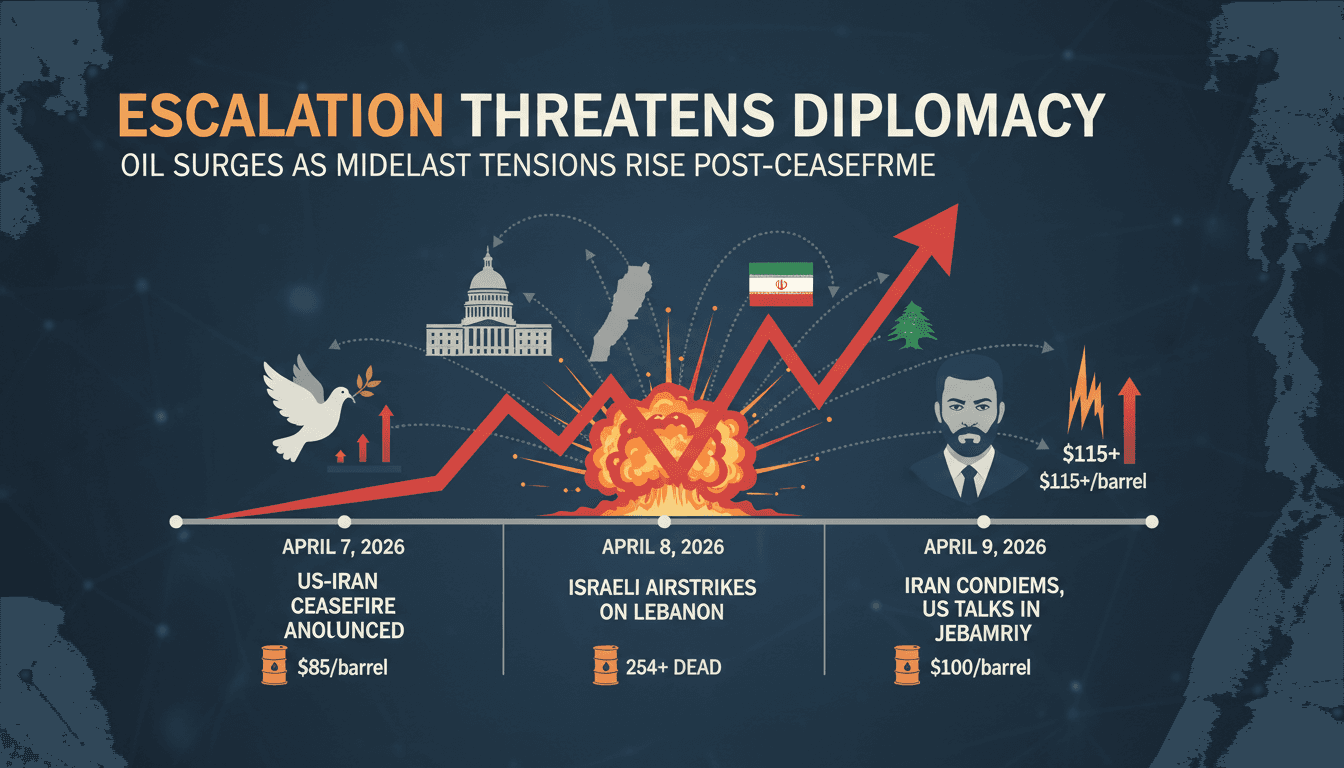
Here's what it means for you.
The escalating tensions in the Middle East could impact global oil prices and supply chains, affecting your cost of living.
Why it matters
The ongoing conflict threatens to destabilize a key region, influencing global markets and international relations.
What happened (in 30 seconds)
- Iranian President Masoud Pezeshkian condemned Israeli airstrikes on Lebanon, stating they violate a ceasefire and jeopardize US negotiations.
- 254 people were killed in the April 8 airstrikes, marking one of the deadliest days in Lebanon amid rising regional tensions.
- Iran closed the Strait of Hormuz, a critical shipping route, in response to the strikes, further escalating the situation.
The context you actually need
- US-Iran tensions have escalated in 2026, with direct strikes occurring between the two nations, culminating in a fragile ceasefire brokered by Pakistan.
- Israel's military campaign against Hezbollah in Lebanon is viewed by Iran as an attack on its regional influence, complicating the ceasefire dynamics.
- Lebanon's urgent complaint to the UN Security Council highlights the international ramifications of the conflict, as global leaders call for de-escalation.
What's really happening
The recent Israeli airstrikes on Lebanon represent a significant escalation in the ongoing conflict between Israel and Hezbollah, which is backed by Iran. On April 8, 2026, Israel launched its largest wave of airstrikes, targeting over 100 sites associated with Hezbollah, resulting in 254 fatalities and 1,000 injuries. This military action occurred just hours after a tentative US-Iran ceasefire was announced, brokered by Pakistan, which aimed to reduce hostilities in the region.
Iran's response to the airstrikes was swift and severe. President Pezeshkian's remarks emphasized that these actions not only violate the ceasefire agreement but also render any ongoing negotiations with the United States meaningless. This reflects Iran's commitment to its allies in Lebanon and its broader strategy in the region, which is centered around maintaining influence over the so-called "axis of resistance" against Israel and the US.
The closure of the Strait of Hormuz by Iran is a critical move, as this waterway is responsible for approximately 20% of the world's oil supply. Disruptions here can lead to significant increases in global oil prices, which have already surged by over 10% in response to the recent tensions. This has direct implications for economies worldwide, particularly for countries reliant on oil imports, including those in the Gulf region and beyond.
The Israeli airstrikes and Iran's subsequent threats highlight the fragile nature of the current ceasefire and the potential for further escalation. The ongoing conflict not only affects the immediate region but also has far-reaching consequences for global markets, particularly in energy and trade. As tensions rise, the international community is watching closely, with calls for de-escalation becoming increasingly urgent.
Who feels it first (and how)
- Oil consumers: Rising fuel prices will directly impact households and businesses, increasing living costs.
- Shipping and logistics companies: Disruptions in the Strait of Hormuz could lead to delays and increased shipping costs.
- Investors: Volatility in oil markets may affect stock prices and investment strategies, particularly in energy sectors.
What to watch next
- Oil price fluctuations: Monitor how global oil prices react to ongoing tensions, as further increases could impact economic stability.
- US diplomatic efforts: Watch for any changes in US negotiations with Iran, especially regarding the ceasefire and regional stability.
- Military actions: Keep an eye on Israeli and Iranian military movements, as escalations could lead to broader conflict.
The airstrikes have resulted in significant casualties and heightened tensions in the region.
Oil prices will continue to rise if the conflict escalates, affecting global markets.
The long-term impact on US-Iran relations and the effectiveness of the ceasefire remains uncertain.
Frequently Asked Questions
- Why it matters?
- The ongoing conflict threatens to destabilize a key region, influencing global markets and international relations.
- What happened (in 30 seconds)?
- Iranian President Masoud Pezeshkian condemned Israeli airstrikes on Lebanon, stating they violate a ceasefire and jeopardize US negotiations. 254 people were killed in the April 8 airstrikes, marking one of the deadliest days in Lebanon amid rising regional tensions. Iran closed the Strait of Hormuz, a critical shipping route, in response to the strikes, further escalating the situation.
- What's really happening?
- The recent Israeli airstrikes on Lebanon represent a significant escalation in the ongoing conflict between Israel and Hezbollah, which is backed by Iran. On April 8, 2026, Israel launched its largest wave of airstrikes, targeting over 100 sites associated with Hezbollah, resulting in 254 fatalities and 1,000 injuries. This military action occurred just hours after a tentative US-Iran ceasefire was announced, brokered by Pakistan, which aimed to reduce hostilities in the region. Iran's response
- Who feels it first (and how)?
- Oil consumers: Rising fuel prices will directly impact households and businesses, increasing living costs. Shipping and logistics companies: Disruptions in the Strait of Hormuz could lead to delays and increased shipping costs. Investors: Volatility in oil markets may affect stock prices and investment strategies, particularly in energy sectors.
- What to watch next?
- Oil price fluctuations: Monitor how global oil prices react to ongoing tensions, as further increases could impact economic stability. US diplomatic efforts: Watch for any changes in US negotiations with Iran, especially regarding the ceasefire and regional stability. Military actions: Keep an eye on Israeli and Iranian military movements, as escalations could lead to broader conflict.
Arabic-language UAE newspaper coverage focused on domestic affairs, public institutions, business, society, and regional developments.
"Al Khaleej coverage generally reflects a mainstream UAE editorial lens with strong attention to public affairs, institutions, and regional developments."
— A47 Editor
إيران: استمرار الغارات على لبنان سيعقد المفاوضات
Iranian President Masoud Pezeshkian stated on Thursday that the continuation of Israeli airstrikes on Lebanon will complicate negotiations in the region. This statement highlights the escalating tensions and the potential impact of military actions o...
English-language reporting on Saudi politics, policy, and society.
"Saudi Gazette reflects mainstream Saudi institutional perspectives."
— A47 Editor
Iran's Pezeshkian says Israel attacks on Lebanon render ceasefire ‘meaningless’
Iran's President Masoud Pezeshkian stated that Israeli airstrikes on Lebanon violate the ceasefire agreement, rendering any negotiations meaningless. This statement follows Israel's heaviest attacks on Lebanon since the conflict with Hezbollah began,...
Capitol Hill news, legislation, and policy insight.
"The Hill specializes in U.S. politics and policy, with a focus on Capitol Hill developments and a reputation for insider reporting."
— A47 Editor
Iranian president: Continued Israeli attacks on Lebanon would render ceasefire talks 'meaningless'
Iranian President Masoud Pezeshkian stated that ongoing Israeli airstrikes on Lebanon violate a recently established ceasefire between the U.S. and Iran, rendering negotiations meaningless. He condemned the Israeli actions as a blatant disregard for ...