
Trump Issues Ultimatum to Iran Over Strait of Hormuz Closure
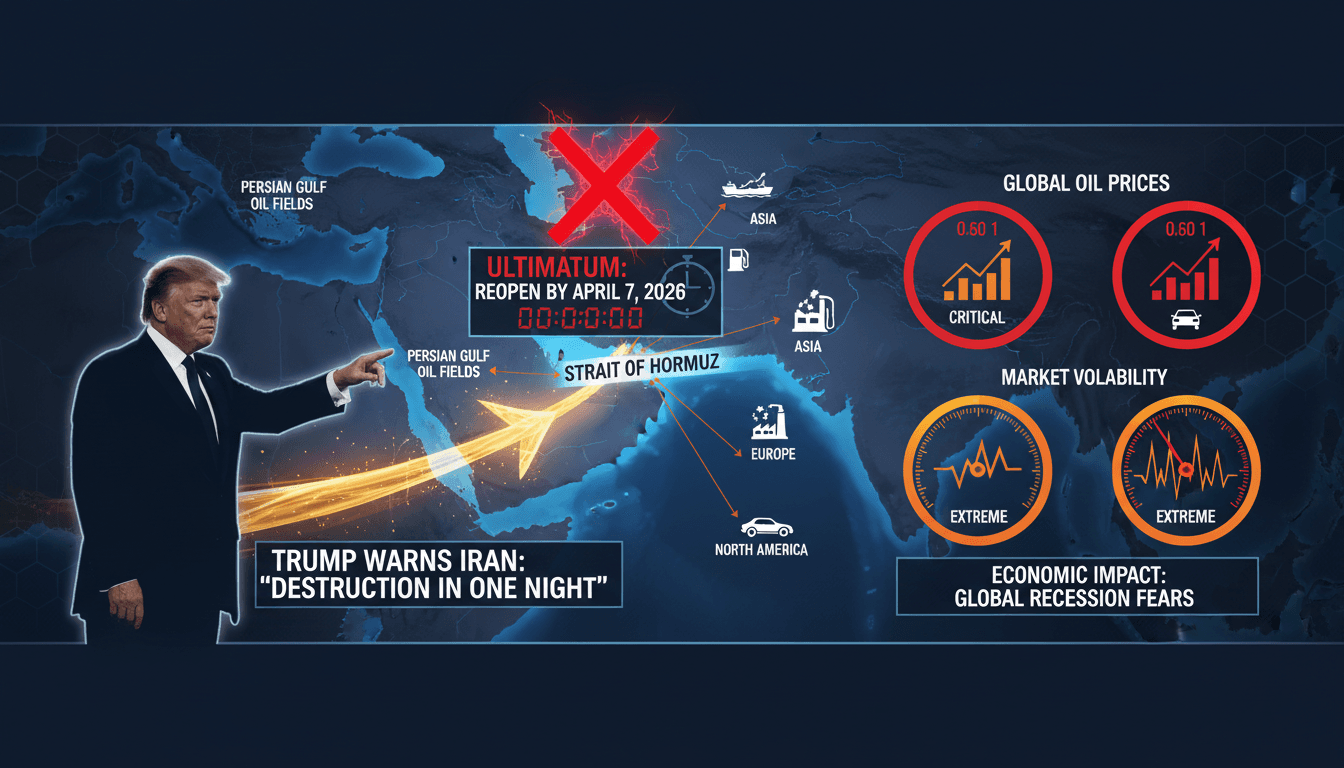
Here's what it means for you.
Rising oil prices and potential supply disruptions could impact your cost of living and business operations.
Why it matters
The Strait of Hormuz is a critical chokepoint for global oil supply, and its closure could lead to significant economic repercussions worldwide.
What happened (in 30 seconds)
- On April 6, 2026, President Donald Trump threatened Iran with destruction unless it reopened the Strait of Hormuz by April 7.
- This ultimatum follows a series of escalating tensions that began with US-Israeli strikes on Iran in late February, leading to Iran's closure of the strait.
- Oil prices surged, with West Texas Intermediate crude reaching $113.46 per barrel amid fears of further conflict and supply disruptions.
The context you actually need
- The US-Iran conflict escalated after joint US-Israeli military strikes targeted Iranian military infrastructure, prompting Iran to retaliate by closing the Strait of Hormuz.
- The Strait of Hormuz is vital for global energy, handling approximately 20% of the world's oil consumption; its closure could severely disrupt supply chains.
- Trump's ultimatum is not new; it follows multiple deadlines and threats since March, reflecting a pattern of escalating military rhetoric and economic pressure.
What's really happening
The current crisis stems from a complex interplay of military aggression, economic interests, and geopolitical strategy. The US and Israel initiated strikes against Iran on February 28, 2026, targeting key military assets. This aggressive posture was met with a swift Iranian response, effectively closing the Strait of Hormuz by early March. The strait is crucial for global oil transport, with around 20% of the world's oil passing through it daily.
As tensions escalated, President Trump issued a series of ultimatums, demanding the reopening of the strait or facing military action. His latest threat on April 6, 2026, where he claimed Iran could be "taken out in one night," underscores the urgency and volatility of the situation. The implications of this ultimatum extend beyond military considerations; they touch on global energy markets, economic stability, and international relations.
The closure of the Strait of Hormuz has already led to significant disruptions in oil supply, with tanker traffic plummeting from pre-war levels of 20 million barrels per day to less than 2. This drastic reduction has caused oil prices to spike, with West Texas Intermediate crude futures rising to $113.46 per barrel. For countries reliant on oil imports, particularly those in the Gulf region, this translates into increased fuel costs and economic uncertainty.
Moreover, the UAE and other Gulf states are closely monitoring the situation, exploring alternative routes and energy pipelines to bypass the strait. This reflects a broader trend of regional states seeking to mitigate their dependence on a single chokepoint, which could reshape energy logistics in the Middle East.
As the deadline approaches, the potential for military action looms large, creating a precarious situation for global markets. The interplay of military threats and economic sanctions creates a feedback loop that exacerbates tensions and drives up prices, impacting consumers and businesses alike.
Who feels it first (and how)
- Consumers: Increased fuel prices will directly affect household budgets and transportation costs.
- Businesses: Companies reliant on oil and energy will face higher operational costs, potentially leading to increased prices for goods and services.
- Investors: Volatility in energy markets could impact investment portfolios, particularly those focused on energy stocks or commodities.
- Gulf states: Countries in the region will experience heightened economic uncertainty and may need to adapt their energy strategies.
What to watch next
- Oil price fluctuations: Continued volatility in oil prices will indicate market reactions to the unfolding situation and could signal broader economic impacts.
- Negotiation developments: Progress in indirect negotiations between the US and Iran could either de-escalate tensions or lead to further conflict.
- Military movements: Any significant military actions or troop deployments in the region will be critical indicators of how the situation may evolve.
The Strait of Hormuz is a critical chokepoint for global oil supply, and its closure has already impacted oil prices.
Continued volatility in energy markets and rising fuel costs will affect consumers and businesses globally.
The outcome of negotiations or military actions remains uncertain, with potential for both escalation and resolution.
Frequently Asked Questions
- Why it matters?
- The Strait of Hormuz is a critical chokepoint for global oil supply, and its closure could lead to significant economic repercussions worldwide.
- What happened (in 30 seconds)?
- On April 6, 2026, President Donald Trump threatened Iran with destruction unless it reopened the Strait of Hormuz by April 7. This ultimatum follows a series of escalating tensions that began with US-Israeli strikes on Iran in late February, leading to Iran's closure of the strait. Oil prices surged, with West Texas Intermediate crude reaching $113.46 per barrel amid fears of further conflict and supply disruptions.
- What's really happening?
- The current crisis stems from a complex interplay of military aggression, economic interests, and geopolitical strategy. The US and Israel initiated strikes against Iran on February 28, 2026, targeting key military assets. This aggressive posture was met with a swift Iranian response, effectively closing the Strait of Hormuz by early March. The strait is crucial for global oil transport, with around 20% of the world's oil passing through it daily. As tensions escalated, President Trump issued
- Who feels it first (and how)?
- Consumers: Increased fuel prices will directly affect household budgets and transportation costs. Businesses: Companies reliant on oil and energy will face higher operational costs, potentially leading to increased prices for goods and services. Investors: Volatility in energy markets could impact investment portfolios, particularly those focused on energy stocks or commodities. Gulf states: Countries in the region will experience heightened economic uncertainty and may need to adapt their
- What to watch next?
- Oil price fluctuations: Continued volatility in oil prices will indicate market reactions to the unfolding situation and could signal broader economic impacts. Negotiation developments: Progress in indirect negotiations between the US and Iran could either de-escalate tensions or lead to further conflict. Military movements: Any significant military actions or troop deployments in the region will be critical indicators of how the situation may evolve.
Editor-curated FT homepage stories spanning markets, business, world, and opinion.
"The Financial Times is a globally respected business publication with a centrist/center-left tone and strong markets focus."
— A47 Editor
Trump says US could destroy Iran ‘in one night’ as he demands opening of Hormuz
President Donald Trump has intensified threats against Iran, stating that the U.S. could destroy the country 'in one night' if Tehran does not agree to reopen the Strait of Hormuz by a set deadline. This ultimatum comes amid rising tensions following...
Corporate leadership, finance, technology, and market trends.
"Fortune covers financial trends, leadership, and innovation with a pragmatic editorial approach."
— A47 Editor
Trump threatens to ‘take out’ all of Iran in one night. From blackout bombs to ‘discombobulators,’ here’s what that could actually mean
President Donald Trump has escalated tensions with Iran by threatening to 'take out' the country in one night, suggesting a potential increase in military action. This statement comes amid ongoing conflicts and heightened rhetoric surrounding the Str...
European coverage of Middle East politics and security issues.
"France 24 offers international reporting with a European editorial perspective."
— A47 Editor
Trump says Iran could be 'taken out' on Tuesday
U.S. President Donald Trump warned that Iran could be 'taken out' in a single night, suggesting that military action could occur as soon as Tuesday if Tehran does not agree to a deal by then. This statement reflects escalating tensions between the U....
24/7 international news from a French perspective in multiple languages.
"France 24 is viewed as a globally focused outlet with balanced coverage and a European perspective."
— A47 Editor
Trump says Iran could be 'taken out' on Tuesday
U.S. President Donald Trump warned that Iran could be 'taken out' in a single night, suggesting that military action could occur as soon as Tuesday if Tehran does not agree to a deal by then. This statement reflects escalating tensions between the U....
National headlines across the United States including breaking stories and societal issues.
"NBC News is a mainstream media outlet known for comprehensive national and international news coverage with a centrist to slightly left-leaning editorial tone."
— A47 Editor
Trump says Iran 'can be taken out in one night'
President Trump stated that Iran 'can be taken out in one night' during a recent news conference, suggesting that military action against the country could occur imminently. This statement underscores the escalating tensions between the U.S. and Iran...
Global markets, investing, and macroeconomics from a premier financial newsroom.
"Bloomberg is respected for in-depth financial reporting and data-driven analysis."
— A47 Editor
Trump Says Iran Can Be Taken Out in One Night, Maybe Tomorrow
President Donald Trump stated during a news conference in Washington, D.C. that Iran could be taken out in one night, suggesting a potential escalation in military action against the country. This remark comes amid ongoing tensions and threats relate...
Conservative-leaning political and national coverage.
"The Washington Times is a conservative-leaning newspaper known for its political coverage and advocacy of right-of-center viewpoints."
— A47 Editor
Trump says U.S. could wipe out Iran 'tomorrow night'
President Trump stated that the U.S. military could eliminate Iran in a single day, intensifying his rhetoric as he set a deadline for Tehran to negotiate or face severe military action. This statement aligns with ongoing tensions surrounding Iran's ...
Conservative-leaning coverage of current events.
"Fox News is a highly influential conservative news outlet known for right-leaning political commentary and coverage."
— A47 Editor
Trump touts airman rescue mission, boasts Iran could be 'taken out in 1 night'
President Trump praised the successful rescue of U.S. airmen shot down over Iran, calling the operation 'very historic' and warning that Iran could be 'taken out' swiftly. The rescue involved a coordinated effort by U.S. forces and the CIA, highlight...
International coverage of politics, security, and social issues.
"Global News is a mainstream Canadian outlet with a centrist editorial stance, focusing on factual reporting."
— A47 Editor
Trump: ‘Iran can be taken out in one night,’ could happen Tuesday
President Trump stated at a White House news conference that Iran could be eliminated in a single night, suggesting that this could occur as soon as Tuesday. This statement reflects the heightened tensions between the U.S. and Iran amid ongoing milit...
News from the United States including domestic politics, society, and culture.
"Global News is a mainstream Canadian media outlet generally considered to have a centrist editorial stance, covering news with a focus on factual reporting and national interest."
— A47 Editor
Trump: ‘Iran can be taken out in one night,’ could happen Tuesday
President Trump stated at a White House news conference that Iran could be eliminated in a single night, suggesting that this could occur as soon as Tuesday. This statement reflects the heightened tensions between the U.S. and Iran amid ongoing milit...