
Iran Warns Israeli Airstrikes on Lebanon Threaten US-Iran Ceasefire Negotiations
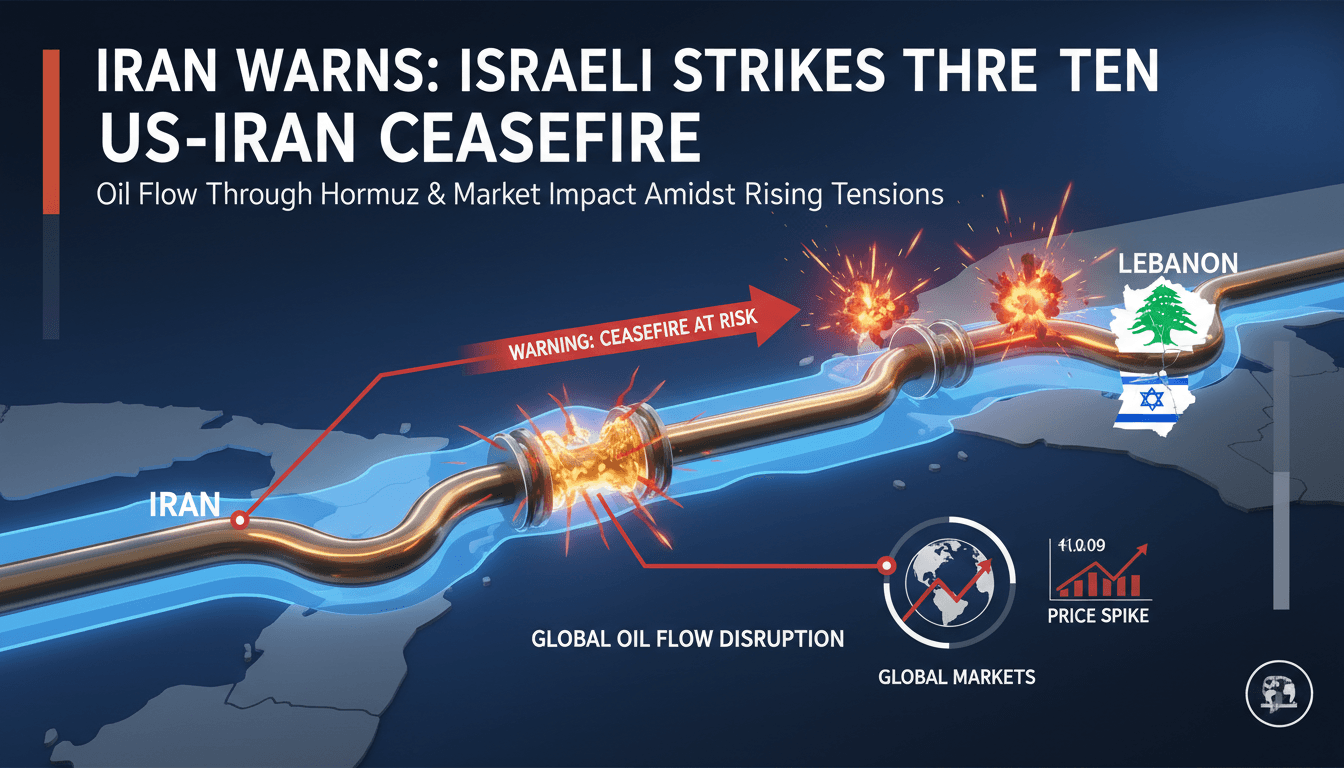
Here's what it means for you.
The ongoing conflict in the Middle East could disrupt global oil markets and impact fuel prices in your region.
Why it matters
The escalation of violence in Lebanon threatens to destabilize the fragile ceasefire between the US and Iran, affecting international diplomatic relations and economic stability.
What happened (in 30 seconds)
- Iranian President Masoud Pezeshkian warned that Israeli airstrikes on Lebanon violate a US-Iran ceasefire agreement and jeopardize upcoming negotiations.
- Israeli strikes on April 8 resulted in at least 254 civilian deaths, intensifying tensions in the region.
- Iran responded by closing the Strait of Hormuz, a critical shipping route, and issuing threats of retaliation against Israel.
The context you actually need
- The 2026 US-Iran War escalated following the assassination of Iran's Supreme Leader, prompting Hezbollah's involvement and increasing regional tensions.
- A two-week ceasefire was brokered by Pakistan on April 8, but it excluded Israeli operations against Hezbollah, leading to disputes over its scope.
- Iran's support for Lebanon is a strategic move to maintain influence in the region and counter Israeli actions, complicating US diplomatic efforts.
What's really happening
The recent Israeli airstrikes on Lebanon mark a significant escalation in the ongoing conflict that has roots in the broader US-Iran tensions. On April 8, 2026, a ceasefire was brokered, aiming to halt direct hostilities between the US and Iran. However, the agreement did not encompass Israeli military operations against Hezbollah, which Iran considers an ally. This exclusion has led to a precarious situation where Israel feels empowered to act against what it perceives as a direct threat from Hezbollah, while Iran sees these actions as a violation of the ceasefire.
The airstrikes on April 8 targeted over 100 Hezbollah sites, resulting in a reported 254 civilian fatalities, according to Lebanese sources. This level of violence not only exacerbates the humanitarian crisis in Lebanon but also serves to galvanize Iranian support for Hezbollah, reinforcing Iran's commitment to its allies in the region. President Pezeshkian's warning on social media reflects a broader strategy by Iran to position itself as a defender of Lebanon, thereby increasing its influence and credibility among its regional allies.
The closure of the Strait of Hormuz by Iran is a critical move that signals its willingness to escalate tensions further. This strait is a vital artery for global oil shipments, and any disruption can have immediate repercussions on oil prices and shipping routes. The Iranian Revolutionary Guard Corps (IRGC) has threatened a "regret-inducing response" to continued Israeli actions, indicating that the situation could spiral into a larger conflict involving multiple actors.
The US, while attempting to mediate and maintain a semblance of order, faces a complex diplomatic landscape. Vice President Vance's comments about a "misunderstanding" regarding the ceasefire's terms highlight the challenges in negotiating peace in a region fraught with historical grievances and competing interests. The UN's condemnation of the Israeli strikes as "appalling" further complicates the diplomatic narrative, as global powers grapple with the implications of these actions.
As tensions rise, the potential for a broader conflict looms, with implications for global security and economic stability. The situation remains fluid, with each side weighing its options carefully, knowing that any misstep could lead to widespread consequences.
Who feels it first (and how)
- Global oil consumers: Rising fuel prices due to potential disruptions in oil supply from the Strait of Hormuz.
- Businesses reliant on stable Middle Eastern relations: Increased costs and uncertainties affecting trade and investment.
- Residents in the UAE and surrounding regions: Heightened security alerts and potential impacts on daily life due to regional instability.
What to watch next
- Negotiations in Islamabad: The outcome of US-Iran talks will indicate whether a more stable ceasefire can be achieved or if tensions will escalate further.
- Israeli military operations: Continued strikes against Hezbollah could provoke a stronger Iranian response, affecting regional dynamics.
- Oil market fluctuations: Watch for changes in oil prices as the situation develops, particularly in response to any disruptions in the Strait of Hormuz.
Israeli airstrikes on Lebanon have resulted in significant civilian casualties and heightened tensions.
Iran will continue to support Hezbollah and may escalate its military posture in response to Israeli actions.
The long-term implications for US-Iran relations and the effectiveness of the ceasefire negotiations remain uncertain.
Frequently Asked Questions
- Why it matters?
- The escalation of violence in Lebanon threatens to destabilize the fragile ceasefire between the US and Iran, affecting international diplomatic relations and economic stability.
- What happened (in 30 seconds)?
- Iranian President Masoud Pezeshkian warned that Israeli airstrikes on Lebanon violate a US-Iran ceasefire agreement and jeopardize upcoming negotiations. Israeli strikes on April 8 resulted in at least 254 civilian deaths, intensifying tensions in the region. Iran responded by closing the Strait of Hormuz, a critical shipping route, and issuing threats of retaliation against Israel.
- What's really happening?
- The recent Israeli airstrikes on Lebanon mark a significant escalation in the ongoing conflict that has roots in the broader US-Iran tensions. On April 8, 2026, a ceasefire was brokered, aiming to halt direct hostilities between the US and Iran. However, the agreement did not encompass Israeli military operations against Hezbollah, which Iran considers an ally. This exclusion has led to a precarious situation where Israel feels empowered to act against what it perceives as a direct threat from H
- Who feels it first (and how)?
- Global oil consumers: Rising fuel prices due to potential disruptions in oil supply from the Strait of Hormuz. Businesses reliant on stable Middle Eastern relations: Increased costs and uncertainties affecting trade and investment. Residents in the UAE and surrounding regions: Heightened security alerts and potential impacts on daily life due to regional instability.
- What to watch next?
- Negotiations in Islamabad: The outcome of US-Iran talks will indicate whether a more stable ceasefire can be achieved or if tensions will escalate further. Israeli military operations: Continued strikes against Hezbollah could provoke a stronger Iranian response, affecting regional dynamics. Oil market fluctuations: Watch for changes in oil prices as the situation develops, particularly in response to any disruptions in the Strait of Hormuz.
Arabic-language UAE newspaper coverage focused on domestic affairs, public institutions, business, society, and regional developments.
"Al Khaleej coverage generally reflects a mainstream UAE editorial lens with strong attention to public affairs, institutions, and regional developments."
— A47 Editor
إيران: استمرار الغارات على لبنان سيعقد المفاوضات
Iranian President Masoud Pezeshkian stated on Thursday that the continuation of Israeli airstrikes on Lebanon will complicate negotiations in the region. This statement highlights the escalating tensions and the potential impact of military actions o...
English-language reporting on Saudi politics, policy, and society.
"Saudi Gazette reflects mainstream Saudi institutional perspectives."
— A47 Editor
Iran's Pezeshkian says Israel attacks on Lebanon render ceasefire ‘meaningless’
Iran's President Masoud Pezeshkian stated that Israeli airstrikes on Lebanon violate the ceasefire agreement, rendering any negotiations meaningless. This statement follows Israel's heaviest attacks on Lebanon since the conflict with Hezbollah began,...
Capitol Hill news, legislation, and policy insight.
"The Hill specializes in U.S. politics and policy, with a focus on Capitol Hill developments and a reputation for insider reporting."
— A47 Editor
Iranian president: Continued Israeli attacks on Lebanon would render ceasefire talks 'meaningless'
Iranian President Masoud Pezeshkian stated that ongoing Israeli airstrikes on Lebanon violate a recently established ceasefire between the U.S. and Iran, rendering negotiations meaningless. He condemned the Israeli actions as a blatant disregard for ...