
Israeli Official Confirms No Ceasefire in Lebanon Amid Ongoing Airstrikes and Negotiations
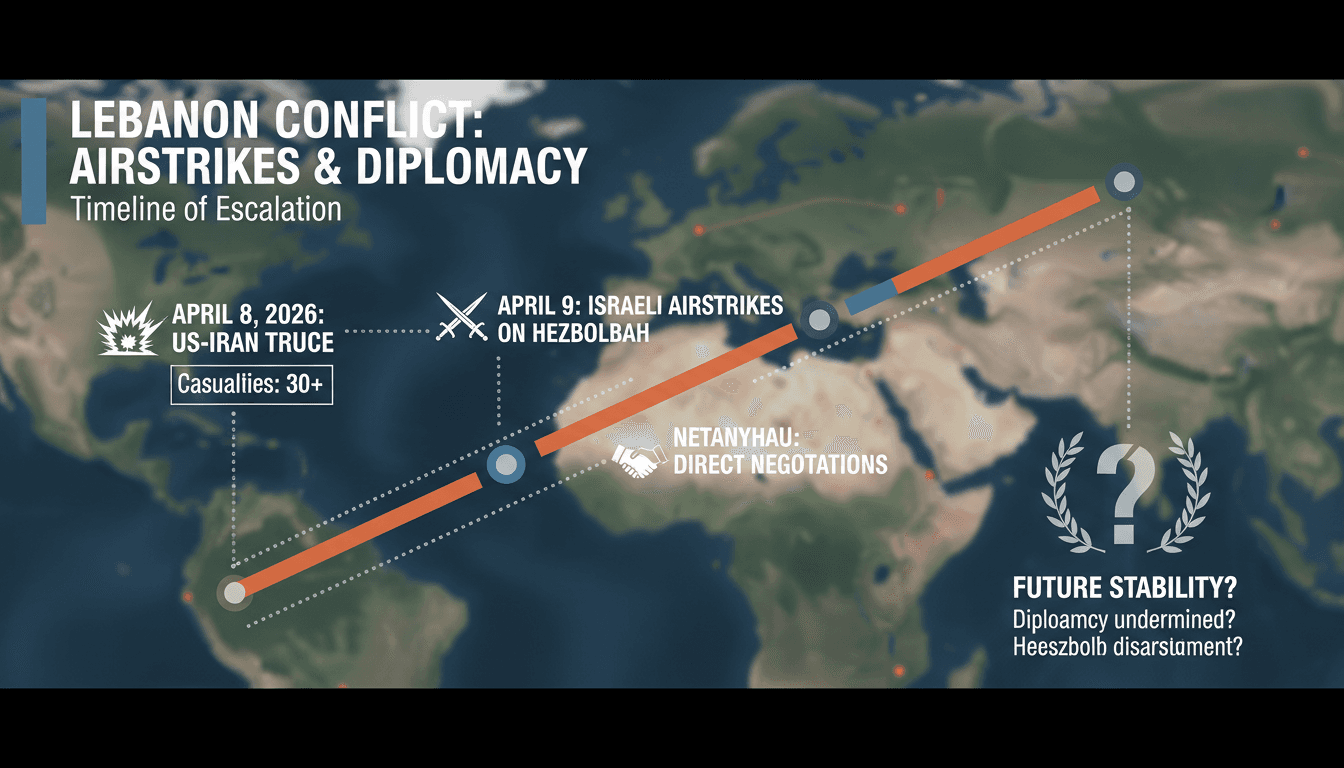
Here's what it means for you.
If you’re in the Middle East or involved in global energy markets, the escalating conflict could impact fuel prices and regional stability.
Why it matters
The ongoing military actions and diplomatic negotiations are critical to understanding the future of US-Iran relations and regional security dynamics.
What happened (in 30 seconds)
- Israeli airstrikes on April 8, 2026, killed at least 254 people in Lebanon, targeting Hezbollah infrastructure.
- Prime Minister Netanyahu announced direct negotiations with Lebanon, focusing on disarming Hezbollah, despite ongoing military actions.
- Iran's involvement in US-led discussions is jeopardized as it demands a ceasefire in Lebanon before participating.
The context you actually need
- Escalation of conflict: The 2026 Lebanon war intensified following Hezbollah's infrastructure rebuilding and ceasefire violations, leading to significant casualties.
- US-Iran truce: A two-week truce was established on April 8, 2026, but excluded Lebanon, complicating Iran's position in negotiations.
- Regional implications: The conflict is affecting oil prices and could disrupt international trade routes, especially through the Strait of Hormuz.
What's really happening
On April 8, 2026, Israel launched a series of airstrikes across Lebanon, marking a significant escalation in the ongoing conflict with Hezbollah. The strikes, which reportedly involved over 100 attacks in just 10 minutes, resulted in at least 254 fatalities and over 1,100 injuries, according to Lebanese civil defense sources. These military actions were executed just hours after a US-Iran truce was announced, which explicitly excluded Lebanon from its terms.
Prime Minister Benjamin Netanyahu's government is under pressure to address Hezbollah's military capabilities and secure its northern border, especially in light of over 1,800 Lebanese deaths since the conflict reignited in early 2026. The Israeli strikes targeted key Hezbollah sites, including weapon depots and leadership figures, such as Ali Youssef Kharshi, an aide to Hezbollah leader Naim Qassem, who was killed in Beirut.
In a twist, Netanyahu announced that direct negotiations with Lebanon would commence "as soon as possible," aimed at disarming Hezbollah. However, a senior Israeli official quickly clarified that there would be "no ceasefire in Lebanon," indicating that military operations would continue despite the diplomatic overtures. This contradiction raises questions about the sincerity and feasibility of the negotiations, especially as Iran has expressed that it will not engage in US-mediated talks without a halt to Israeli attacks.
The situation is further complicated by the geopolitical landscape, where Iran’s support for Hezbollah is crucial. Iran's President Masoud Pezeshkian dismissed the negotiations as "meaningless" in light of the ongoing strikes, highlighting the tensions between military actions and diplomatic efforts. The US, represented by Ambassador Michel Issa, is caught in the middle, trying to mediate a resolution while ensuring Israel's security concerns are addressed.
The ramifications of this conflict extend beyond immediate military concerns. The volatility in the region has already led to spikes in oil prices, nearing $100 per barrel, as fears mount over potential disruptions in the Strait of Hormuz. For Dubai residents, this translates into rising fuel costs and potential disruptions in travel and commerce, as previous regional strikes have led to airspace closures.
Who feels it first (and how)
- Middle Eastern governments: Increased military and diplomatic pressures will strain resources and influence regional stability.
- Energy sector stakeholders: Rising oil prices will impact profits and operational costs, especially for those reliant on stable supply chains.
- Travel and tourism industries: Disruptions in air travel due to regional conflicts could lead to significant economic losses.
What to watch next
- Iran's response: Monitor Iran's public statements and military actions in response to Israeli strikes, as they will indicate the potential for further escalation or diplomatic engagement.
- US diplomatic efforts: Watch for developments in US-led negotiations involving Lebanon and Iran, as any breakthrough or failure will have significant implications for regional stability.
- Oil market fluctuations: Keep an eye on oil prices as tensions evolve, particularly regarding supply chain disruptions through the Strait of Hormuz.
Israeli airstrikes are ongoing, and negotiations with Lebanon are scheduled to begin next week.
Iran will continue to support Hezbollah and may escalate its rhetoric or military actions in response to Israeli strikes.
The outcome of the upcoming negotiations and whether they can lead to a de-escalation of hostilities.
Frequently Asked Questions
- Why it matters?
- The ongoing military actions and diplomatic negotiations are critical to understanding the future of US-Iran relations and regional security dynamics.
- What happened (in 30 seconds)?
- Israeli airstrikes on April 8, 2026, killed at least 254 people in Lebanon, targeting Hezbollah infrastructure. Prime Minister Netanyahu announced direct negotiations with Lebanon, focusing on disarming Hezbollah, despite ongoing military actions. Iran's involvement in US-led discussions is jeopardized as it demands a ceasefire in Lebanon before participating.
- What's really happening?
- On April 8, 2026, Israel launched a series of airstrikes across Lebanon, marking a significant escalation in the ongoing conflict with Hezbollah. The strikes, which reportedly involved over 100 attacks in just 10 minutes, resulted in at least 254 fatalities and over 1,100 injuries, according to Lebanese civil defense sources. These military actions were executed just hours after a US-Iran truce was announced, which explicitly excluded Lebanon from its terms. Prime Minister Benjamin Netanyahu's
- Who feels it first (and how)?
- Middle Eastern governments: Increased military and diplomatic pressures will strain resources and influence regional stability. Energy sector stakeholders: Rising oil prices will impact profits and operational costs, especially for those reliant on stable supply chains. Travel and tourism industries: Disruptions in air travel due to regional conflicts could lead to significant economic losses.
- What to watch next?
- Iran's response: Monitor Iran's public statements and military actions in response to Israeli strikes, as they will indicate the potential for further escalation or diplomatic engagement. US diplomatic efforts: Watch for developments in US-led negotiations involving Lebanon and Iran, as any breakthrough or failure will have significant implications for regional stability. Oil market fluctuations: Keep an eye on oil prices as tensions evolve, particularly regarding supply chain disruptions th
Global business headlines with AI angles.
"General business outlet that frequently covers AI."
— A47 Editor
Israel Reportedly Says 'No Ceasefire In Lebanon' Despite Negotiations Announcement, Casting Doubt On Iran Talks
An Israeli official has stated that there is 'no ceasefire in Lebanon' despite recent announcements of negotiations, raising concerns about the ongoing conflict and the potential for broader regional tensions involving Iran and the U.S.
Regional coverage and analysis focused on politics, diplomacy, and business across the Middle East.
"Al-Monitor is known for analytical reporting on Middle East politics and policy developments."
— A47 Editor
Lebanon seeks temporary ceasefire to allow broader talks with Israel, official says
Lebanon is advocating for a temporary ceasefire to facilitate broader discussions with Israel, as stated by a senior official. This initiative is inspired by a recent ceasefire brokered by Pakistan between the U.S. and Iran, although no specific date...