
Ethereum Foundation's Ketman Project Exposes 100 North Korean IT Workers in Web3 Firms
Here's what it means for you.
If you work in the Web3 space, this investigation highlights the urgent need for enhanced security protocols to protect your projects from insider threats.
Why it matters
The infiltration of Web3 firms by North Korean operatives underscores significant vulnerabilities in the cybersecurity landscape, impacting trust and operational integrity.
What happened (in 30 seconds)
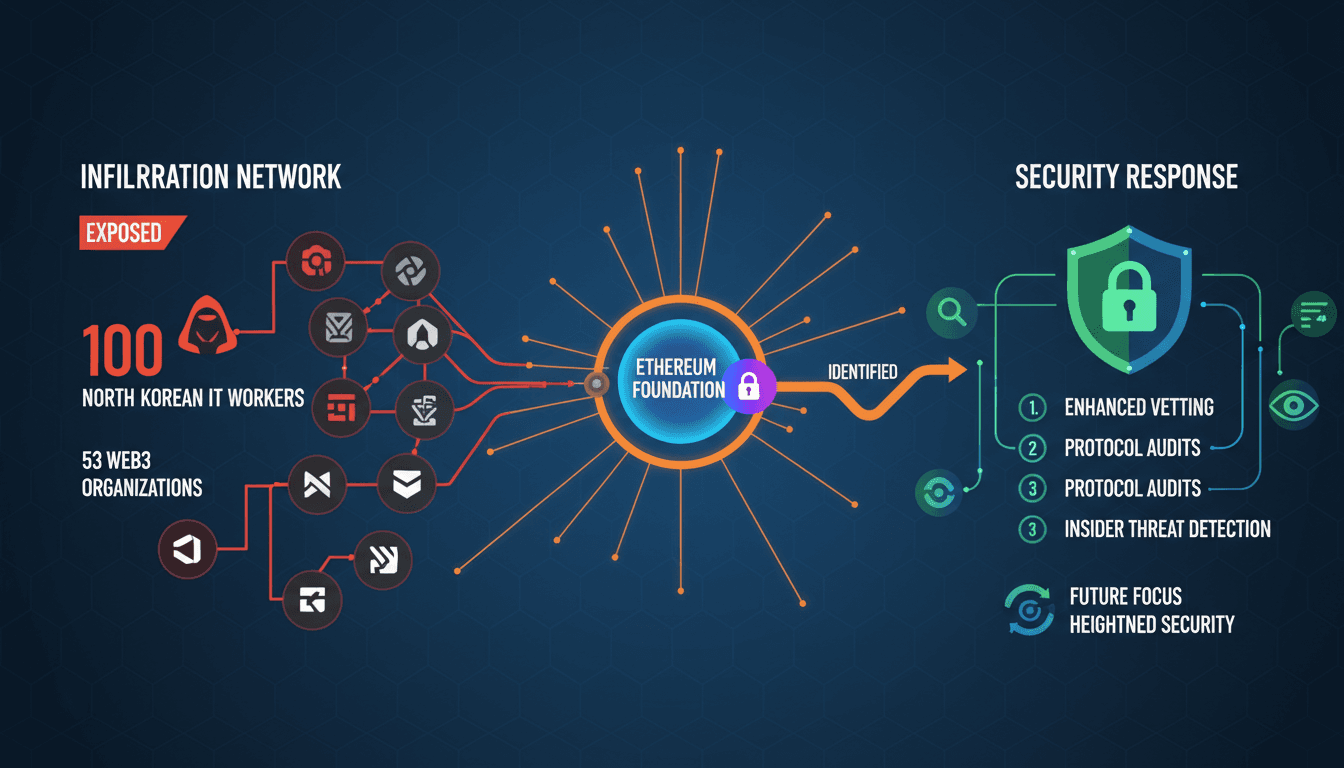
- On April 16, 2026, the Ethereum Foundation revealed that its Ketman Project identified around 100 North Korean IT workers infiltrating 53 Web3 organizations.
- Operatives used forged identities, including fake KYC documents and AI-generated profiles, to operate undetected on freelance platforms.
- A detection tool was developed to help projects mitigate insider threats and expel the identified operatives.
The context you actually need
- North Korea has a history of cybercrime, utilizing overseas IT workers and cryptocurrency theft to bypass international sanctions, with over $6.75 billion stolen since 2015.
- The ETH Rangers program, initiated in late 2024, aimed to bolster security in the Web3 ecosystem by funding independent researchers to investigate potential threats.
- The Ketman Project's findings included 62 merged pull requests from suspect repositories, indicating a systematic approach to infiltrating Web3 projects.
What's really happening
The Ethereum Foundation's ETH Rangers program was launched in response to escalating cybersecurity threats within the Web3 ecosystem. As the decentralized finance (DeFi) landscape grows, so does the risk of infiltration by malicious actors, particularly from nations like North Korea, which have been known to leverage cyber capabilities for financial gain. The Ketman Project's six-month investigation revealed a sophisticated network of approximately 100 North Korean IT workers posing as Japanese freelancers. This operation involved the use of forged identities and fake documentation, allowing these operatives to blend seamlessly into the global freelance market.
The investigation identified patterns that raised red flags, such as inconsistent work histories, timezone discrepancies, and unique technical fingerprints that deviated from typical developer profiles. By analyzing these indicators, researchers were able to pinpoint the infiltrators and alert the affected organizations. The release of the gh-fake-analyzer tool and the DPRK IT Workers Framework represents a proactive step towards mitigating insider threats, providing a framework for other projects to adopt similar security measures.
The implications of this infiltration extend beyond immediate security concerns. As Web3 projects increasingly rely on decentralized teams and remote work, the potential for insider threats grows. The Ethereum Foundation's findings have prompted a reevaluation of hiring practices within the industry, emphasizing the need for rigorous vetting processes to ensure that personnel are not only technically qualified but also trustworthy. The industry is now at a crossroads, where the balance between innovation and security must be carefully managed to maintain user trust and project integrity.
Moreover, the financial impact of these infiltrations cannot be overlooked. With the Ethereum Foundation reporting recoveries of $5.8 million and tracing 785 vulnerabilities, the economic stakes are high. Projects that fail to implement robust security measures risk not only financial loss but also reputational damage, which can have long-lasting effects on user confidence and market stability.
Who feels it first (and how)
- Web3 developers: Increased scrutiny on hiring practices and potential delays in project timelines due to enhanced vetting.
- Freelancers in the tech space: Heightened competition and potential barriers to entry as projects implement stricter security measures.
- Investors in crypto projects: Increased risk awareness may lead to more cautious investment strategies and a focus on security protocols.
What to watch next
- Adoption of security frameworks: Monitor how quickly and widely the gh-fake-analyzer tool and DPRK IT Workers Framework are adopted across the Web3 ecosystem, as this will indicate the industry's response to insider threats.
- Regulatory changes: Watch for potential regulatory responses aimed at enhancing cybersecurity standards within the crypto and Web3 sectors, which could reshape operational practices.
- Emergence of new security technologies: Keep an eye on innovations in cybersecurity tools designed specifically for the decentralized finance space, as these may become critical in preventing future infiltrations.
Approximately 100 North Korean IT workers were identified infiltrating Web3 firms.
Increased security measures and hiring vetting processes will be adopted across the industry.
The long-term impact on user trust and investment in Web3 projects remains to be seen.
Frequently Asked Questions
- Why it matters?
- The infiltration of Web3 firms by North Korean operatives underscores significant vulnerabilities in the cybersecurity landscape, impacting trust and operational integrity.
- What happened (in 30 seconds)?
- On April 16, 2026, the Ethereum Foundation revealed that its Ketman Project identified around 100 North Korean IT workers infiltrating 53 Web3 organizations. Operatives used forged identities, including fake KYC documents and AI-generated profiles, to operate undetected on freelance platforms. A detection tool was developed to help projects mitigate insider threats and expel the identified operatives.
- What's really happening?
- The Ethereum Foundation's ETH Rangers program was launched in response to escalating cybersecurity threats within the Web3 ecosystem. As the decentralized finance (DeFi) landscape grows, so does the risk of infiltration by malicious actors, particularly from nations like North Korea, which have been known to leverage cyber capabilities for financial gain. The Ketman Project's six-month investigation revealed a sophisticated network of approximately 100 North Korean IT workers posing as Japanese
- Who feels it first (and how)?
- Web3 developers: Increased scrutiny on hiring practices and potential delays in project timelines due to enhanced vetting. Freelancers in the tech space: Heightened competition and potential barriers to entry as projects implement stricter security measures. Investors in crypto projects: Increased risk awareness may lead to more cautious investment strategies and a focus on security protocols.
- What to watch next?
- Adoption of security frameworks: Monitor how quickly and widely the gh-fake-analyzer tool and DPRK IT Workers Framework are adopted across the Web3 ecosystem, as this will indicate the industry's response to insider threats. Regulatory changes: Watch for potential regulatory responses aimed at enhancing cybersecurity standards within the crypto and Web3 sectors, which could reshape operational practices. Emergence of new security technologies: Keep an eye on innovations in cybersecurity tools de
Research, news, and analysis on blockchain startups, DeFi, and regulations.
"Crypto Briefing provides research, news, and analysis on blockchain startups, DeFi, and crypto regulations with investor-focused coverage."
— A47 Editor
Ethereum-backed project uncovers 100 North Korean operatives in crypto firms
A recent investigation funded by the Ethereum Foundation has uncovered 100 North Korean operatives embedded in various cryptocurrency firms, raising significant security concerns within the sector. These operatives were reportedly working under false...
News and analysis on Bitcoin, altcoins, and blockchain innovation.
"Bitcoinist delivers news and analysis on Bitcoin, altcoins, and blockchain innovation with a focus on market trends and industry updates."
— A47 Editor
Ethereum Targets North Korea’s Secret Workforce — Are Your Favorite DeFi Protocols Compromised?
The Ethereum Foundation has identified 100 IT workers linked to North Korea's Democratic People's Republic of Korea (DPRK) embedded in approximately 53 cryptocurrency projects. This revelation comes as part of a new initiative aimed at enhancing secu...
Real-time updates, analysis, and reports on the blockchain and cryptocurrency sectors.
"Crypto News delivers real-time updates, analysis, and reports on the blockchain and cryptocurrency sectors."
— A47 Editor
Ethereum Foundation-funded project exposes 100 DPRK developers operating in crypto
A six-month investigation funded by the Ethereum Foundation has revealed that 100 North Korean developers were operating under false identities within various Web3 teams, raising significant security concerns in the cryptocurrency sector.
Covers blockchain, cryptocurrency news, project analysis, and market insights.
"Cointelegraph is a leading crypto-focused media outlet known for timely news, analysis, and educational content related to blockchain and digital assets."
— A47 Editor
Ethereum Foundation-funded program exposes 100 DPRK workers in crypto
The Ketman Project, supported by funding from the Ethereum Foundation, has uncovered 100 North Korean IT workers and identified 53 projects employing operatives from the Democratic People's Republic of Korea (DPRK). This initiative highlights the ong...