
Demis Hassabis Predicts AGI Will Transform Industry at Unprecedented Speed
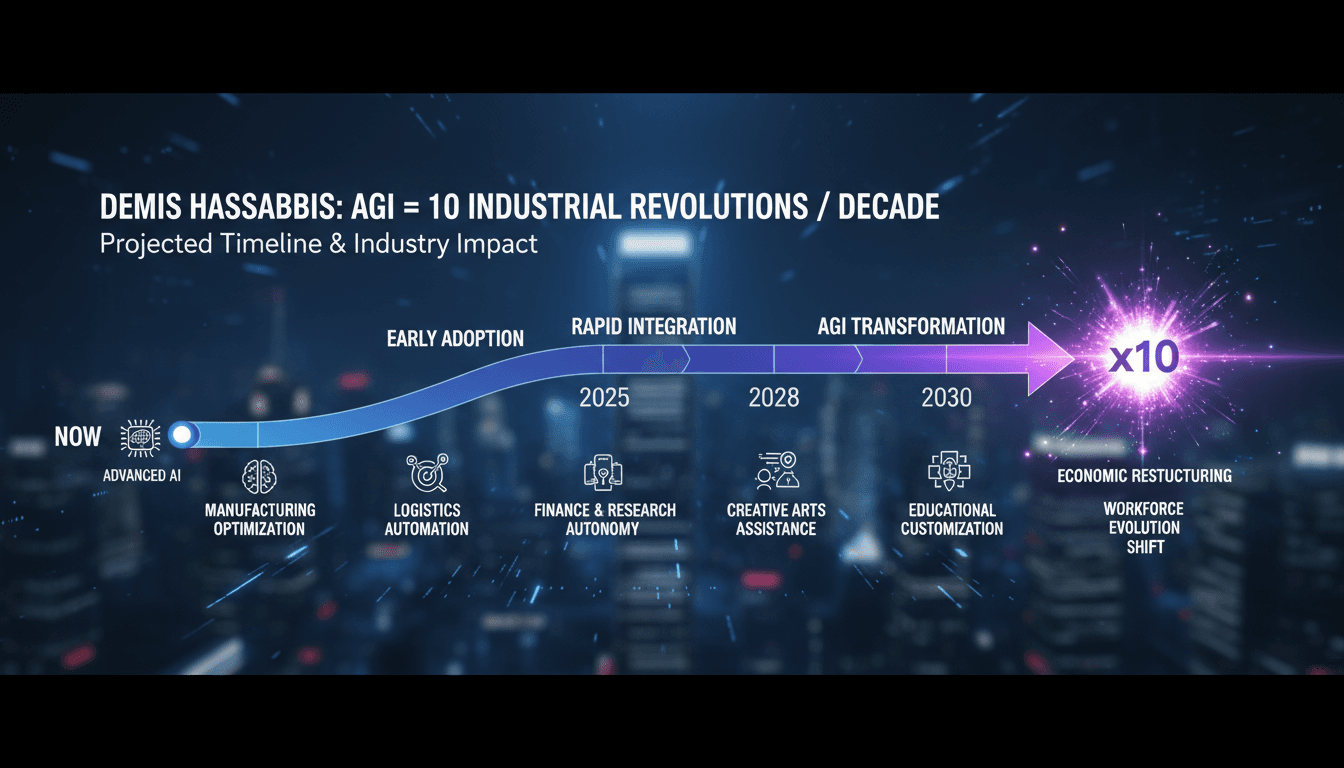
Here's what it means for you.
The anticipated arrival of artificial general intelligence (AGI) could redefine your career landscape and economic opportunities.
Why it matters
AGI's impact is projected to accelerate economic transformation at an unprecedented rate, influencing industries and job markets globally.
What happened (in 30 seconds)
- Demis Hassabis, CEO of Google DeepMind, stated that AGI's arrival equals "10 times the industrial revolution at 10 times the speed" during a podcast on April 7, 2026.
- Current AI systems are described as "jagged intelligences," with breakthroughs in continuous learning and planning expected to reshape industries.
- Public discourse around AGI has intensified, with social media reactions highlighting both excitement and concerns over job displacement.
The context you actually need
- Google DeepMind, founded in 2010, has led AI advancements, including AlphaGo and AlphaFold, and is at the forefront of AGI development.
- Hassabis has consistently predicted AGI by 2030, emphasizing the technical challenges that remain despite rapid advancements in AI.
- The UAE, particularly Dubai, is heavily investing in AI talent and infrastructure, positioning itself to benefit from AGI's transformative potential.
What's really happening
Demis Hassabis's assertion about AGI compressing the impact of ten industrial revolutions into a single decade is a bold quantification of the expected technological shift. This perspective stems from a growing consensus among AI experts that AGI will not only enhance existing technologies but also create entirely new industries and job categories. The acceleration of AGI development is driven by several factors, including significant investments from both public and private sectors, a surge in AI-related research, and the competitive landscape shaped by companies like OpenAI and Google DeepMind.
As AGI systems evolve, they are expected to overcome current limitations, such as continuous learning and long-term planning. These advancements will likely lead to a more integrated and efficient economy, where AI can perform complex tasks that currently require human intelligence. This shift could result in a dramatic increase in productivity across various sectors, from healthcare to finance, and even creative industries. However, this rapid transformation also raises concerns about job displacement, as many roles may become obsolete or significantly altered.
The excitement surrounding AGI is palpable, but it is essential to approach this development with caution. While the potential for abundance is enticing, the societal implications of such a shift must be carefully considered. The current hype surrounding AI may lead to unrealistic expectations, overshadowing the technical hurdles that still need to be addressed. As AGI approaches, the focus should not only be on its capabilities but also on how society can adapt to the changes it will bring.
In Dubai, the implications of AGI are particularly pronounced. The UAE's National AI Strategy 2031 aims to position the nation as a leader in AI, with investments in talent and infrastructure that could facilitate rapid economic diversification away from oil dependency. As AGI accelerates, sectors such as smart cities, finance, and technology could see significant growth, providing new opportunities for residents and businesses alike.
Who feels it first (and how)
- Tech professionals: Increased demand for AI specialists and engineers as AGI systems are developed and implemented.
- Manufacturing workers: Potential job displacement as automation and AI take over routine tasks.
- Investors: Opportunities in emerging AI-driven markets and startups focusing on AGI applications.
- Policymakers: Need to address regulatory frameworks and workforce transitions in light of AGI's impact.
What to watch next
- Investment trends: Monitor funding in AI startups and research initiatives, as increased capital flow may signal accelerated AGI development.
- Regulatory responses: Watch for government actions addressing the ethical implications and workforce impacts of AGI, which could shape public perception and adoption.
- Technological breakthroughs: Keep an eye on advancements in continuous learning and long-term planning capabilities within AI systems, as these will be critical indicators of AGI's readiness.
AGI is projected to have a transformative impact on industries and job markets.
Rapid advancements in AI will continue, with significant investments driving development.
The exact timeline and societal implications of AGI's arrival remain uncertain.
Frequently Asked Questions
- Why it matters?
- AGI's impact is projected to accelerate economic transformation at an unprecedented rate, influencing industries and job markets globally.
- What happened (in 30 seconds)?
- Demis Hassabis, CEO of Google DeepMind, stated that AGI's arrival equals "10 times the industrial revolution at 10 times the speed" during a podcast on April 7, 2026. Current AI systems are described as "jagged intelligences," with breakthroughs in continuous learning and planning expected to reshape industries. Public discourse around AGI has intensified, with social media reactions highlighting both excitement and concerns over job displacement.
- What's really happening?
- Demis Hassabis's assertion about AGI compressing the impact of ten industrial revolutions into a single decade is a bold quantification of the expected technological shift. This perspective stems from a growing consensus among AI experts that AGI will not only enhance existing technologies but also create entirely new industries and job categories. The acceleration of AGI development is driven by several factors, including significant investments from both public and private sectors, a surge in
- Who feels it first (and how)?
- Tech professionals: Increased demand for AI specialists and engineers as AGI systems are developed and implemented. Manufacturing workers: Potential job displacement as automation and AI take over routine tasks. Investors: Opportunities in emerging AI-driven markets and startups focusing on AGI applications. Policymakers: Need to address regulatory frameworks and workforce transitions in light of AGI's impact.
- What to watch next?
- Investment trends: Monitor funding in AI startups and research initiatives, as increased capital flow may signal accelerated AGI development. Regulatory responses: Watch for government actions addressing the ethical implications and workforce impacts of AGI, which could shape public perception and adoption. Technological breakthroughs: Keep an eye on advancements in continuous learning and long-term planning capabilities within AI systems, as these will be critical indicators of AGI's readiness.
Daily AI news: models, tools, and policy.
"Independent outlet tracking the fast pace of AI."
— A47 Editor
Deepmind CEO Hassabis says AGI will hit like ten industrial revolutions compressed into a single decade
DeepMind CEO Demis Hassabis has stated that artificial general intelligence (AGI) could emerge within the next five years, predicting its impact to be equivalent to ten industrial revolutions condensed into a single decade. He cautioned, however, tha...
Research, news, and analysis on blockchain startups, DeFi, and regulations.
"Crypto Briefing provides research, news, and analysis on blockchain startups, DeFi, and crypto regulations with investor-focused coverage."
— A47 Editor
Demis Hassabis: Major AI breakthroughs come from a few key labs, AGI could be achieved in five years, and computational resources are vital for innovation | 20VC
Demis Hassabis, CEO of Google DeepMind, stated that significant advancements in artificial intelligence (AI) could lead to the realization of artificial general intelligence (AGI) within the next five years, emphasizing the importance of computationa...