
US Warns European Allies of Delayed Weapons Deliveries Due to Iran Conflict
Here's what it means for you.
If you rely on European defense stability, prepare for potential vulnerabilities as U.S. military resources are redirected.
Why it matters
The delays in weapons deliveries could weaken NATO's eastern defenses against Russian aggression, impacting regional security dynamics.
What happened (in 30 seconds)
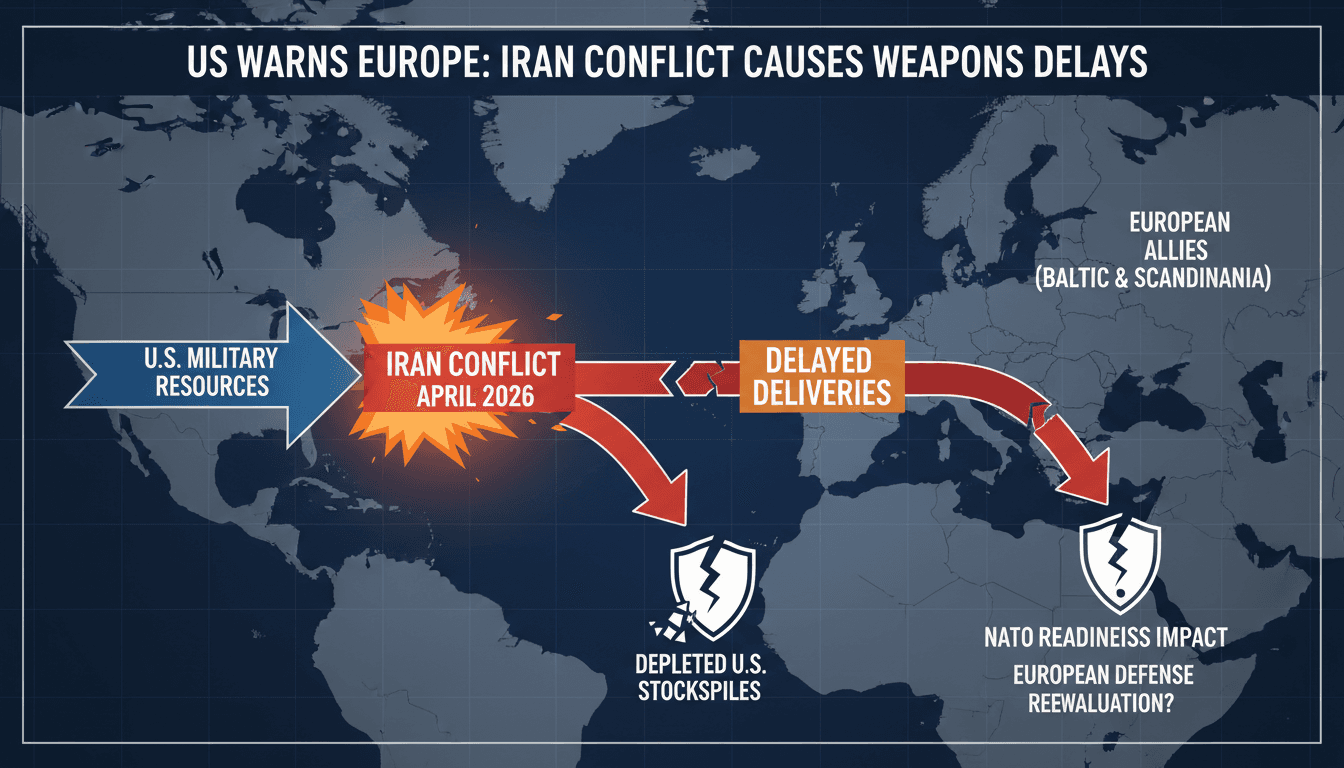
- U.S. officials notified Baltic and Scandinavian countries of imminent delays in weapons deliveries on April 16, 2026.
- Delays attributed to the depletion of U.S. military stockpiles due to the ongoing war with Iran.
- European defense readiness is undermined, raising concerns about vulnerabilities to Russian threats.
The context you actually need
- U.S.-Iran war began in early 2026, leading to significant depletion of American munitions reserves.
- Prior commitments to bolster European defenses against Russia included billions in weaponry transfers since the 2022 Ukraine invasion.
- Production backlogs under the Foreign Military Sales program prioritize domestic needs over allied contracts, exacerbating delivery delays.
What's really happening
The U.S. military's ongoing conflict with Iran has created a critical strain on its munitions stockpiles, leading to a significant reallocation of resources. As of April 2026, the U.S. has expended an estimated $3 billion worth of over 850 Tomahawk cruise missiles in just the first month of the war. This extensive use of precision-guided munitions and artillery systems has left American military reserves dangerously low, prompting U.S. officials to notify European allies of impending delays in arms deliveries.
The Baltic and Scandinavian countries, which heavily rely on U.S. military systems for their defense, are particularly affected. The notifications sent to these nations indicate that previously contracted arms shipments will be postponed, raising alarms about their readiness against potential Russian incursions. The situation is compounded by the fact that the U.S. has been committed to bolstering European defenses since the onset of the Ukraine conflict in 2022, transferring billions in weaponry to support NATO allies.
As the U.S. military prioritizes its own wartime needs, production backlogs under the Foreign Military Sales program have intensified. This means that while the U.S. ramps up production of critical systems like the Patriot missile defense system, replenishment timelines for these systems extend into years. European defense officials have expressed private concerns about the strategic vulnerabilities this creates, particularly in NATO's eastern flank, where the threat of Russian aggression remains high.
The implications of these delays are not just military; they also have economic ramifications. For instance, the escalating U.S.-Iran hostilities have driven Brent crude oil prices above $100 per barrel, which could lead to increased energy costs for households in Europe and beyond. This volatility in energy markets could further strain economies already grappling with inflation and supply chain disruptions.
Who feels it first (and how)
- European defense officials: Concerned about readiness and strategic vulnerabilities.
- Military contractors: Facing production backlogs and potential financial impacts from delayed contracts.
- Consumers in Europe: Likely to experience increased energy costs due to market volatility.
- NATO member states: Particularly those in Eastern Europe, facing heightened security risks.
What to watch next
- U.S. military production rates: Monitor announcements regarding the ramp-up of production for critical defense systems, as this will indicate how quickly stockpiles can be replenished.
- European defense spending: Watch for potential increases in defense budgets among European nations as they seek to mitigate vulnerabilities.
- Geopolitical tensions: Keep an eye on developments in the U.S.-Iran conflict and Russian military movements, as these will influence regional security dynamics.
U.S. military stockpiles are depleted due to the Iran war.
European nations will experience delays in arms deliveries, impacting defense readiness.
The long-term effects on NATO's strategic posture and European defense budgets.
Frequently Asked Questions
- Why it matters?
- The delays in weapons deliveries could weaken NATO's eastern defenses against Russian aggression, impacting regional security dynamics.
- What happened (in 30 seconds)?
- U.S. officials notified Baltic and Scandinavian countries of imminent delays in weapons deliveries on April 16, 2026. Delays attributed to the depletion of U.S. military stockpiles due to the ongoing war with Iran. European defense readiness is undermined, raising concerns about vulnerabilities to Russian threats.
- What's really happening?
- The U.S. military's ongoing conflict with Iran has created a critical strain on its munitions stockpiles, leading to a significant reallocation of resources. As of April 2026, the U.S. has expended an estimated $3 billion worth of over 850 Tomahawk cruise missiles in just the first month of the war. This extensive use of precision-guided munitions and artillery systems has left American military reserves dangerously low, prompting U.S. officials to notify European allies of impending delays in a
- Who feels it first (and how)?
- European defense officials: Concerned about readiness and strategic vulnerabilities. Military contractors: Facing production backlogs and potential financial impacts from delayed contracts. Consumers in Europe: Likely to experience increased energy costs due to market volatility. NATO member states: Particularly those in Eastern Europe, facing heightened security risks.
- What to watch next?
- U.S. military production rates: Monitor announcements regarding the ramp-up of production for critical defense systems, as this will indicate how quickly stockpiles can be replenished. European defense spending: Watch for potential increases in defense budgets among European nations as they seek to mitigate vulnerabilities. Geopolitical tensions: Keep an eye on developments in the U.S.-Iran conflict and Russian military movements, as these will influence regional security dynamics.
Arabic-language digital news outlet covering UAE, regional, and international developments with broad general-news coverage.
"Al Ain News coverage typically blends UAE-focused reporting with wider Arab regional and international news."
— A47 Editor
دول أوروبية في وضع حرج بسبب تأخير محتمل في تسليم أسلحة أمريكية
American officials have informed their European counterparts about a potential delay in the delivery of arms deals, placing European capitals in a precarious situation. This development raises concerns regarding the readiness and security of European...
Pan-Arab news coverage spanning politics, business, sports, and regional affairs.
"Asharq Al-Awsat reflects a broad Arab editorial perspective with strong attention to regional geopolitics."
— A47 Editor
تقرير: أميركا أبلغت دولاً أوروبية باحتمال تأخر شحنات أسلحة
American officials have informed European counterparts that some contracted arms shipments are likely to be delayed, according to three sources cited by Reuters. This development raises concerns about the reliability of U.S. military support to its E...
Arabic-language coverage of international news and geopolitics.
"RT Arabic is a Russian state-funded outlet often criticized for promoting Kremlin-aligned narratives."
— A47 Editor
"رويترز": أمريكا تبلغ الدول الأوروبية بتأخيرات في تسليم الأسلحة المتعاقد عليها مسبقا
According to Reuters, U.S. officials have informed their European counterparts about potential delays in the delivery of previously contracted weapons due to the depletion of stockpiles. This announcement raises concerns about the reliability of U.S....