
U.S. Naval Blockade on Iranian Vessels Begins with Twenty Ships Transiting Strait of Hormuz
Here's what it means for you.
If you rely on global shipping routes, expect potential delays and increased costs in the coming weeks.
Why it matters
The U.S. blockade in the Strait of Hormuz could significantly impact global oil prices and shipping logistics.
What happened (in 30 seconds)
- Twenty commercial ships successfully transited the Strait of Hormuz during the first 24 hours of the U.S. naval blockade.
- Iran-linked vessels faced interdiction, with six to thirteen ships turned back to prevent smuggling.
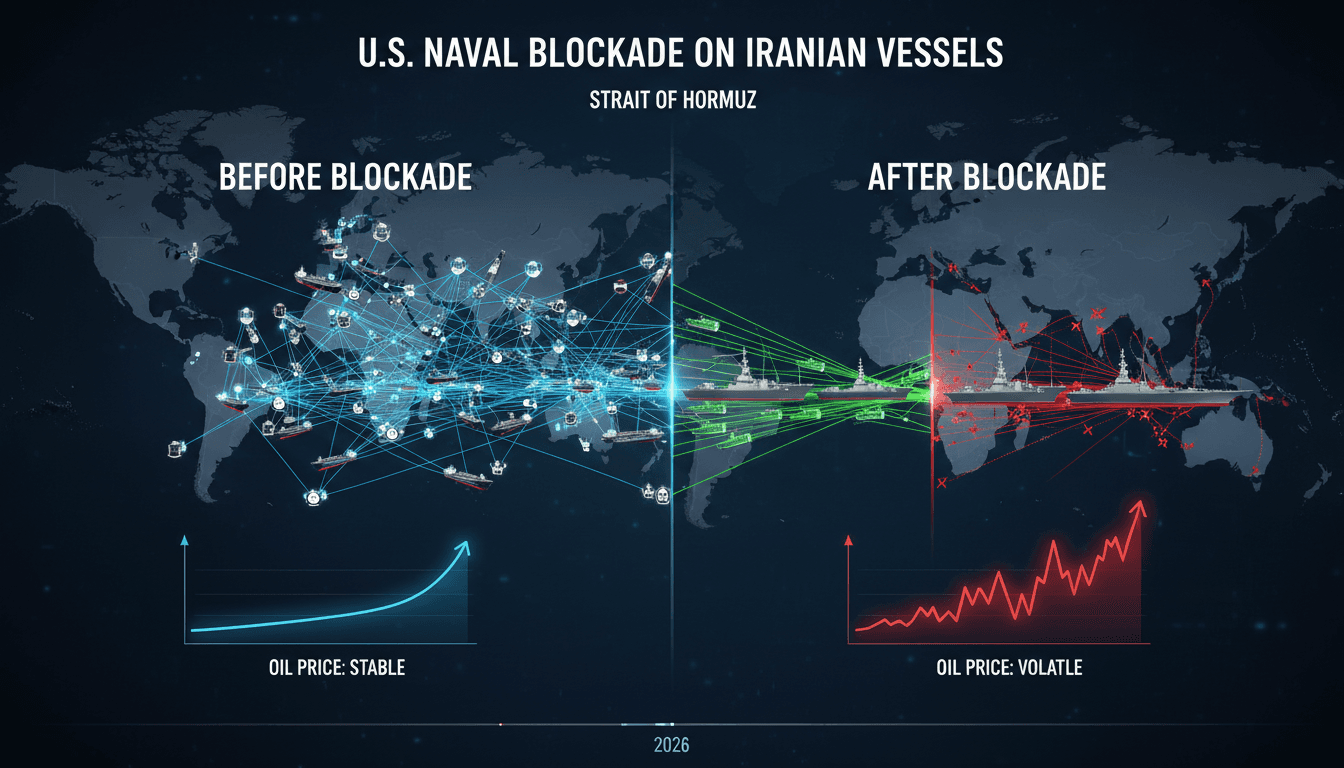
- Oil prices surged above $100 per barrel, reflecting market volatility and geopolitical tensions.
The context you actually need
- The blockade is part of the ongoing U.S.-Iran conflict, which escalated due to Iranian disruptions in shipping since late February 2026.
- U.S. Central Command initiated the blockade to enforce maritime security while allowing non-Iranian vessels to continue operations.
- Traffic through the Strait of Hormuz, a critical global shipping lane, has dropped sharply from over 120 daily transits to a fraction, raising concerns about supply chain stability.
What's really happening
The U.S. naval blockade in the Strait of Hormuz represents a strategic maneuver in the broader context of U.S.-Iran relations, which have been fraught with tension since the late February disruptions to shipping. The U.S. Central Command (CENTCOM) implemented a "maritime sorting" mechanism, allowing non-Iranian flagged vessels to pass after thorough inspections while targeting Iranian-linked ships. This selective approach aims to restrict Tehran's exports and imports without severely disrupting global trade.
In the first 24 hours of the blockade, twenty commercial ships successfully navigated the strait, indicating that the U.S. military's inspections were effective in distinguishing compliant vessels from those linked to Iran. However, the blockade has led to a significant decline in overall traffic, with volumes dropping from pre-war levels of over 120 daily transits to a mere fraction, reflecting heightened caution among shipping operators.
The implications of this blockade extend beyond immediate shipping disruptions. As oil prices surged above $100 per barrel, the ripple effects are likely to be felt across various sectors, particularly in regions heavily reliant on oil imports. For instance, Dubai residents are already experiencing fuel price surges, which could lead to increased transport and living costs. The UAE is exploring alternative oil export routes via the Red Sea to mitigate potential shortages, but this strategy may not fully shield the economy from the volatility of global energy markets.
Moreover, the blockade has drawn international reactions, with Iran condemning the action as "piracy" and vowing retaliation, while China labeled it "dangerous and irresponsible." The U.S. Senate has expressed support for the blockade, and allies like Israel have backed the measure, indicating a potential escalation in military and diplomatic tensions in the region.
As the situation evolves, the U.S. military's ongoing inspections and the response from Iran will be critical in determining the future of shipping through this vital corridor. The blockade not only serves as a tactical response to Iranian actions but also highlights the intricate balance of power in the region and its implications for global trade.
Who feels it first (and how)
- Shipping operators: Increased scrutiny and potential delays in transit times.
- Oil-dependent economies: Rising fuel prices impacting transportation and living costs.
- Consumers: Higher prices for goods and services due to increased shipping costs.
- Investors: Market volatility affecting stock prices in energy and shipping sectors.
What to watch next
- Shipping traffic levels: Monitor changes in the number of vessels transiting the Strait of Hormuz to gauge the blockade's effectiveness.
- Oil price fluctuations: Watch for further increases in oil prices, which could signal escalating tensions or supply chain disruptions.
- Diplomatic negotiations: Keep an eye on any ceasefire talks or diplomatic efforts involving Iran, the U.S., and regional allies, as these could influence the blockade's duration and impact.
The U.S. has initiated a selective naval blockade targeting Iranian vessels.
Oil prices will remain volatile as the situation develops.
The long-term effectiveness of the blockade in curbing Iranian exports and its impact on global shipping.
Frequently Asked Questions
- Why it matters?
- The U.S. blockade in the Strait of Hormuz could significantly impact global oil prices and shipping logistics.
- What happened (in 30 seconds)?
- Twenty commercial ships successfully transited the Strait of Hormuz during the first 24 hours of the U.S. naval blockade. Iran-linked vessels faced interdiction, with six to thirteen ships turned back to prevent smuggling. Oil prices surged above $100 per barrel, reflecting market volatility and geopolitical tensions.
- What's really happening?
- The U.S. naval blockade in the Strait of Hormuz represents a strategic maneuver in the broader context of U.S.-Iran relations, which have been fraught with tension since the late February disruptions to shipping. The U.S. Central Command (CENTCOM) implemented a "maritime sorting" mechanism, allowing non-Iranian flagged vessels to pass after thorough inspections while targeting Iranian-linked ships. This selective approach aims to restrict Tehran's exports and imports without severely disrupting
- Who feels it first (and how)?
- Shipping operators: Increased scrutiny and potential delays in transit times. Oil-dependent economies: Rising fuel prices impacting transportation and living costs. Consumers: Higher prices for goods and services due to increased shipping costs. Investors: Market volatility affecting stock prices in energy and shipping sectors.
- What to watch next?
- Shipping traffic levels: Monitor changes in the number of vessels transiting the Strait of Hormuz to gauge the blockade's effectiveness. Oil price fluctuations: Watch for further increases in oil prices, which could signal escalating tensions or supply chain disruptions. Diplomatic negotiations: Keep an eye on any ceasefire talks or diplomatic efforts involving Iran, the U.S., and regional allies, as these could influence the blockade's duration and impact.
Jordanian news and regional updates.
"Roya News is a Jordanian outlet focused on breaking news and local affairs."
— A47 Editor
نيويورك تايمز: 20 سفينة تجارية تعبر هرمز في أول أيام الحصار الأمريكي
According to the New York Times, 20 commercial vessels have crossed the Strait of Hormuz on the first day of the U.S. blockade, indicating a significant maritime activity in a strategically vital region. This development comes amid heightened tension...
Arabic-language coverage of international news and geopolitics.
"RT Arabic is a Russian state-funded outlet often criticized for promoting Kremlin-aligned narratives."
— A47 Editor
"وول ستريت جورنال": أكثر من 20 سفينة تجارية عبرت مضيق هرمز خلال آخر 24 ساعة
According to the Wall Street Journal, more than 20 commercial vessels have transited the Strait of Hormuz in the past 24 hours, as reported by U.S. officials. This significant maritime activity highlights the ongoing importance of this strategic wate...
Pan-Arab news coverage spanning politics, business, sports, and regional affairs.
"Asharq Al-Awsat reflects a broad Arab editorial perspective with strong attention to regional geopolitics."
— A47 Editor
رغم الحصار الأميركي... سفينتان أبحرتا من إيران تعبران مضيق هرمز
On April 14, 2026, data from the ship tracking company Kepler indicated that at least two vessels departed from Iranian ports and successfully crossed the Strait of Hormuz on April 13, despite ongoing U.S. sanctions.
Arabic-language political and world news coverage for UAE readers.
"Emarat Al Youm world coverage usually presents international developments through a UAE and Arab audience lens."
— A47 Editor
"كيبلر": سفينتان أبحرتا من إيران تعبران مضيق هرمز رغم الحصار الأميركي "كيبلر": سفينتان أبحرتا من إيران تعبران مضيق هرمز رغم الحصار الأميركي
Data from the ship tracking company Kepler indicates that at least two vessels have departed from Iranian ports and successfully crossed the Strait of Hormuz despite ongoing U.S. sanctions. This development highlights the resilience of maritime trade...