
Iranian Missile and Drone Attack Injures Two in Jordan
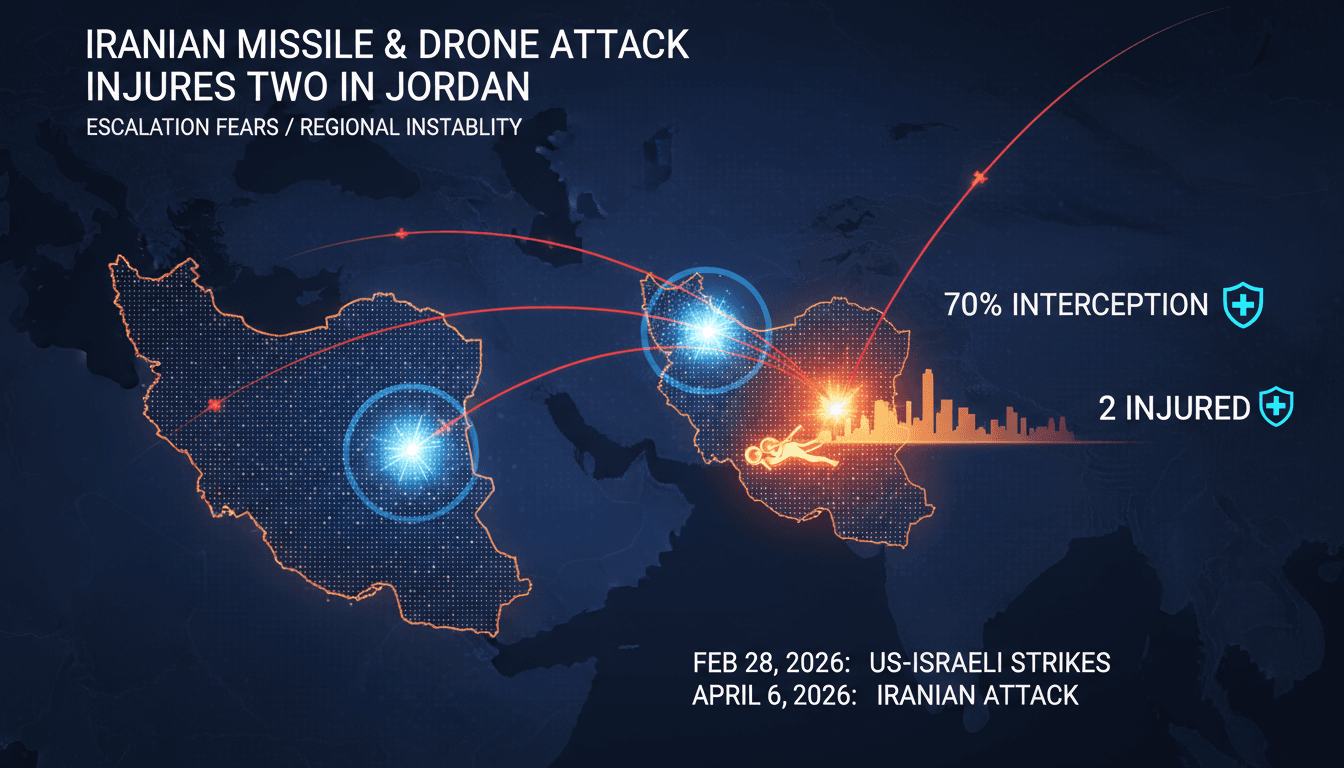
Here's what it means for you.
As geopolitical tensions rise, your travel plans and energy costs may be affected.
Why it matters
This incident underscores the fragility of regional security and its potential ripple effects on global markets.
What happened (in 30 seconds)
- Two individuals were injured in Jordan due to debris from an Iranian missile and drone attack on April 6, 2026.
- Jordan's air defenses intercepted two out of three drones but failed to stop one missile and one drone, resulting in material damage.
- This attack is part of a larger conflict involving 281 Iranian projectiles launched at Jordan since February 28, 2026, in retaliation for U.S.-Israeli strikes.
The context you actually need
- Iran has launched 281 missiles and drones toward Jordan since late February, with Jordan intercepting 261 of them.
- Jordan maintains a neutral stance but actively defends its airspace against Iranian overflights, leading to ongoing military readiness.
- The regional conflict has resulted in cumulative injuries and significant damage to infrastructure, with 29 reported injuries since the conflict began, all of which have recovered.
What's really happening
The April 6 incident is a manifestation of the escalating conflict between Iran and a coalition of U.S. and Israeli forces, which began with targeted strikes on Iranian sites. This conflict has prompted Iran to retaliate aggressively, launching a total of 281 missiles and drones toward Jordan, a country that has historically maintained a neutral position in regional disputes.
Jordan's air defenses have been relatively effective, intercepting 261 of these projectiles. However, the failure to intercept one missile and one drone on April 6 highlights the vulnerabilities that still exist. The debris from these attacks has caused injuries and material damage, raising concerns about civilian safety and the effectiveness of Jordan's defense systems.
The ongoing barrage of Iranian projectiles is not just a military issue; it has significant implications for regional stability and international relations. Jordan's strategic position makes it a focal point in the conflict, and the nation's response could influence its relationships with both Western allies and neighboring countries. The fact that two individuals were injured, albeit with no fatalities, suggests a precarious balance of power and the potential for escalation.
Moreover, the conflict impacts broader economic conditions, particularly in energy markets. As tensions rise, so do concerns about the security of oil supplies, which can lead to increased prices globally. This is particularly relevant for Dubai and the UAE, where energy market volatility can affect everything from travel costs to inflation rates.
The situation is further complicated by the regional dynamics involving other Middle Eastern nations, each with their own interests and alliances. The lack of a clear resolution to this conflict means that the potential for further incidents remains high, keeping both military and civilian populations on edge.
Who feels it first (and how)
- Travelers: Increased aviation alerts and potential flight disruptions due to regional instability.
- Energy consumers: Fluctuations in energy prices as markets react to heightened tensions.
- Local businesses: Those relying on stable regional conditions may face economic uncertainty.
What to watch next
- Military responses from Jordan: Any escalation or change in defense posture could indicate a shift in regional dynamics.
- Iran's retaliatory actions: Further missile launches or drone attacks could provoke international responses.
- Energy market fluctuations: Watch for changes in oil prices as geopolitical tensions evolve.
Two individuals were injured in the recent attack; Jordan's air defenses intercepted most projectiles.
Continued Iranian missile and drone attacks as part of the ongoing conflict; potential for increased military readiness in Jordan.
The long-term implications for regional stability and how other nations will respond to Iran's actions.
Frequently Asked Questions
- Why it matters?
- This incident underscores the fragility of regional security and its potential ripple effects on global markets.
- What happened (in 30 seconds)?
- Two individuals were injured in Jordan due to debris from an Iranian missile and drone attack on April 6, 2026. Jordan's air defenses intercepted two out of three drones but failed to stop one missile and one drone, resulting in material damage. This attack is part of a larger conflict involving 281 Iranian projectiles launched at Jordan since February 28, 2026, in retaliation for U.S.-Israeli strikes.
- What's really happening?
- The April 6 incident is a manifestation of the escalating conflict between Iran and a coalition of U.S. and Israeli forces, which began with targeted strikes on Iranian sites. This conflict has prompted Iran to retaliate aggressively, launching a total of 281 missiles and drones toward Jordan, a country that has historically maintained a neutral position in regional disputes. Jordan's air defenses have been relatively effective, intercepting 261 of these projectiles. However, the failure to in
- Who feels it first (and how)?
- Travelers: Increased aviation alerts and potential flight disruptions due to regional instability. Energy consumers: Fluctuations in energy prices as markets react to heightened tensions. Local businesses: Those relying on stable regional conditions may face economic uncertainty.
- What to watch next?
- Military responses from Jordan: Any escalation or change in defense posture could indicate a shift in regional dynamics. Iran's retaliatory actions: Further missile launches or drone attacks could provoke international responses. Energy market fluctuations: Watch for changes in oil prices as geopolitical tensions evolve.
Arabic-language coverage of political affairs and current events.
"Okaz political coverage typically follows mainstream Saudi framing on national and regional affairs."
— A47 Editor
إصابة شخصين في الأردن بهجوم صاروخي إيراني
Two individuals were injured in Jordan due to an Iranian missile and drone attack. According to the Jordanian Public Security Directorate, the Jordanian Armed Forces were unable to intercept one missile and a drone among several launched by Tehran in...
Arabic-language UAE newspaper coverage focused on domestic affairs, public institutions, business, society, and regional developments.
"Al Khaleej coverage generally reflects a mainstream UAE editorial lens with strong attention to public affairs, institutions, and regional developments."
— A47 Editor
جريحان في الأردن إثر هجمات صاروخية إيرانية
Two individuals were injured in Jordan following Iranian missile attacks, as reported by the Jordanian Public Security Directorate. The military stated that they were unable to intercept one missile and a drone among the projectiles launched from Ira...
Arabic-language UAE newspaper coverage focused on domestic affairs, public institutions, business, society, and regional developments.
"Al Khaleej coverage generally reflects a mainstream UAE editorial lens with strong attention to public affairs, institutions, and regional developments."
— A47 Editor
الأردن ينجح في إسقاط صاروخين ومسيرتين خلال 24 ساعة
The Jordanian Armed Forces announced that Iran targeted the kingdom with two missiles and two drones within the last 24 hours, highlighting ongoing tensions in the region. This incident underscores the potential threats facing Jordan's national secur...