
U.S. Senate Fails to Pass War Powers Resolution Limiting Military Actions Against Iran
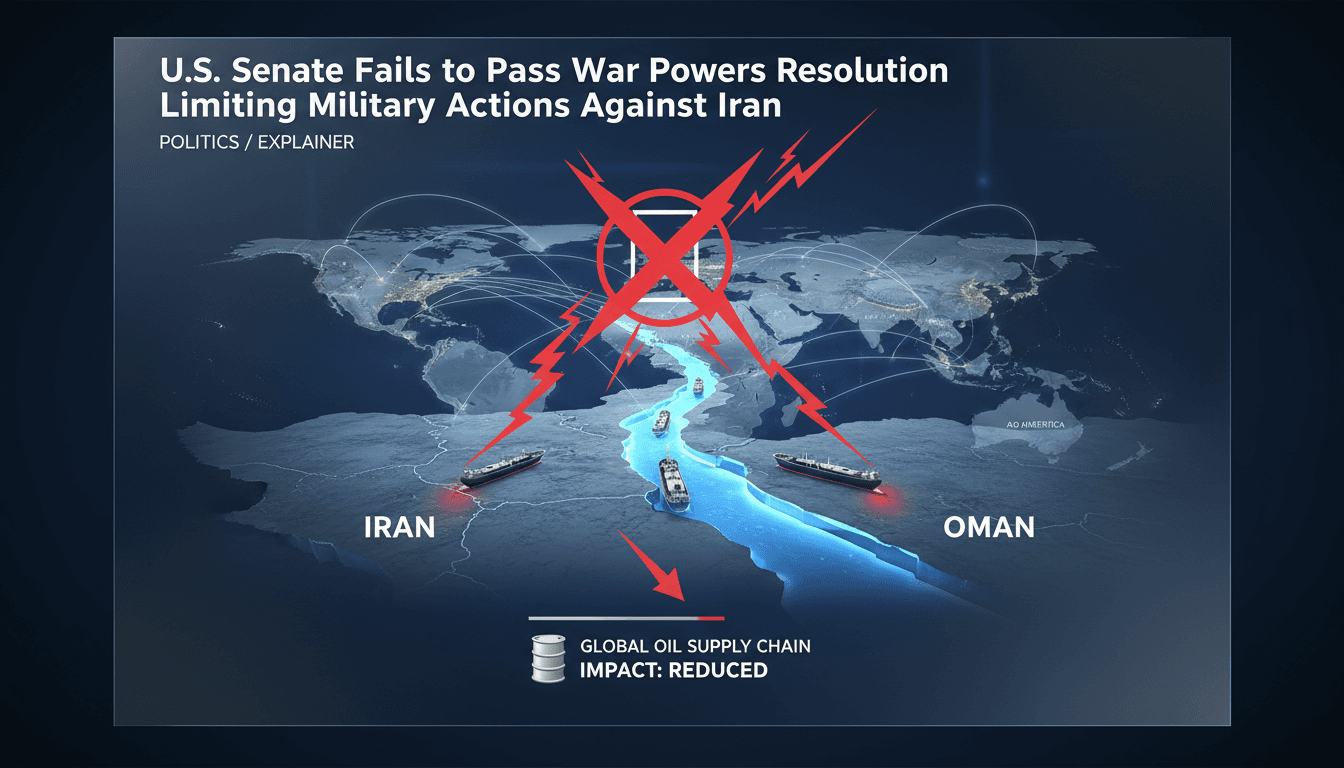
Here's what it means for you.
Your business operations may face increased costs and supply chain disruptions due to ongoing military actions in the Middle East.
Why it matters
The Senate's failure to limit military action could prolong U.S. involvement in the Iran conflict, impacting global oil prices and supply chains.
What happened (in 30 seconds)
- The Senate voted 47-52 against a war powers resolution aimed at limiting President Trump's military actions in Iran.
- Senator Tammy Duckworth's motion was defeated for the fourth time, with most Democrats supporting it and a few Republicans crossing party lines.
- The House also rejected a companion measure the following day, preserving executive authority over military operations.
The context you actually need
- The 2026 Iran war began on February 28, following U.S.-Israeli strikes, escalating tensions that led to a naval blockade of Iranian ports.
- Operation Economic Fury was launched on April 13, aiming to cut off Iranian oil exports and enforce sanctions amid ongoing indirect talks.
- Previous attempts to invoke the War Powers Resolution had failed three times, indicating a consistent struggle for congressional oversight on military actions.
What's really happening
The U.S. Senate's rejection of the war powers resolution reflects a broader tension between executive authority and congressional oversight in military matters. The procedural vote, which saw a tally of 47-52, underscores the partisan divide on foreign policy, particularly regarding military engagement in the Middle East. Senator Tammy Duckworth's resolution aimed to compel the Trump administration to seek congressional authorization for ongoing military operations, including a naval blockade of the Strait of Hormuz. This blockade, initiated on April 13, 2026, is part of Operation Economic Fury, which seeks to disrupt Iranian oil exports and enforce sanctions.
The failure of the resolution not only preserves the executive's unilateral military authority but also signals a reluctance among many senators to challenge the administration's military strategy. This dynamic is particularly relevant given the ongoing conflict that began with U.S.-Israeli strikes on Iranian targets. The Senate's decision to reject the resolution for the fourth time indicates a pattern of resistance to congressional intervention in military affairs, raising questions about the balance of power in U.S. governance.
The implications of this decision extend beyond the political arena. Markets reacted positively to the news of indirect talks and a temporary ceasefire, suggesting that investors are cautiously optimistic about a potential resolution to the conflict. However, the ongoing military actions and the blockade are likely to have significant economic repercussions, particularly in regions dependent on oil imports. The blockade has already begun to disrupt supply chains, leading to increased fuel and grocery prices in areas like Dubai, where over 80% of imports rely on the Strait of Hormuz.
As the situation evolves, the Senate's stance may embolden the Trump administration to continue its military campaign without seeking congressional approval, potentially leading to further escalations in the region. The ongoing conflict and the Senate's inaction could also have long-term effects on U.S. foreign policy, particularly in how military engagements are authorized and managed.
Who feels it first (and how)
- Migrant workers in Dubai: Facing economic hardship due to rising costs from supply disruptions.
- Businesses reliant on oil imports: Experiencing increased operational costs and supply chain challenges.
- Global finance sectors: Monitoring inflation risks and potential impacts on international markets.
What to watch next
- Continued Senate votes: Watch for Senator Chris Murphy's commitment to push for weekly votes, which could pressure Republicans and influence future military authorizations.
- Market reactions to indirect talks: Monitor how financial markets respond to any developments in U.S.-Iran negotiations, as optimism could lead to fluctuations in oil prices.
- Impact on regional economies: Keep an eye on economic indicators in Gulf Cooperation Council (GCC) states, particularly regarding inflation and supply chain stability.
The Senate rejected the war powers resolution 47-52.
Ongoing military actions will continue to disrupt supply chains and elevate costs in affected regions.
The long-term implications of the Senate's inaction on U.S. foreign policy and military engagement strategies.
Frequently Asked Questions
- Why it matters?
- The Senate's failure to limit military action could prolong U.S. involvement in the Iran conflict, impacting global oil prices and supply chains.
- What happened (in 30 seconds)?
- The Senate voted 47-52 against a war powers resolution aimed at limiting President Trump's military actions in Iran. Senator Tammy Duckworth's motion was defeated for the fourth time, with most Democrats supporting it and a few Republicans crossing party lines. The House also rejected a companion measure the following day, preserving executive authority over military operations.
- What's really happening?
- The U.S. Senate's rejection of the war powers resolution reflects a broader tension between executive authority and congressional oversight in military matters. The procedural vote, which saw a tally of 47-52, underscores the partisan divide on foreign policy, particularly regarding military engagement in the Middle East. Senator Tammy Duckworth's resolution aimed to compel the Trump administration to seek congressional authorization for ongoing military operations, including a naval blockade of
- Who feels it first (and how)?
- Migrant workers in Dubai: Facing economic hardship due to rising costs from supply disruptions. Businesses reliant on oil imports: Experiencing increased operational costs and supply chain challenges. Global finance sectors: Monitoring inflation risks and potential impacts on international markets.
- What to watch next?
- Continued Senate votes: Watch for Senator Chris Murphy's commitment to push for weekly votes, which could pressure Republicans and influence future military authorizations. Market reactions to indirect talks: Monitor how financial markets respond to any developments in U.S.-Iran negotiations, as optimism could lead to fluctuations in oil prices. Impact on regional economies: Keep an eye on economic indicators in Gulf Cooperation Council (GCC) states, particularly regarding inflation and supp
International coverage from The Guardian's global desks.
"The Guardian is known for its progressive editorial stance and in-depth analysis."
— A47 Editor
US Senate fails to pass war powers resolution for fourth time – as it happened
The US Senate has failed to pass a war powers resolution for the fourth time, amidst ongoing tensions between the US and Iran, as President Donald Trump criticizes NATO allies for not supporting his military actions. This failure reflects the complex...
Right-of-center views on political news.
"The Washington Times is a conservative-leaning newspaper known for its political coverage and advocacy of right-of-center viewpoints."
— A47 Editor
Democrats' war powers resolution dies in Senate, more expected
Senate Democrats' war powers resolution aimed at limiting President Trump's military authority in Iran failed in the Senate, as Minority Leader Charles E. Schumer announced plans to continue introducing similar measures until the conflict ends.
Arabic-language UAE newspaper coverage focused on domestic affairs, public institutions, business, society, and regional developments.
"Al Khaleej coverage generally reflects a mainstream UAE editorial lens with strong attention to public affairs, institutions, and regional developments."
— A47 Editor
الديمقراطيون يواصلون السعي لكبح سلطات ترامب في حرب إيران
The U.S. Senate is set to vote on Wednesday on the latest effort led by Democratic members to limit President Donald Trump's war powers, as party leaders pledged on Tuesday to continue introducing such measures as long as the conflict with Iran persi...