
Stanford HAI 2026 AI Index Report Highlights Divergence Between AI Experts and Public Perception
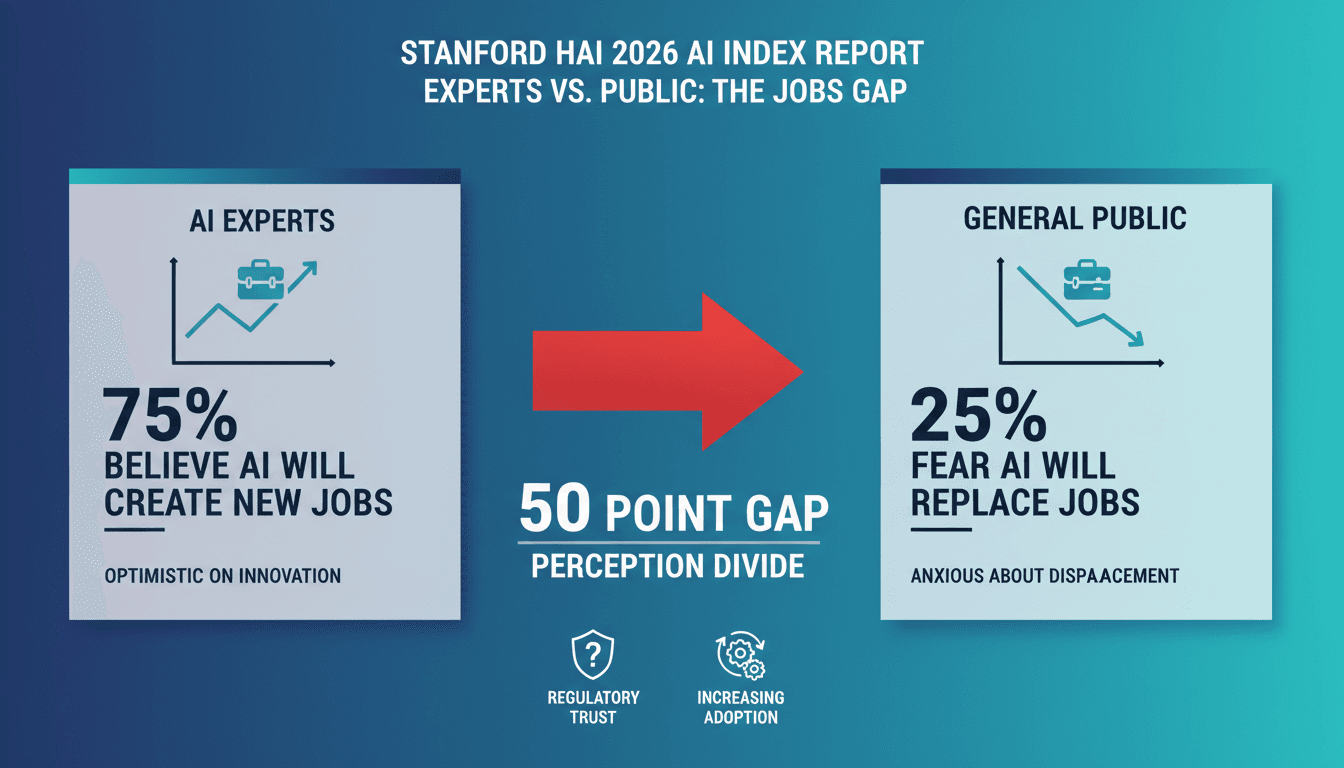
Here's what it means for you.
Understanding the disconnect between AI experts and the general public can help you navigate the evolving landscape of AI in your industry.
Why it matters
The disparity in perceptions about AI's impact could shape future policies, investments, and workforce strategies.
What happened (in 30 seconds)
- Stanford HAI released the 2026 AI Index Report on April 13, revealing a significant gap between AI experts' optimism and the public's pessimism regarding AI's societal impacts.
- 73% of AI experts expect positive job effects, while only 23% of the public shares this view, highlighting a 50-point perception gap.
- The report indicates U.S. leadership in AI investment but notes declining talent attraction and uneven progress in responsible AI practices.
The context you actually need
- The AI Index has tracked global AI developments since 2017, focusing on advancements post-2022 generative AI breakthroughs like ChatGPT.
- Public anxiety around AI has risen, driven by fears of job displacement and regulatory gaps, as evidenced by prior surveys from Pew and Ipsos.
- China is closing the performance gap with the U.S., leading in AI publications and intensifying competition in the global AI landscape.
What's really happening
The 2026 AI Index Report from Stanford HAI reveals a stark contrast between the views of AI experts and the general public, particularly in the U.S. This disconnect is not merely a matter of differing opinions; it reflects deeper systemic issues in how AI is perceived and understood across different sectors of society.
AI experts, who are often at the forefront of technological advancements, tend to have a more optimistic outlook on the potential benefits of AI, particularly regarding job creation and economic growth. In contrast, the general public harbors significant concerns about job losses and the ethical implications of AI technologies. This 50-point gap in perception—73% of experts foresee positive job effects compared to just 23% of the public—highlights a critical communication failure between those developing AI technologies and the communities affected by them.
The report underscores that while the U.S. remains a leader in AI investment, it faces challenges in attracting and retaining talent. This is particularly concerning as the competition with China intensifies, with Chinese institutions closing the performance gaps in AI model development and leading in research publications. The report also points to uneven progress in responsible AI practices, which is crucial for building public trust.
As AI adoption accelerates globally, the disparity in perceptions could lead to significant implications for policy-making and workforce strategies. If the public continues to view AI primarily as a threat, there may be increased calls for regulation and oversight, potentially stifling innovation. Conversely, if experts can bridge this gap and effectively communicate the benefits of AI, it could foster a more supportive environment for technological advancement.
The report's findings are particularly relevant for industries heavily impacted by AI, such as healthcare, finance, and manufacturing. As these sectors increasingly integrate AI technologies, understanding the public's concerns and addressing them proactively will be essential for successful implementation and acceptance.
Who feels it first (and how)
- Tech industry professionals: They may face increased scrutiny and pressure to demonstrate the positive impacts of AI.
- Workers in sectors vulnerable to automation: Job displacement fears could lead to heightened anxiety and resistance to AI adoption.
- Policymakers: They will need to navigate public sentiment while fostering innovation and economic growth.
- Healthcare providers: As AI becomes more integrated into medical care, understanding public concerns will be crucial for patient acceptance.
What to watch next
- Public opinion shifts: Monitoring changes in public sentiment towards AI will be crucial for understanding future regulatory landscapes.
- Talent migration trends: Observing where AI talent is moving can indicate which regions or countries are becoming more attractive for innovation.
- AI policy developments: Keeping an eye on new regulations or guidelines emerging in response to public concerns will shape the future of AI deployment.
There is a significant perception gap between AI experts and the general public regarding AI's societal impacts.
Increased public scrutiny and calls for regulation as AI technologies become more prevalent.
How effectively AI experts can communicate the benefits of AI to bridge the perception gap.
Frequently Asked Questions
- Why it matters?
- The disparity in perceptions about AI's impact could shape future policies, investments, and workforce strategies.
- What happened (in 30 seconds)?
- Stanford HAI released the 2026 AI Index Report on April 13, revealing a significant gap between AI experts' optimism and the public's pessimism regarding AI's societal impacts. 73% of AI experts expect positive job effects, while only 23% of the public shares this view, highlighting a 50-point perception gap. The report indicates U.S. leadership in AI investment but notes declining talent attraction and uneven progress in responsible AI practices.
- What's really happening?
- The 2026 AI Index Report from Stanford HAI reveals a stark contrast between the views of AI experts and the general public, particularly in the U.S. This disconnect is not merely a matter of differing opinions; it reflects deeper systemic issues in how AI is perceived and understood across different sectors of society. AI experts, who are often at the forefront of technological advancements, tend to have a more optimistic outlook on the potential benefits of AI, particularly regarding job crea
- Who feels it first (and how)?
- Tech industry professionals: They may face increased scrutiny and pressure to demonstrate the positive impacts of AI. Workers in sectors vulnerable to automation: Job displacement fears could lead to heightened anxiety and resistance to AI adoption. Policymakers: They will need to navigate public sentiment while fostering innovation and economic growth. Healthcare providers: As AI becomes more integrated into medical care, understanding public concerns will be crucial for patient acceptance.
- What to watch next?
- Public opinion shifts: Monitoring changes in public sentiment towards AI will be crucial for understanding future regulatory landscapes. Talent migration trends: Observing where AI talent is moving can indicate which regions or countries are becoming more attractive for innovation. AI policy developments: Keeping an eye on new regulations or guidelines emerging in response to public concerns will shape the future of AI deployment.
Tech startup news, programming trends, and discussions shared by the developer community.
"Hacker News is a community-driven source highlighting influential tech discussions, startup launches, and programming insights."
— A47 Editor
Stanford report highlights growing disconnect between AI insiders and everyone
A recent Stanford report has revealed a growing disconnect between artificial intelligence (AI) insiders and the general public, highlighting concerns about the implications of AI technologies and their acceptance. This gap indicates a significant di...
Real-time updates, analysis, and reports on the blockchain and cryptocurrency sectors.
"Crypto News delivers real-time updates, analysis, and reports on the blockchain and cryptocurrency sectors."
— A47 Editor
Latest AI News: Stanford’s 2026 AI Report Card Just Dropped and China Has Nearly Closed the Gap on the US in the AI Race
Stanford HAI released its 2026 AI Index, indicating that the United States' lead in artificial intelligence over China has significantly diminished, with Anthropic's leading model only slightly ahead of its closest Chinese competitor.
Startup news with frequent AI coverage.
"Covers launches, funding, and product updates in AI."
— A47 Editor
Stanford report highlights growing disconnect between AI insiders and everyone else
A recent report from Stanford's AI Index reveals a growing disconnect between artificial intelligence experts and the general public, highlighting increasing concerns regarding job security, healthcare, and economic stability as AI technology advance...
Curated tech headlines including AI stories.
"Influential aggregator surfacing the day’s top tech/AI links."
— A47 Editor
Stanford HAI 2026 AI Index Report: AI capability is accelerating, not plateauing, the US-China gap closed, the US leads in data centers and investment, and more (Stanford HAI)
The Stanford HAI 2026 AI Index Report indicates that AI capabilities are accelerating rather than plateauing, with the US maintaining a lead in data centers and investment, while the gap with China is closing. This report highlights the growing influ...
AI news with an enterprise and cloud focus.
"Covers AI in the context of data infrastructure, cloud, and enterprise stacks."
— A47 Editor
China has erased the US lead in AI, Stanford HAI’s 2026 AI index reveals
The 2026 AI Index Report from Stanford University reveals that China has overtaken the United States in artificial intelligence capabilities, marking a significant shift in the global AI landscape. The report highlights a rapid adoption of AI technol...