
German Chancellor Merz Urges NATO Unity Amid US-Iran Conflict
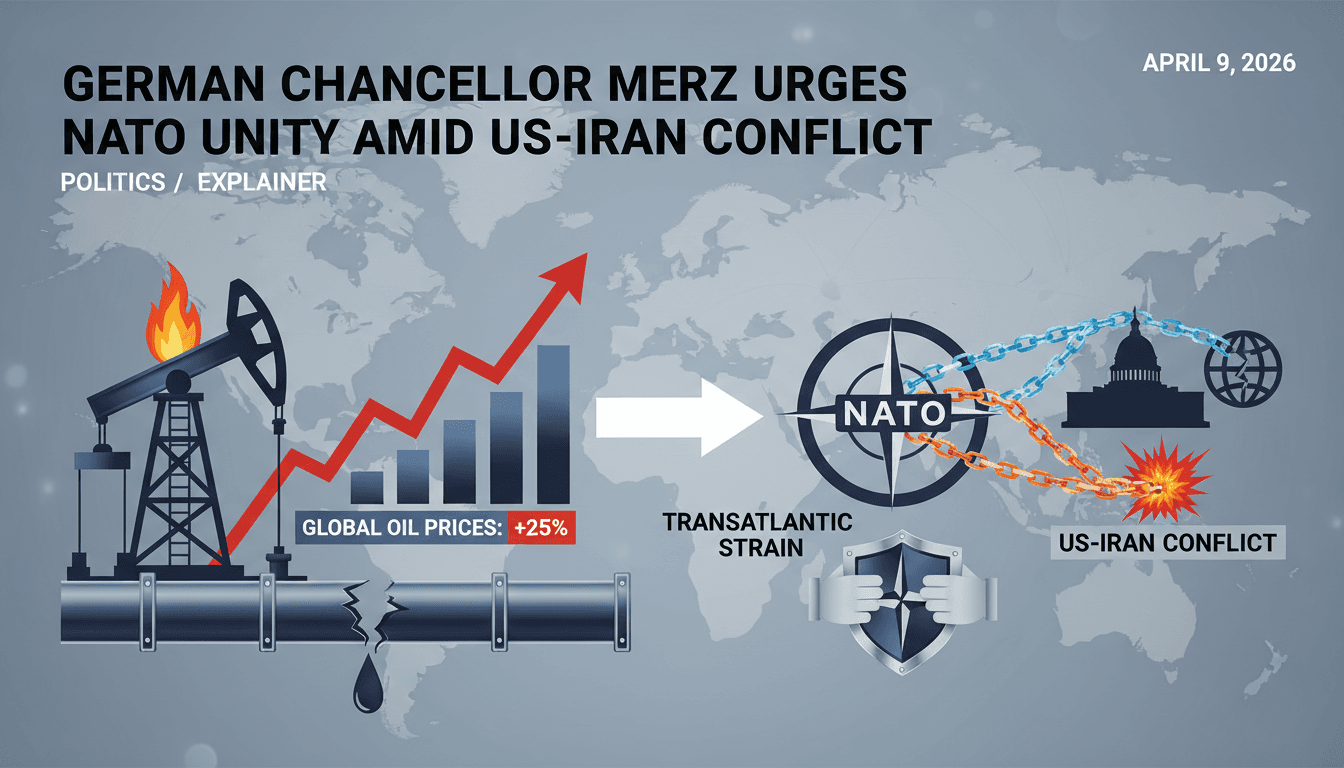
Here's what it means for you.
If you're in the energy sector or rely on stable oil prices, the geopolitical dynamics surrounding NATO and the US-Iran war could directly impact your costs and market stability.
Why it matters
The cohesion of NATO is critical for European security and economic stability, especially as global oil prices fluctuate due to Middle Eastern conflicts.
What happened (in 30 seconds)
- On April 9, 2026, German Chancellor Friedrich Merz stated that NATO must remain united despite the ongoing US-Iran war.
- Merz urged US President Donald Trump to pursue negotiations with Iran, emphasizing NATO's role in European security.
- A temporary ceasefire brokered by Pakistan has been established, allowing for potential diplomatic resolutions and reopening the Strait of Hormuz.
The context you actually need
- The US-Iran war began on February 28, 2026, with significant military actions that severely damaged Iran's military capabilities.
- The closure of the Strait of Hormuz has disrupted 20% of global oil supplies, causing energy prices to spike above $120 per barrel.
- Germany's rejection of NATO involvement in the conflict highlights ongoing tensions in transatlantic relations, particularly regarding military alliances and security responsibilities.
What's really happening
Chancellor Friedrich Merz's recent statements reflect a critical moment in NATO's history, where the alliance's unity is being tested by external conflicts. The US-Iran war, which has seen the US and Israel conduct extensive military operations against Iranian assets, has not only destabilized the region but has also raised alarms about energy security worldwide. With approximately 90% of Iran's weapons factories destroyed, the conflict has shifted the balance of power, prompting concerns over Iran's retaliatory capabilities and the potential for broader regional instability.
Merz's emphasis on NATO's cohesion is a strategic move to reassure European allies that Germany remains committed to collective security. His call for urgent negotiations with Iran underscores the necessity of diplomatic solutions in mitigating the conflict's impact on Europe. The temporary ceasefire, brokered by Pakistan, offers a glimmer of hope for de-escalation, but it also places pressure on NATO to maintain a united front. The fear is that divisions within the alliance could embolden adversaries and undermine collective defense commitments.
The economic implications are significant. The closure of the Strait of Hormuz has already led to soaring energy prices, which directly affects economies dependent on oil imports. In Dubai, for instance, residents have felt the pinch of elevated fuel costs, reflecting broader market anxieties. The ceasefire announcement has provided some relief, with oil prices falling below $100 per barrel, but the volatility remains a concern for businesses and consumers alike.
Moreover, the geopolitical landscape is shifting, with countries like Pakistan stepping in as mediators, which could alter traditional power dynamics. As the US seeks to navigate its foreign policy under President Trump's leadership, the response from NATO allies will be crucial in shaping future engagements with Iran and ensuring that the alliance does not fracture under pressure.
Who feels it first (and how)
- Energy Sector Professionals: Fluctuating oil prices impact operational costs and profitability.
- European Governments: National security policies and economic stability are directly affected by NATO's cohesion.
- Investors in Gulf Markets: Stock market volatility in response to geopolitical events can lead to significant financial implications.
- Consumers in Oil-Dependent Regions: Rising fuel prices can increase the cost of living and affect purchasing power.
What to watch next
- Negotiation Outcomes: The success of US-Iran negotiations could stabilize or further destabilize oil prices, impacting global markets.
- NATO's Response: How NATO members react to the US-Iran conflict will influence the alliance's future cohesion and strategic direction.
- Energy Price Trends: Continued monitoring of oil prices will be crucial, particularly as the situation evolves and potential resolutions are sought.
The US-Iran war has significantly damaged Iran's military capabilities.
NATO will face ongoing pressures to maintain unity in response to external conflicts.
The long-term effects of the ceasefire on regional stability and energy markets remain uncertain.
Frequently Asked Questions
- Why it matters?
- The cohesion of NATO is critical for European security and economic stability, especially as global oil prices fluctuate due to Middle Eastern conflicts.
- What happened (in 30 seconds)?
- On April 9, 2026, German Chancellor Friedrich Merz stated that NATO must remain united despite the ongoing US-Iran war. Merz urged US President Donald Trump to pursue negotiations with Iran, emphasizing NATO's role in European security. A temporary ceasefire brokered by Pakistan has been established, allowing for potential diplomatic resolutions and reopening the Strait of Hormuz.
- What's really happening?
- Chancellor Friedrich Merz's recent statements reflect a critical moment in NATO's history, where the alliance's unity is being tested by external conflicts. The US-Iran war, which has seen the US and Israel conduct extensive military operations against Iranian assets, has not only destabilized the region but has also raised alarms about energy security worldwide. With approximately 90% of Iran's weapons factories destroyed, the conflict has shifted the balance of power, prompting concerns over I
- Who feels it first (and how)?
- Energy Sector Professionals: Fluctuating oil prices impact operational costs and profitability. European Governments: National security policies and economic stability are directly affected by NATO's cohesion. Investors in Gulf Markets: Stock market volatility in response to geopolitical events can lead to significant financial implications. Consumers in Oil-Dependent Regions: Rising fuel prices can increase the cost of living and affect purchasing power.
- What to watch next?
- Negotiation Outcomes: The success of US-Iran negotiations could stabilize or further destabilize oil prices, impacting global markets. NATO's Response: How NATO members react to the US-Iran conflict will influence the alliance's future cohesion and strategic direction. Energy Price Trends: Continued monitoring of oil prices will be crucial, particularly as the situation evolves and potential resolutions are sought.
Regional and international reporting focused on Middle Eastern politics, diplomacy, and economics.
"Asharq Al-Awsat is a Saudi-owned international newspaper reflecting mainstream Gulf political perspectives."
— A47 Editor
Germany's Merz: We Do Not Want NATO to Split over US-Iran War
Germany's opposition leader, Friedrich Merz, has expressed concerns about NATO potentially fracturing over the ongoing conflict between the US and Iran, emphasizing the need for unity among member states.
Regional coverage and analysis focused on politics, diplomacy, and business across the Middle East.
"Al-Monitor is known for analytical reporting on Middle East politics and policy developments."
— A47 Editor
Germany's Merz: We do not want NATO to split over U.S.-Iran war
German Chancellor Friedrich Merz emphasized the importance of maintaining NATO unity amid rising tensions from the U.S.-Iran conflict, expressing concerns that the war could further strain relations between the U.S. and its European allies. He urged ...
International coverage of politics, security, and social issues.
"Global News is a mainstream Canadian outlet with a centrist editorial stance, focusing on factual reporting."
— A47 Editor
Don’t want NATO to split over U.S.-Iran war, German chancellor says
German Chancellor Friedrich Merz urged U.S. President Donald Trump to engage in urgent negotiations with Iran, emphasizing the importance of maintaining NATO unity amid rising tensions related to the U.S.-Iran conflict.