
House Republicans Block Democratic War Powers Resolution on Iran
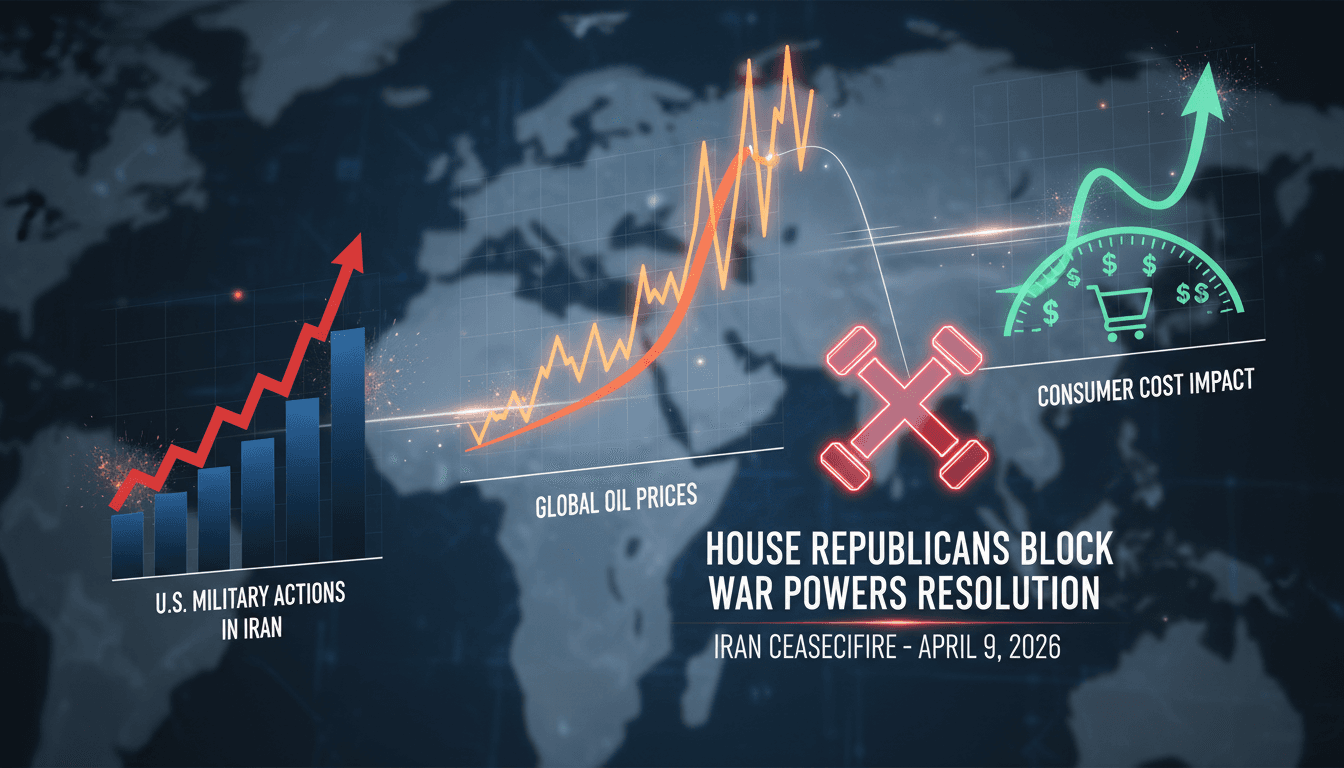
Here's what it means for you.
Your business may face rising operational costs due to geopolitical tensions affecting oil prices.
Why it matters
This procedural block reflects deeper partisan divides that could influence U.S. foreign policy and market stability.
What happened (in 30 seconds)
- House Democrats attempted to pass a war powers resolution demanding President Trump withdraw U.S. forces from Iran.
- Republicans, led by Representative Chris Smith, blocked the resolution during a pro forma session without debate.
- Democrats plan to continue pushing for oversight when the House reconvenes on April 14.
The context you actually need
- The U.S.-Iran conflict escalated in February 2026, with military actions leading to confirmed U.S. casualties and rising tensions in the region.
- A two-week ceasefire was declared on April 7, but Democrats argue it is insufficient without a permanent withdrawal of troops.
- Previous resolutions invoking the War Powers Act have failed along party lines, indicating a consistent struggle for legislative oversight on military actions.
What's really happening
The procedural block of the war powers resolution on April 9, 2026, highlights a significant power struggle within the U.S. government regarding military engagement and executive authority. The resolution, introduced by Representative Gregory Meeks and supported by House Minority Leader Hakeem Jeffries, aimed to enforce congressional oversight during a fragile ceasefire in the ongoing U.S.-Iran conflict. This conflict, which began in late February 2026, has already resulted in the deaths of 15 U.S. soldiers and has strained international relations, particularly concerning oil supply routes through the Strait of Hormuz.
The Republican-led House, prioritizing party alignment over legislative debate, adjourned the session without allowing a vote on the resolution. This move reflects a broader trend of increasing partisanship in Congress, where party loyalty often supersedes bipartisan cooperation on critical national security issues. The decision to block the resolution may also be seen as an attempt to support President Trump's military strategies, which have garnered mixed reactions from the public and lawmakers alike.
As the conflict continues, the implications of this procedural block extend beyond political theater. The ongoing military engagement has already led to significant fluctuations in oil prices, with Brent crude exceeding $120 per barrel prior to the ceasefire announcement. This volatility directly impacts global markets, including those in regions like Dubai, where residents have faced a 33.3% surge in fuel prices. The economic repercussions of military actions in the Middle East are felt worldwide, affecting everything from transportation costs to consumer goods.
The Democrats' vow to continue pressing for oversight indicates that this issue will remain a focal point in future congressional sessions. As the House reconvenes on April 14, the potential for renewed debate on military engagement and the role of Congress in authorizing military action will be critical. The outcome of these discussions could reshape U.S. foreign policy and influence how future conflicts are managed, particularly in an era where executive power is increasingly scrutinized.
Who feels it first (and how)
- Consumers: Rising oil prices lead to increased costs for goods and services.
- Businesses: Companies reliant on stable fuel prices may face higher operational costs.
- Military families: Families of service members may experience heightened anxiety and uncertainty regarding their loved ones' safety.
- Investors: Market fluctuations can impact investment portfolios and economic forecasts.
What to watch next
- Congressional actions: Watch for any new resolutions or votes regarding military engagement in Iran when the House reconvenes.
- Oil price trends: Monitor fluctuations in oil prices as geopolitical tensions evolve, particularly in response to U.S. military actions.
- Public sentiment: Keep an eye on polling data regarding public support for military engagement and congressional oversight, which could influence future legislative actions.
The U.S.-Iran conflict has resulted in military casualties and rising oil prices.
Continued partisan battles over military oversight and foreign policy decisions in Congress.
The long-term effects of this conflict on U.S. foreign relations and domestic economic stability.
Frequently Asked Questions
- Why it matters?
- This procedural block reflects deeper partisan divides that could influence U.S. foreign policy and market stability.
- What happened (in 30 seconds)?
- House Democrats attempted to pass a war powers resolution demanding President Trump withdraw U.S. forces from Iran. Republicans, led by Representative Chris Smith, blocked the resolution during a pro forma session without debate. Democrats plan to continue pushing for oversight when the House reconvenes on April 14.
- What's really happening?
- The procedural block of the war powers resolution on April 9, 2026, highlights a significant power struggle within the U.S. government regarding military engagement and executive authority. The resolution, introduced by Representative Gregory Meeks and supported by House Minority Leader Hakeem Jeffries, aimed to enforce congressional oversight during a fragile ceasefire in the ongoing U.S.-Iran conflict. This conflict, which began in late February 2026, has already resulted in the deaths of 15 U
- Who feels it first (and how)?
- Consumers: Rising oil prices lead to increased costs for goods and services. Businesses: Companies reliant on stable fuel prices may face higher operational costs. Military families: Families of service members may experience heightened anxiety and uncertainty regarding their loved ones' safety. Investors: Market fluctuations can impact investment portfolios and economic forecasts.
- What to watch next?
- Congressional actions: Watch for any new resolutions or votes regarding military engagement in Iran when the House reconvenes. Oil price trends: Monitor fluctuations in oil prices as geopolitical tensions evolve, particularly in response to U.S. military actions. Public sentiment: Keep an eye on polling data regarding public support for military engagement and congressional oversight, which could influence future legislative actions.
Top international stories selected by The Guardian editors.
"The Guardian is known for its progressive editorial stance and in-depth analysis."
— A47 Editor
Melania Trump says she ‘never had a relationship’ with Jeffrey Epstein – US politics live
Melania Trump held a press conference where she stated that she has never had a relationship with Jeffrey Epstein and emphasized that she is not a victim of Epstein. This statement comes amid ongoing scrutiny surrounding Epstein's connections to vari...
Regional coverage and analysis focused on politics, diplomacy, and business across the Middle East.
"Al-Monitor is known for analytical reporting on Middle East politics and policy developments."
— A47 Editor
US Republicans block bid to rein in Trump Iran war powers
U.S. House Republicans have blocked a Democratic initiative aimed at limiting President Donald Trump's war powers concerning Iran, preventing a resolution to cease U.S. military actions against the country. This decision was made during a brief House...