
Higher Sodium Intake Linked to Faster Memory Decline in Older Males
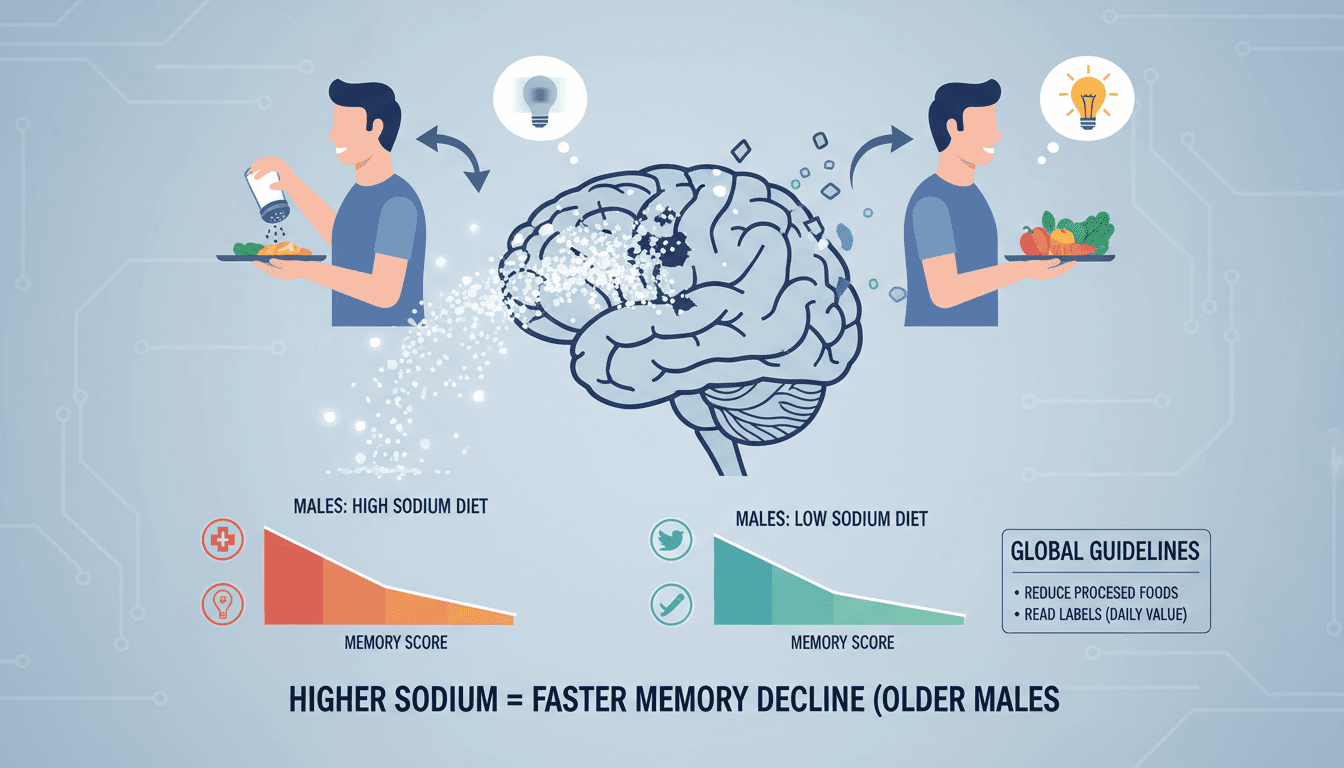
Here's what it means for you.
Your dietary choices, particularly sodium intake, could significantly impact your cognitive health as you age.
Why it matters
This study highlights sodium as a modifiable risk factor for cognitive decline, emphasizing the need for dietary awareness among older adults.
What happened (in 30 seconds)
- A longitudinal study tracked 1,208 cognitively unimpaired older adults over six years, revealing that higher sodium intake is linked to faster episodic memory decline in men.
- Researchers from Edith Cowan University found a significant negative association in males (adjusted β = -0.00002, FDR p = 0.044), but no similar effects were observed in women.
- The findings suggest that dietary sodium could be a target for interventions aimed at preserving cognitive function in aging populations.
The context you actually need
- Prior research has shown mixed results regarding sodium's impact on cognitive health, with animal studies indicating a potential link to impairment.
- The AIBL cohort was specifically designed to explore aging and lifestyle factors related to Alzheimer's disease, providing a robust dataset for this investigation.
- UAE residents consume an average of 11-12 grams of salt daily, significantly exceeding the WHO's recommended limit of 5 grams, raising concerns about cognitive health in this demographic.
What's really happening
The recent study published by researchers at Edith Cowan University utilized data from the Australian Imaging, Biomarkers and Lifestyle (AIBL) cohort, focusing on dietary sodium's role in cognitive decline among older males. Over a six-year period, the study monitored 1,208 cognitively unimpaired adults, with a mean age of 70.87 years, to assess the relationship between sodium intake and episodic memory performance.
The researchers employed linear mixed-effects models to analyze cognitive function at five different time points, adjusting for various confounding factors such as age, sex, education, and APOE status. The results indicated that higher sodium intake was associated with a steeper decline in episodic memory among men, while no significant associations were found in women or the overall cohort. This gender-specific finding raises questions about biological differences in how sodium affects cognitive health.
The implications of this study are particularly relevant in light of the increasing recognition of modifiable lifestyle factors in dementia prevention. With sodium being a common dietary component, especially in processed foods, the findings suggest that reducing sodium intake could be a straightforward intervention to help mitigate cognitive decline in older males. Dietitians and health professionals are now urged to consider sodium reduction as part of broader dietary recommendations for brain health.
In the UAE, where the average daily salt intake is already alarmingly high, the study's findings could have significant public health implications. The UAE Ministry of Health and Prevention has been proactive in addressing high sodium consumption through campaigns and new regulations targeting salt levels in processed foods. However, the study's results underscore the need for continued efforts to educate the public about the risks associated with high sodium intake, particularly as it relates to cognitive health.
As the global population ages, understanding the dietary factors that contribute to cognitive decline becomes increasingly critical. This study positions sodium as a potential target for intervention, highlighting the importance of dietary awareness and lifestyle modifications in preserving cognitive function as we age.
Who feels it first (and how)
- Older males: Specifically those over 60 who consume high levels of sodium.
- Health professionals: Dietitians and geriatric specialists focusing on cognitive health.
- Public health officials: In regions with high sodium consumption, particularly in the UAE.
What to watch next
- Public health campaigns: Monitor the effectiveness of sodium reduction initiatives in the UAE and their impact on cognitive health.
- Dietary guidelines: Watch for updates in dietary recommendations from health organizations regarding sodium intake and cognitive health.
- Further research: Look for additional studies exploring the gender differences in sodium's effects on cognitive decline.
Higher sodium intake is linked to faster episodic memory decline in older males.
Sodium reduction could become a key focus in dietary recommendations for cognitive health.
The reasons behind the lack of association in females and the broader implications for the entire population.
Frequently Asked Questions
- Why it matters?
- This study highlights sodium as a modifiable risk factor for cognitive decline, emphasizing the need for dietary awareness among older adults.
- What happened (in 30 seconds)?
- A longitudinal study tracked 1,208 cognitively unimpaired older adults over six years, revealing that higher sodium intake is linked to faster episodic memory decline in men. Researchers from Edith Cowan University found a significant negative association in males (adjusted β = -0.00002, FDR p = 0.044), but no similar effects were observed in women. The findings suggest that dietary sodium could be a target for interventions aimed at preserving cognitive function in aging populations.
- What's really happening?
- The recent study published by researchers at Edith Cowan University utilized data from the Australian Imaging, Biomarkers and Lifestyle (AIBL) cohort, focusing on dietary sodium's role in cognitive decline among older males. Over a six-year period, the study monitored 1,208 cognitively unimpaired adults, with a mean age of 70.87 years, to assess the relationship between sodium intake and episodic memory performance. The researchers employed linear mixed-effects models to analyze cognitive funct
- Who feels it first (and how)?
- Older males: Specifically those over 60 who consume high levels of sodium. Health professionals: Dietitians and geriatric specialists focusing on cognitive health. Public health officials: In regions with high sodium consumption, particularly in the UAE.
- What to watch next?
- Public health campaigns: Monitor the effectiveness of sodium reduction initiatives in the UAE and their impact on cognitive health. Dietary guidelines: Watch for updates in dietary recommendations from health organizations regarding sodium intake and cognitive health. Further research: Look for additional studies exploring the gender differences in sodium's effects on cognitive decline.
Pan-Arab news coverage spanning politics, business, sports, and regional affairs.
"Asharq Al-Awsat reflects a broad Arab editorial perspective with strong attention to regional geopolitics."
— A47 Editor
دراسة: الإفراط في الملح يرتبط بتدهور أسرع في الذاكرة
A recent study has established a link between excessive salt consumption and accelerated cognitive decline, in addition to its known association with high blood pressure. This finding highlights the potential cognitive risks associated with high salt...
Conservative-leaning coverage of current events.
"Fox News is a highly influential conservative news outlet known for right-leaning political commentary and coverage."
— A47 Editor
High salt intake linked to faster memory decline in one group, study finds
New research has established a link between high salt intake and accelerated cognitive decline in older men, suggesting that sodium may have detrimental effects on brain health that extend beyond its known impact on blood pressure.
Arabic-language UAE newspaper coverage focused on domestic affairs, public institutions, business, society, and regional developments.
"Al Khaleej coverage generally reflects a mainstream UAE editorial lens with strong attention to public affairs, institutions, and regional developments."
— A47 Editor
تناول الملح يرتبط بتدهور ذاكرة الرجال
Australian researchers from Edith Cowan University have found that high-salt diets are linked to memory decline in men over time, a condition associated with Alzheimer's disease, while no similar results were observed in women. The study, which laste...