
SanDisk and Western Digital report record profits driven by AI storage demand
Here's what it means for you.
The surge in AI data storage demand is reshaping the tech landscape, presenting new opportunities for growth and innovation.
What happened
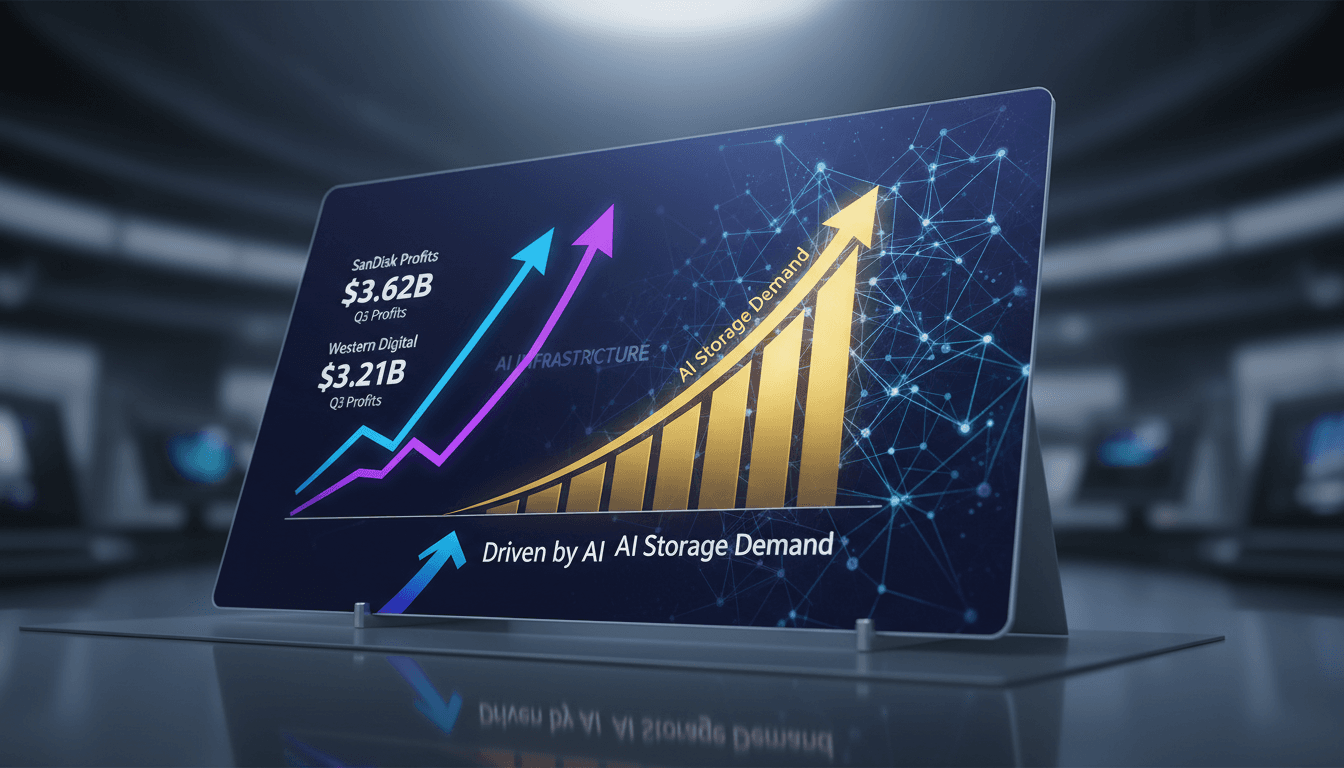
SanDisk and Western Digital reported third-quarter profits of $3.62 billion and $3.21 billion, respectively, due to strong AI storage demand.
The Context
- SanDisk and Western Digital are benefiting from the surge in AI-related data storage needs.
- The companies are positioned differently in the chip market compared to traditional AI hardware manufacturers.
- The market is closely watching SanDisk as it navigates its role in the AI ecosystem.
Takeaway
The strong performance of SanDisk and Western Digital suggests continued growth in the AI storage market.
Market-moving headlines impacting equities, bonds, and related risk assets.
"Real-time catalysts and volatility drivers across indices and sectors."
— A47 Editor
Sandisk joins Western Digital, Seagate in signaling strong AI storage demand
Sandisk has joined Western Digital and Seagate in indicating a strong demand for AI-related storage solutions, reflecting a significant shift in the tech market as companies adapt to increasing data needs.
U.S. business news, corporate developments, and economy.
"The Wall Street Journal is respected for deep financial and economic reporting with a center-right editorial perspective."
— A47 Editor
Sandisk, Western Digital Report Jumps in Third-Quarter Profit on AI Data Storage Demand
Sandisk and Western Digital reported significant profits in the third quarter, with Sandisk earning $3.62 billion and Western Digital $3.21 billion, driven by increased demand for AI data storage solutions.
Stock market news, investing ideas, and trading analysis.
"TheStreet provides market news and retail-investor-focused analysis."
— A47 Editor
SanDisk’s next report carries a high bar
SanDisk is set to report its fiscal third-quarter results, drawing significant attention as it emerges as a notable player in the artificial intelligence-related stock market, despite its focus on memory chips rather than GPUs.