
Israeli Airstrikes Result in 15 Additional Deaths in Lebanon Amid National Mourning
Here's what it means for you.
Your professional landscape may shift as regional instability affects global markets and energy prices.
Why it matters
The ongoing conflict could disrupt energy supplies and impact economic stability in the Middle East, affecting global markets.
What happened (in 30 seconds)
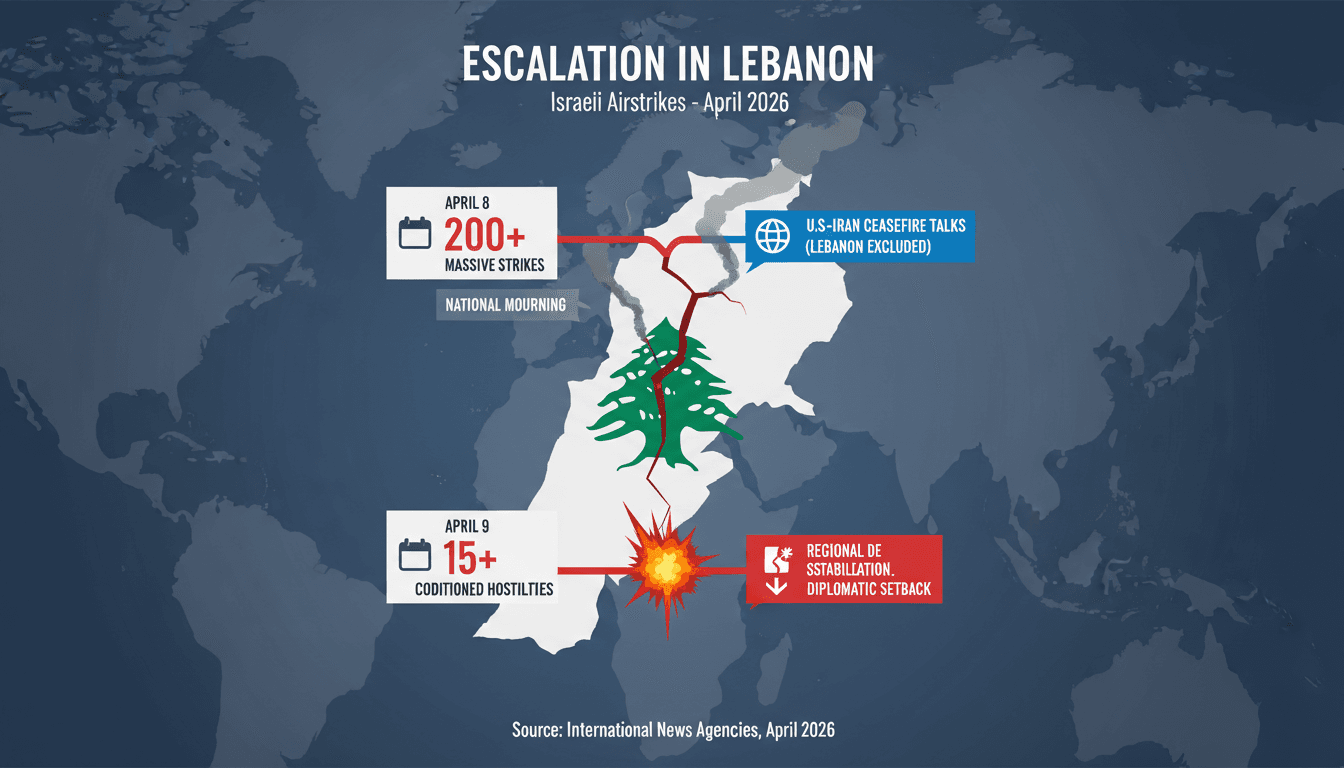
- Israeli airstrikes on April 8, 2026, killed at least 203 people in Lebanon, marking the deadliest day of conflict since March.
- Additional strikes on April 9 resulted in at least 15 more fatalities during a national day of mourning for the prior victims.
- Tensions escalated after Hezbollah launched rockets at Israel, leading to intensified Israeli military responses amid a disputed U.S.-Iran ceasefire.
The context you actually need
- Hezbollah's actions: The Iran-backed group began rocket attacks on Israel on March 2, escalating military responses from Israel.
- Ceasefire disputes: A U.S.-Iran ceasefire took effect on April 8, but Israel and the U.S. rejected claims that it included Lebanon and Hezbollah.
- Casualty reports: The Lebanese Health Ministry reported 203 deaths from the April 8 strikes, the highest single-day toll since the conflict escalated.
What's really happening
The recent airstrikes in Lebanon are a culmination of escalating tensions that began with Hezbollah's rocket attacks on Israel in early March 2026. The situation intensified as Israel responded with a series of airstrikes targeting over 100 alleged Hezbollah sites, resulting in significant civilian casualties. The strikes on April 8 were particularly devastating, with reports indicating that 203 people were killed, including many civilians in Beirut. This marked the deadliest day of conflict in recent history, highlighting the severe humanitarian impact of military operations in densely populated areas.
The backdrop to these events includes a complex geopolitical landscape, where the U.S. and Iran are engaged in a tense standoff. The ceasefire agreement announced on April 8 was intended to de-escalate hostilities, but both Israel and the U.S. have dismissed claims that it extends to Lebanon. This rejection has led to continued military operations by Israel, which argues that it must defend itself against Hezbollah's aggression. The recent airstrikes are part of a broader strategy to weaken Hezbollah's military capabilities, which Israel perceives as a direct threat.
As the conflict unfolds, the implications extend beyond the immediate region. The large Lebanese expatriate community, particularly in places like Dubai, is closely monitoring the situation, as it may affect their families and investments back home. Additionally, the UAE, with its significant energy interests, is likely to be affected by any disruptions in regional stability. The CEO of ADNOC has already emphasized the importance of maintaining open shipping lanes in the Strait of Hormuz, underscoring the potential for economic repercussions stemming from military actions.
The humanitarian crisis is also a pressing concern, with UN officials condemning the scale of destruction and calling for urgent measures to protect civilians. The Lebanese government, while facing internal pressures, has yet to retaliate against Israeli strikes, indicating a complex balancing act in responding to both domestic and international pressures. As the situation evolves, the potential for further escalation remains high, with both sides entrenched in their positions.
Who feels it first (and how)
- Lebanese civilians: Directly impacted by airstrikes and casualties, facing humanitarian crises.
- Lebanese expatriates: Those in Dubai and elsewhere concerned about family safety and economic stability.
- Energy sector professionals: Individuals in oil and gas may see fluctuations in market stability and prices.
- International investors: Stakeholders monitoring regional stability for potential investment risks.
What to watch next
- Ceasefire negotiations: Watch for developments in U.S.-Iran talks, as any agreements could influence military actions in Lebanon.
- Casualty reports: Continued updates on civilian casualties will indicate the humanitarian impact and potential for international response.
- Market reactions: Monitor oil prices and energy market stability, as escalations could lead to price fluctuations affecting global economies.
The conflict has resulted in significant civilian casualties and humanitarian crises in Lebanon.
Continued military operations from Israel as tensions with Hezbollah persist.
The potential for a broader regional conflict involving other nations or groups.
Frequently Asked Questions
- Why it matters?
- The ongoing conflict could disrupt energy supplies and impact economic stability in the Middle East, affecting global markets.
- What happened (in 30 seconds)?
- Israeli airstrikes on April 8, 2026, killed at least 203 people in Lebanon, marking the deadliest day of conflict since March. Additional strikes on April 9 resulted in at least 15 more fatalities during a national day of mourning for the prior victims. Tensions escalated after Hezbollah launched rockets at Israel, leading to intensified Israeli military responses amid a disputed U.S.-Iran ceasefire.
- What's really happening?
- The recent airstrikes in Lebanon are a culmination of escalating tensions that began with Hezbollah's rocket attacks on Israel in early March 2026. The situation intensified as Israel responded with a series of airstrikes targeting over 100 alleged Hezbollah sites, resulting in significant civilian casualties. The strikes on April 8 were particularly devastating, with reports indicating that 203 people were killed, including many civilians in Beirut. This marked the deadliest day of conflict in
- Who feels it first (and how)?
- Lebanese civilians: Directly impacted by airstrikes and casualties, facing humanitarian crises. Lebanese expatriates: Those in Dubai and elsewhere concerned about family safety and economic stability. Energy sector professionals: Individuals in oil and gas may see fluctuations in market stability and prices. International investors: Stakeholders monitoring regional stability for potential investment risks.
- What to watch next?
- Ceasefire negotiations: Watch for developments in U.S.-Iran talks, as any agreements could influence military actions in Lebanon. Casualty reports: Continued updates on civilian casualties will indicate the humanitarian impact and potential for international response. Market reactions: Monitor oil prices and energy market stability, as escalations could lead to price fluctuations affecting global economies.
UAE-based English-language newspaper covering regional politics, economics, and global affairs.
"The National reflects Emirati policy perspectives while maintaining international editorial standards."
— A47 Editor
Israeli strikes kill at least 15 as Lebanon observes national day of mourning
Israeli airstrikes have resulted in at least 15 fatalities in Lebanon, coinciding with a national day of mourning declared by the Lebanese government following a series of devastating attacks. The strikes are part of an ongoing military escalation th...
Global markets, investing, and macroeconomics from a premier financial newsroom.
"Bloomberg is respected for in-depth financial reporting and data-driven analysis."
— A47 Editor
Israel Intensifies Lebanon Strikes
Israel has escalated its military operations against Hezbollah in Lebanon, launching its largest assault since the beginning of its invasion, despite a recent US-announced ceasefire in the broader Middle East conflict. This intensification raises con...
Global news coverage with extensive reporting on Middle Eastern conflicts and geopolitics.
"Al Jazeera is a Qatar-based broadcaster known for wide regional coverage and alternative perspectives."
— A47 Editor
Several people reported killed in fresh Israeli attacks on Lebanon
Recent Israeli airstrikes in Lebanon have resulted in multiple fatalities, with reports indicating at least 182 deaths in central Beirut alone, marking a significant escalation in the ongoing conflict with Hezbollah. This surge in violence comes desp...
Comprehensive coverage of Middle Eastern and global issues.
"Al Jazeera is a prominent voice from the Global South, especially the Middle East, with an emphasis on underreported stories."
— A47 Editor
Several people reported killed in fresh Israeli attacks on Lebanon
Recent Israeli airstrikes in Lebanon have resulted in multiple fatalities, with reports indicating at least 182 deaths in central Beirut alone, marking a significant escalation in the ongoing conflict with Hezbollah. This surge in violence comes desp...