
Trump Pushes for Iran Deal Amidst Israeli Military Tensions and Regional Escalations
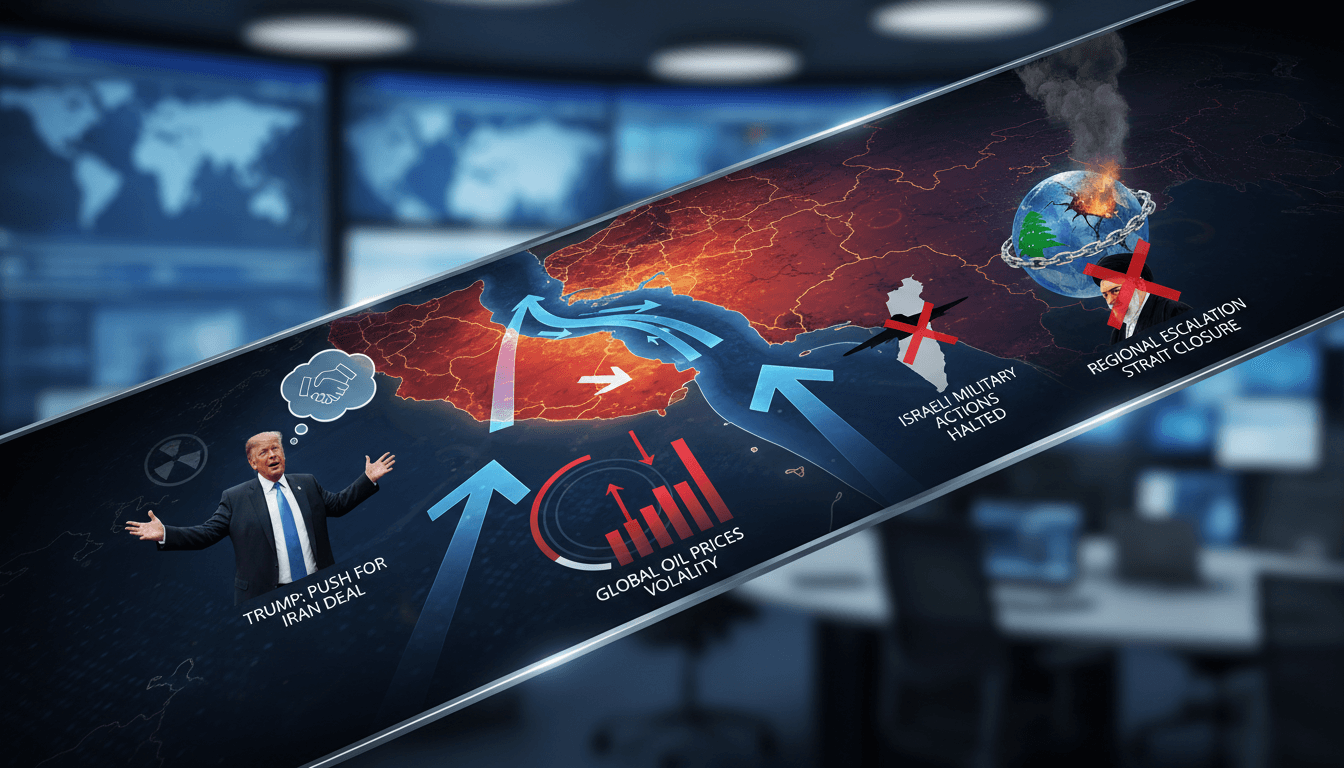
Here's what it means for you.
The shifting dynamics in U.S.-Middle East relations could impact global oil prices and geopolitical stability, affecting markets and consumers worldwide.
Why it matters
The U.S. push for a diplomatic resolution in the Middle East could reshape energy markets and international relations, influencing economic conditions globally.
What happened (in 30 seconds)
- Trump's intervention: U.S. President Donald Trump reportedly urged Israeli Prime Minister Benjamin Netanyahu to halt military actions in Lebanon amid fragile ceasefires.
- Iran's aggressive stance: Following the assassination of Ayatollah Khamenei, Iran closed the Strait of Hormuz, escalating tensions and impacting oil supply routes.
- Negotiation dynamics: Trump appears more eager for a nuclear deal with Iran than Tehran itself, complicating the U.S.-Israel relationship.
The context you actually need
- Escalating conflict: The 2026 Iran war began after failed nuclear negotiations, leading to Israeli strikes and Iranian retaliation through Hezbollah.
- U.S. strategy shift: Trump’s administration is focusing on ceasefires and negotiations rather than military escalation, reflecting a change in U.S. foreign policy.
- Economic implications: The closure of the Strait of Hormuz has led to significant volatility in oil prices, impacting global markets and energy security.
What's really happening
The current geopolitical landscape in the Middle East is marked by a complex interplay of military actions, diplomatic negotiations, and economic pressures. Following the assassination of Iran's Supreme Leader Ali Khamenei in February 2026, Israel launched a series of military strikes, which were met with retaliatory actions from Hezbollah, escalating tensions in the region. The U.S. has historically supported Israel's military campaigns, but recent developments indicate a shift in strategy under Trump's leadership.
Trump's reported eagerness for a nuclear deal with Iran suggests a desire to stabilize the region and reduce the likelihood of further military conflict. This eagerness is juxtaposed against Netanyahu's push for continued military action and regime change in Iran, creating a tension between U.S. diplomatic goals and Israeli military objectives. Trump's intervention to halt Israeli bombing in Lebanon reflects a broader strategy to enforce fragile truces and prioritize negotiations over military escalation.
The closure of the Strait of Hormuz by Iran on April 18, 2026, has significant implications for global oil markets. Brent crude oil prices surged past $120 per barrel, highlighting the economic stakes involved in this geopolitical conflict. The UAE, particularly Dubai, has felt the immediate impact, with stock exchanges sliding and residents facing rising fuel costs. The volatility in oil prices, driven by geopolitical tensions, poses risks to energy security and economic stability in the region and beyond.
As the U.S. pursues negotiations with Iran, the dynamics of the Israel-Iran conflict will continue to evolve. The fragile ceasefires currently in place are at risk of collapse without binding agreements, and the potential for renewed conflict remains high. The U.S. is also exploring direct talks between Israel and Lebanon, indicating a broader diplomatic approach to resolving tensions in the region.
Who feels it first (and how)
- Energy sector: Oil companies and consumers will experience immediate impacts from fluctuating oil prices and supply chain disruptions.
- Investors: Market volatility will affect investment strategies, particularly in energy and defense sectors.
- Middle Eastern governments: Regional governments will face pressure to respond to changing U.S. policies and the potential for renewed conflict.
What to watch next
- U.S.-Iran negotiations: Monitor the progress of diplomatic talks, as successful agreements could stabilize oil prices and reduce tensions.
- Israeli military actions: Keep an eye on Israel's military strategy and any potential escalations, which could disrupt fragile ceasefires.
- Oil market reactions: Watch for fluctuations in oil prices and stock market responses to geopolitical developments, as these will impact global economic conditions.
The U.S. is actively pursuing negotiations with Iran to stabilize the region.
Continued volatility in oil prices as geopolitical tensions fluctuate.
The long-term effectiveness of ceasefires and whether they can lead to lasting peace in the region.
Frequently Asked Questions
- Why it matters?
- The U.S. push for a diplomatic resolution in the Middle East could reshape energy markets and international relations, influencing economic conditions globally.
- What happened (in 30 seconds)?
- Trump's intervention: U.S. President Donald Trump reportedly urged Israeli Prime Minister Benjamin Netanyahu to halt military actions in Lebanon amid fragile ceasefires. Iran's aggressive stance: Following the assassination of Ayatollah Khamenei, Iran closed the Strait of Hormuz, escalating tensions and impacting oil supply routes. Negotiation dynamics: Trump appears more eager for a nuclear deal with Iran than Tehran itself, complicating the U.S.-Israel relationship.
- What's really happening?
- The current geopolitical landscape in the Middle East is marked by a complex interplay of military actions, diplomatic negotiations, and economic pressures. Following the assassination of Iran's Supreme Leader Ali Khamenei in February 2026, Israel launched a series of military strikes, which were met with retaliatory actions from Hezbollah, escalating tensions in the region. The U.S. has historically supported Israel's military campaigns, but recent developments indicate a shift in strategy unde
- Who feels it first (and how)?
- Energy sector: Oil companies and consumers will experience immediate impacts from fluctuating oil prices and supply chain disruptions. Investors: Market volatility will affect investment strategies, particularly in energy and defense sectors. Middle Eastern governments: Regional governments will face pressure to respond to changing U.S. policies and the potential for renewed conflict.
- What to watch next?
- U.S.-Iran negotiations: Monitor the progress of diplomatic talks, as successful agreements could stabilize oil prices and reduce tensions. Israeli military actions: Keep an eye on Israel's military strategy and any potential escalations, which could disrupt fragile ceasefires. Oil market reactions: Watch for fluctuations in oil prices and stock market responses to geopolitical developments, as these will impact global economic conditions.
Pan-Arab political news and analysis.
"Al-Quds Al-Arabi is a London-based Arabic newspaper known for political coverage."
— A47 Editor
“بات أكثر حرصاً على الاتفاق من الإيرانيين”: هل ملّ ترامب حروب نتنياهو؟
Recently, former President Donald Trump took an unprecedented step by prohibiting Israel from continuing its airstrikes in Lebanon, just a day after a ceasefire was imposed on both sides. This announcement was made via a tweet on his social media acc...
Pan-Arab news coverage spanning politics, business, sports, and regional affairs.
"Asharq Al-Awsat reflects a broad Arab editorial perspective with strong attention to regional geopolitics."
— A47 Editor
نتنياهو «مصدوم» من منشور ترمب بشأن لبنان... وتل أبيب تطلب توضيحات
Israeli Prime Minister Benjamin Netanyahu expressed shock over a post by U.S. President Donald Trump, which stated that Israel is 'forbidden' from conducting airstrikes in Lebanon. In response, Israel has requested clarifications from the White House...