
European Commission Unveils Open-Source Age Verification App for Online Safety
Here's what it means for you.
If you operate in the digital space, understanding this app's implications on user privacy and compliance is crucial.
Why it matters
This initiative represents a significant regulatory shift in online child protection, impacting how platforms manage user data and age verification.
What happened (in 30 seconds)
- On April 15, 2026, the European Commission announced the technical readiness of an open-source age verification app for online content.
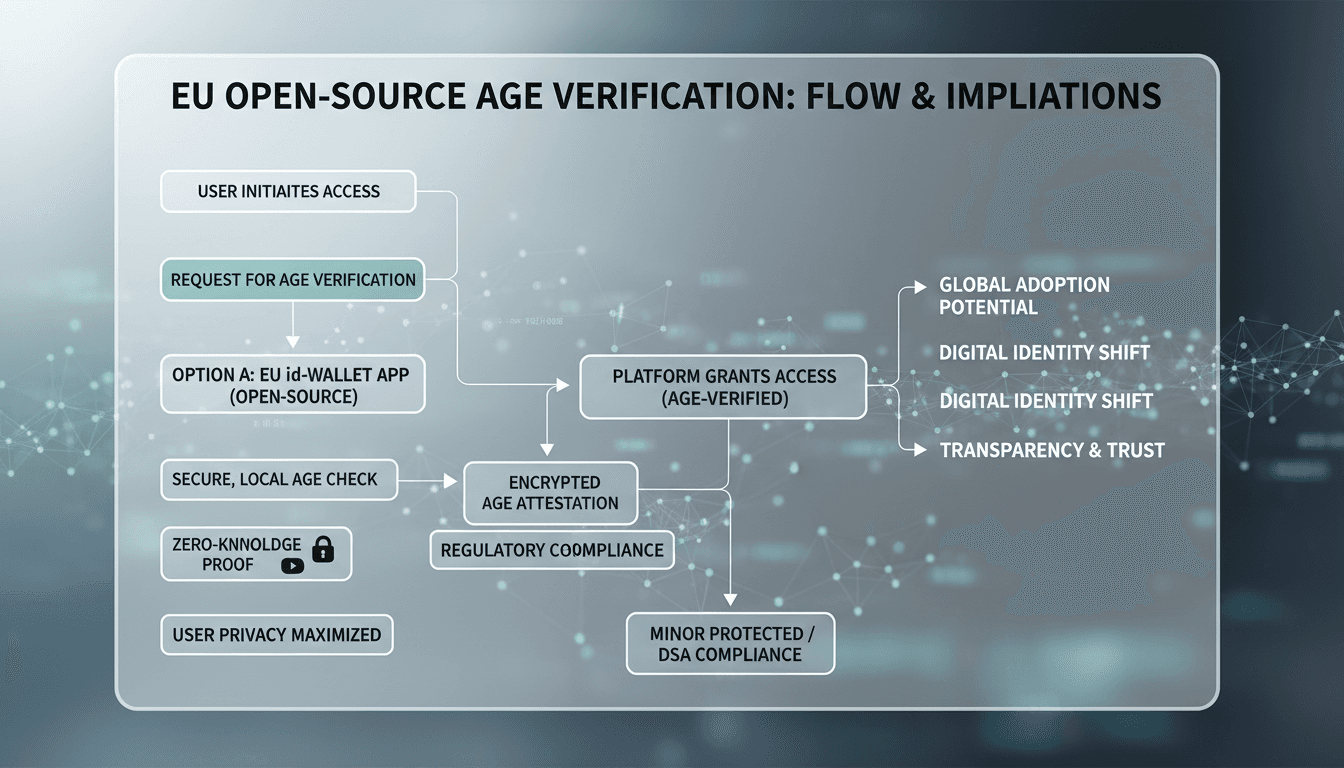
- The app allows anonymous age checks for users, enabling access to age-restricted content without storing personal data.
- Integration into national digital wallets is underway, with several EU member states planning to adopt the app for enhanced child safety online.
The context you actually need
- The Digital Services Act (DSA) mandates that very large online platforms (VLOPs) implement measures to protect minors from harmful content, effective from 2024.
- The app was developed in collaboration with contractors Scytales and T-Systems, focusing on privacy-preserving verification methods.
- Pilot programs have been conducted in several EU countries, including Denmark and France, to customize the app for national needs.
What's really happening
The European Commission's launch of the open-source age verification app is a direct response to the growing concerns about child safety online. With the DSA in effect, platforms with over 45 million monthly EU users are under increased scrutiny to protect minors from exposure to inappropriate content. This app is designed to facilitate compliance by allowing users to verify their age without compromising their privacy.
The app employs advanced technologies, including zero-knowledge proofs, which enable users to prove their age without revealing any personal information. This is a significant advancement in the realm of digital identity verification, as it addresses previous privacy concerns raised by tech firms regarding data storage and user tracking. By utilizing methods such as passport scans or electronic IDs via QR codes, the app ensures that age verification can be conducted seamlessly and securely.
The implications of this app extend beyond mere compliance; they signal a shift in how digital platforms will operate in the EU. Non-compliance with the DSA can result in fines of up to 6% of global revenue, creating a strong incentive for platforms to adopt this technology. As the app becomes available for integration into national digital wallets, it is expected to streamline the verification process across various online services, from social media to adult content sites.
However, the rollout is not without challenges. While the app is technically ready, its actual adoption by major platforms like Meta remains uncertain. The ongoing DSA investigations into platforms such as TikTok and adult sites highlight the pressure these companies face to comply with new regulations. The app's open-source nature also raises questions about its potential global adoption and whether similar frameworks will emerge in other regions.
As the EU moves forward with this initiative, the focus will be on ensuring that the app is user-friendly and widely accepted. The success of this app could set a precedent for other jurisdictions considering similar measures to protect minors online.
Who feels it first (and how)
- Digital platforms: Required to integrate the app to comply with DSA regulations.
- Parents and guardians: Will benefit from enhanced protections for children accessing online content.
- Tech developers: May need to adapt existing systems to incorporate the new verification methods.
- EU member states: Will implement the app into national digital wallets, impacting local digital identity frameworks.
What to watch next
- Adoption rates by major platforms: Monitoring which platforms integrate the app will indicate its acceptance and effectiveness.
- User feedback on privacy and usability: Understanding how users perceive the app will shape future iterations and enhancements.
- Regulatory responses to non-compliance: Observing how the EU enforces DSA penalties will reveal the seriousness of compliance among digital platforms.
The app is technically ready and will be integrated into national digital wallets by late 2026.
Major platforms will face pressure to adopt the app to avoid significant fines under the DSA.
The extent to which the app will be adopted outside the EU or influence global standards for age verification.
Frequently Asked Questions
- Why it matters?
- This initiative represents a significant regulatory shift in online child protection, impacting how platforms manage user data and age verification.
- What happened (in 30 seconds)?
- On April 15, 2026, the European Commission announced the technical readiness of an open-source age verification app for online content. The app allows anonymous age checks for users, enabling access to age-restricted content without storing personal data. Integration into national digital wallets is underway, with several EU member states planning to adopt the app for enhanced child safety online.
- What's really happening?
- The European Commission's launch of the open-source age verification app is a direct response to the growing concerns about child safety online. With the DSA in effect, platforms with over 45 million monthly EU users are under increased scrutiny to protect minors from exposure to inappropriate content. This app is designed to facilitate compliance by allowing users to verify their age without compromising their privacy. The app employs advanced technologies, including zero-knowledge proofs, whi
- Who feels it first (and how)?
- Digital platforms: Required to integrate the app to comply with DSA regulations. Parents and guardians: Will benefit from enhanced protections for children accessing online content. Tech developers: May need to adapt existing systems to incorporate the new verification methods. EU member states: Will implement the app into national digital wallets, impacting local digital identity frameworks.
- What to watch next?
- Adoption rates by major platforms: Monitoring which platforms integrate the app will indicate its acceptance and effectiveness. User feedback on privacy and usability: Understanding how users perceive the app will shape future iterations and enhancements. Regulatory responses to non-compliance: Observing how the EU enforces DSA penalties will reveal the seriousness of compliance among digital platforms.
Business and policy angles on tech and AI.
"Business desk coverage intersecting with AI trends."
— A47 Editor
Europe’s Online Age Verification App Is Here
Europe has launched a free online age verification app aimed at blocking access to porn sites and social media platforms for minors, marking a significant step in digital safety. The app is designed to be completely anonymous, encouraging companies t...
Emerging technologies, digital transformation, IT, and cultural impact of tech.
"WIRED covers the intersection of technology, culture, and politics with a progressive, forward-looking editorial stance."
— A47 Editor
Europe’s Online Age Verification App Is Here
Europe has launched a free online age verification app aimed at blocking access to porn sites and social media platforms for minors, marking a significant step in digital safety. The app is designed to be completely anonymous, encouraging companies t...
Latest tech news, product reviews, and analysis for consumers and professionals.
"CNET delivers accessible and detailed technology reporting, including trusted product reviews and how-to guides."
— A47 Editor
How to Keep Kids Safe Online? Europe Believes Its Age Verification App Is the Answer
The European Commission has announced that its new age verification app, aimed at keeping children safe online, is technically ready and will soon be available, as stated by President Ursula von der Leyen. This initiative comes in response to growing...
Curated tech headlines including AI stories.
"Influential aggregator surfacing the day’s top tech/AI links."
— A47 Editor
The EU unveils an open-source age verification app, which requires showing ID, to shield kids from harmful content, setting the standard for verification tech (Gian Volpicelli/Bloomberg)
The European Union has introduced an open-source age verification app designed to confirm users' ages online, requiring users to show identification. This initiative aims to protect minors from harmful content and sets a new standard for verification...
Technology business news, market impacts, and innovation trends.
"Bloomberg is a premier financial and tech news provider, respected for its in-depth reporting and analytical rigor."
— A47 Editor
EU Unveils Age Verification App as Social Media Bans Gain Steam
The European Union has introduced a new app designed to verify users' ages online, establishing a benchmark for age verification technology as various countries contemplate legislation to restrict social media access for younger teenagers.
Technology and innovation coverage, including consumer tech and digital transformation stories.
"Emirates 24|7 technology coverage often highlights practical tech developments with relevance to Gulf readers and businesses."
— A47 Editor
EU children's social media access curbed soon as age verification app is ready EU children's social media access curbed soon as age verification app is ready
The European Commission has announced the readiness of an age verification app aimed at regulating children's access to social media, as stated by President Ursula von der Leyen. This initiative comes as EU member states, inspired by Australia's rece...