
Lebanese President Aoun Initiates Direct Talks with Israel Amid Ongoing Conflict
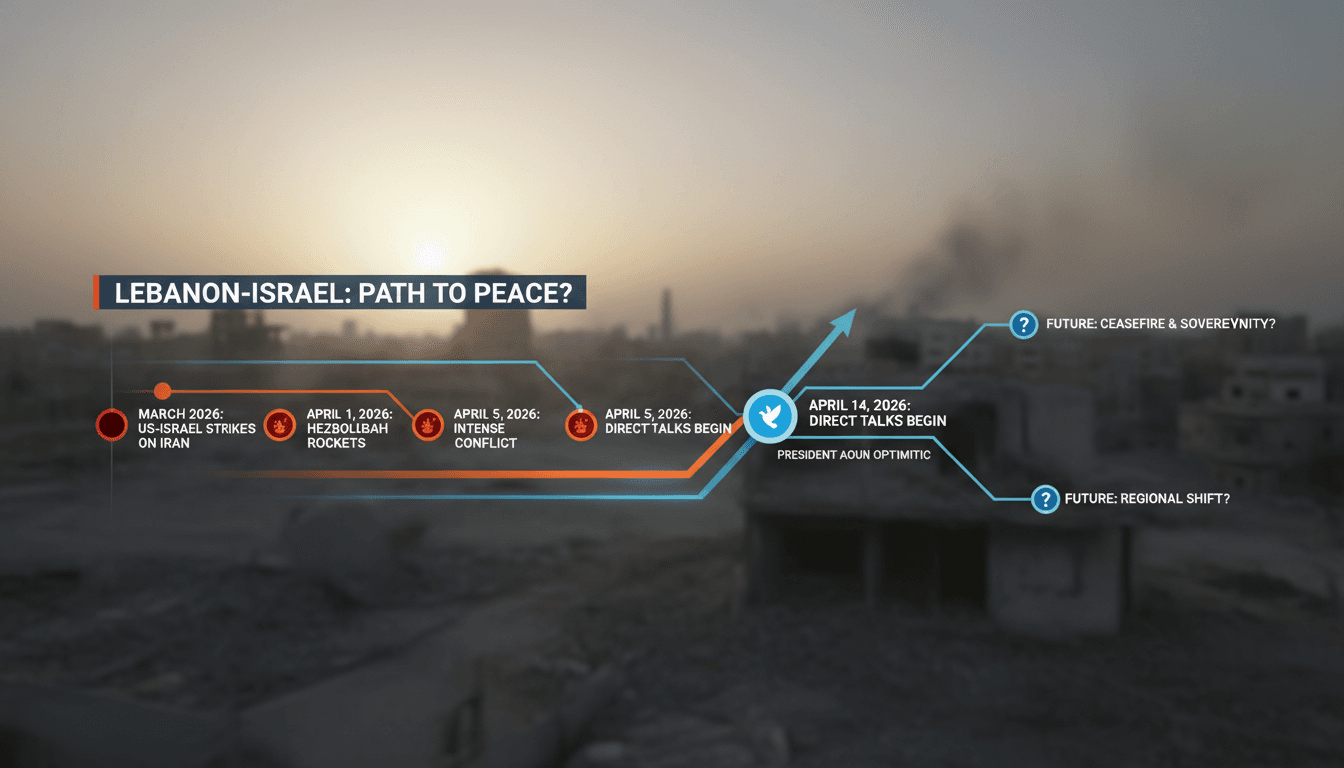
Here's what it means for you.
The outcome of these negotiations could influence regional stability and economic conditions that affect global markets.
Why it matters
The direct talks between Lebanon and Israel could signal a shift in Middle Eastern geopolitics, impacting trade and investment flows.
What happened (in 30 seconds)
- April 14, 2026: Lebanese President Joseph Aoun expressed hope for an end to suffering through direct talks with Israel.
- Ongoing conflict: The negotiations follow weeks of intense fighting between Hezbollah and Israel, which began on March 2, 2026.
- U.S. mediation: The talks are the first high-level bilateral negotiations since 1993, mediated by U.S. Secretary of State Marco Rubio.
The context you actually need
- Escalating conflict: The 2026 Lebanon war erupted after Hezbollah resumed rocket attacks on Israel, following the assassination of Iran's Supreme Leader.
- Humanitarian crisis: Over 2,000 Lebanese have died, and 1.2 million have been displaced due to the ongoing violence.
- Political landscape: President Aoun's government aims to assert sovereignty and reduce Hezbollah's influence while navigating a complex regional environment.
What's really happening
The recent escalation in Lebanon's conflict with Israel has roots in a series of provocations and retaliations that have destabilized the region. The war began on March 2, 2026, when Hezbollah launched rocket attacks in response to U.S.-Israeli airstrikes that killed Iran's Supreme Leader Ali Khamenei. This marked a significant turning point, as it reignited tensions that had been simmering since the 2023-2024 Israel-Hezbollah clashes and a violated ceasefire in November 2024.
President Joseph Aoun, who took office in 2025, is navigating a precarious political landscape. His government is under pressure to assert state sovereignty and redeploy the Lebanese Army south of the Litani River, as mandated by UN Resolution 1701. The ongoing conflict has resulted in over 2,000 Lebanese deaths and displaced more than 1.2 million people, creating a humanitarian crisis that the government is desperate to address.
The direct talks in Washington, D.C., represent a significant diplomatic effort, as they are the first high-level negotiations between Lebanon and Israel in over three decades. U.S. Secretary of State Marco Rubio's involvement underscores the international community's interest in stabilizing the region. Aoun's hopeful statement reflects a desire to end the suffering of the Lebanese people, particularly in the south, where the conflict has been most intense.
However, the talks are not without opposition. Hezbollah Secretary-General Naim Qassem has denounced the negotiations as a "ploy to disarm" and has called for the Lebanese government to withdraw from the talks. This internal dissent highlights the challenges Aoun faces in pursuing a diplomatic resolution while managing Hezbollah's influence.
The economic implications of the conflict are also significant. The war has led to an estimated 16% contraction in Lebanon's GDP, exacerbating an already dire economic situation. Dubai's large Lebanese expatriate community, numbering over 100,000, is particularly anxious about the safety of family members in southern Lebanon, and remittances—an essential economic lifeline—are facing disruptions.
As the talks progress, the potential for a ceasefire and a framework for peace could reshape Lebanon's future, but the path forward remains fraught with challenges. The outcome of these negotiations will not only affect Lebanon but could also have ripple effects throughout the region, influencing trade, investment, and geopolitical alliances.
Who feels it first (and how)
- Lebanese citizens: Directly impacted by the ongoing violence and humanitarian crisis.
- Expatriates in Dubai: Heightened anxiety over family safety and economic stability in Lebanon.
- Investors: Those with interests in the Middle East may experience market volatility based on the outcome of the talks.
What to watch next
- Progress of negotiations: Continued dialogue could lead to a ceasefire, impacting regional stability and economic conditions.
- Hezbollah's response: Any escalation or resistance from Hezbollah could derail peace efforts and exacerbate the humanitarian crisis.
- International involvement: Increased U.S. or other foreign engagement in the talks could shift the balance of power and influence in the region.
The humanitarian crisis in Lebanon is severe, with over 2,000 deaths reported.
Continued negotiations may lead to a temporary ceasefire, but long-term peace remains uncertain.
The extent of Hezbollah's influence on the Lebanese government and its willingness to accept a peace agreement.
Frequently Asked Questions
- Why it matters?
- The direct talks between Lebanon and Israel could signal a shift in Middle Eastern geopolitics, impacting trade and investment flows.
- What happened (in 30 seconds)?
- April 14, 2026: Lebanese President Joseph Aoun expressed hope for an end to suffering through direct talks with Israel. Ongoing conflict: The negotiations follow weeks of intense fighting between Hezbollah and Israel, which began on March 2, 2026. U.S. mediation: The talks are the first high-level bilateral negotiations since 1993, mediated by U.S. Secretary of State Marco Rubio.
- What's really happening?
- The recent escalation in Lebanon's conflict with Israel has roots in a series of provocations and retaliations that have destabilized the region. The war began on March 2, 2026, when Hezbollah launched rocket attacks in response to U.S.-Israeli airstrikes that killed Iran's Supreme Leader Ali Khamenei. This marked a significant turning point, as it reignited tensions that had been simmering since the 2023-2024 Israel-Hezbollah clashes and a violated ceasefire in November 2024. President Joseph
- Who feels it first (and how)?
- Lebanese citizens: Directly impacted by the ongoing violence and humanitarian crisis. Expatriates in Dubai: Heightened anxiety over family safety and economic stability in Lebanon. Investors: Those with interests in the Middle East may experience market volatility based on the outcome of the talks.
- What to watch next?
- Progress of negotiations: Continued dialogue could lead to a ceasefire, impacting regional stability and economic conditions. Hezbollah's response: Any escalation or resistance from Hezbollah could derail peace efforts and exacerbate the humanitarian crisis. International involvement: Increased U.S. or other foreign engagement in the talks could shift the balance of power and influence in the region.
Arabic-language UAE newspaper coverage focused on domestic affairs, public institutions, business, society, and regional developments.
"Al Khaleej coverage generally reflects a mainstream UAE editorial lens with strong attention to public affairs, institutions, and regional developments."
— A47 Editor
الرئيس اللبناني: آمل أن تشكل المحادثات مع إسرائيل بداية لإنهاء معاناة اللبنانيين
Lebanese President Joseph Aoun expressed hope that the talks with Israel, which commenced in Washington, could mark the beginning of alleviating the suffering of the Lebanese people following weeks of intense conflict between Hezbollah and Israel.
Pan-Arab news coverage spanning politics, business, sports, and regional affairs.
"Asharq Al-Awsat reflects a broad Arab editorial perspective with strong attention to regional geopolitics."
— A47 Editor
عون يحذّر من كارثة إنسانية في لبنان ودعم أوروبي لمسار التفاوض مع إسرائيل
President Joseph Aoun has warned of a looming humanitarian disaster in Lebanon, where over one million people have been displaced due to the ongoing conflict. The situation highlights the severe impact of the war on the Lebanese population, raising c...
Arabic-language coverage of international news and geopolitics.
"RT Arabic is a Russian state-funded outlet often criticized for promoting Kremlin-aligned narratives."
— A47 Editor
الرئيس اللبناني يدعو لوقف الحرب ويعلق آمالا على اجتماع واشنطن لبدء مفاوضات مع إسرائيل
Lebanese President Joseph Aoun has called for an end to the ongoing conflict, expressing hope for the upcoming meeting in Washington between representatives of Lebanon, the United States, and Israel, aimed at establishing a ceasefire and initiating d...