
American Journalist Shelly Kittleson Released from Kata'ib Hizballah Captivity in Iraq
Here's what it means for you.
If you work in international relations or media, the outcome of this incident could influence how your organization navigates risks in conflict zones.
Why it matters
The release of Shelly Kittleson underscores the ongoing volatility in Iraq and the complexities of U.S. foreign policy in the region.
What happened (in 30 seconds)
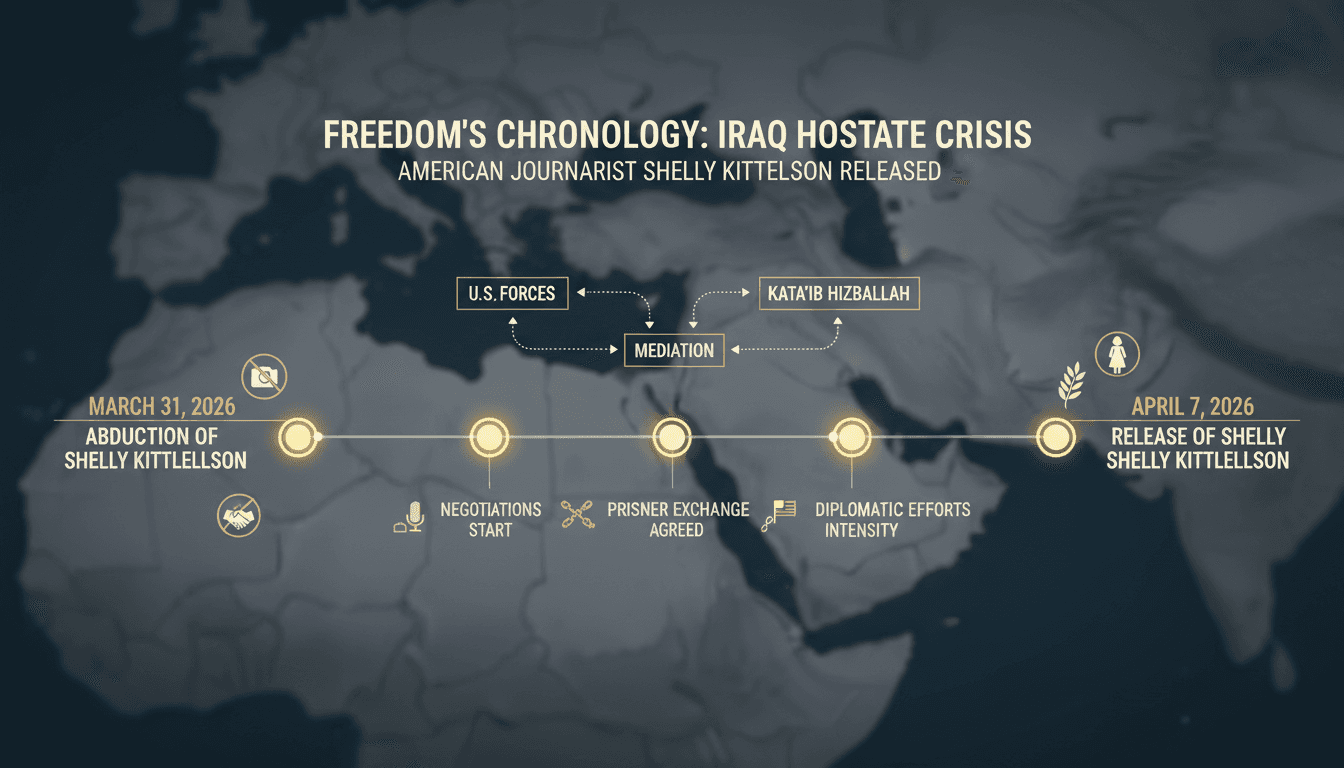
- Shelly Kittleson was kidnapped on March 31, 2026, by masked gunmen linked to Kata'ib Hizballah in Baghdad.
- Negotiations led to her release on April 7, 2026, through a prisoner exchange facilitated by U.S. and Iraqi officials.
- U.S. Secretary of State Marco Rubio confirmed her freedom, emphasizing the need for her immediate departure from Iraq.
The context you actually need
- Kittleson is an experienced journalist known for covering conflict zones, raising concerns about the safety of reporters in volatile regions.
- Kata'ib Hizballah is a U.S.-designated terrorist organization with a history of targeting U.S. interests, complicating diplomatic relations.
- The U.S. Embassy had issued a Level 4 travel advisory for Iraq, indicating extreme risk and urging American citizens to leave the country.
What's really happening
The abduction and subsequent release of Shelly Kittleson highlight the precarious nature of journalistic work in conflict zones, particularly in Iraq, where Iran-aligned militias like Kata'ib Hizballah operate with relative impunity. Kittleson, a seasoned journalist with a track record of reporting from Iraq, Syria, and Afghanistan, was taken from a busy street in Baghdad, an act that underscores the risks faced by journalists in the region.
The negotiations for her release involved multiple parties, including the Iraqi government and U.S. agencies such as the FBI and the Department of War. This multi-layered negotiation process reflects the complex dynamics at play in U.S.-Iraq relations, especially given the backdrop of heightened tensions between Iran and the U.S. The U.S. has been increasingly concerned about the activities of Iranian-backed militias, which have been implicated in attacks against U.S. interests in the region.
Kata'ib Hizballah's framing of Kittleson's detention as a "questioning" rather than a kidnapping illustrates their strategy to manipulate narratives surrounding their actions. This incident not only raises questions about the safety of journalists but also about the broader implications for U.S. foreign policy in the Middle East. The successful negotiation for Kittleson's release may bolster U.S. diplomatic efforts in Iraq, but it also risks emboldening militias that perceive such actions as leverage in their ongoing power struggle against U.S. influence.
Furthermore, the incident has drawn public attention to the U.S. administration's handling of foreign affairs, with many praising the swift action taken to secure Kittleson's release. This public sentiment may influence future U.S. policy decisions, particularly regarding military and diplomatic engagement in Iraq and surrounding areas.
The aftermath of Kittleson's release will likely see continued scrutiny of U.S. relations with Iraq, especially as the Iraqi government navigates its own internal pressures from various militia groups. The implications extend beyond immediate safety concerns for journalists; they also touch on the broader geopolitical landscape, where U.S. interests must be balanced against the realities of local power dynamics and the influence of Iranian-backed forces.
Who feels it first (and how)
- Journalists and media organizations: Increased awareness of risks in conflict zones and potential changes in operational protocols.
- U.S. government officials: Pressure to ensure the safety of American citizens abroad and manage diplomatic relations with Iraq.
- Iraqi citizens: Ongoing instability and the influence of militias on daily life and security.
What to watch next
- Future abductions: Monitor incidents involving journalists and foreign nationals in Iraq, as they may indicate rising tensions.
- U.S. diplomatic actions: Watch for shifts in U.S. policy towards Iran and its proxies in Iraq, which could affect regional stability.
- Public sentiment: Observe how this incident influences public opinion on U.S. foreign policy, particularly regarding military presence in the Middle East.
Shelly Kittleson was released after a week in captivity.
U.S. diplomatic efforts will intensify to address militia threats in Iraq.
The long-term impact on U.S.-Iraq relations and the safety of journalists in the region.
Frequently Asked Questions
- Why it matters?
- The release of Shelly Kittleson underscores the ongoing volatility in Iraq and the complexities of U.S. foreign policy in the region.
- What happened (in 30 seconds)?
- Shelly Kittleson was kidnapped on March 31, 2026, by masked gunmen linked to Kata'ib Hizballah in Baghdad. Negotiations led to her release on April 7, 2026, through a prisoner exchange facilitated by U.S. and Iraqi officials. U.S. Secretary of State Marco Rubio confirmed her freedom, emphasizing the need for her immediate departure from Iraq.
- What's really happening?
- The abduction and subsequent release of Shelly Kittleson highlight the precarious nature of journalistic work in conflict zones, particularly in Iraq, where Iran-aligned militias like Kata'ib Hizballah operate with relative impunity. Kittleson, a seasoned journalist with a track record of reporting from Iraq, Syria, and Afghanistan, was taken from a busy street in Baghdad, an act that underscores the risks faced by journalists in the region. The negotiations for her release involved multiple pa
- Who feels it first (and how)?
- Journalists and media organizations: Increased awareness of risks in conflict zones and potential changes in operational protocols. U.S. government officials: Pressure to ensure the safety of American citizens abroad and manage diplomatic relations with Iraq. Iraqi citizens: Ongoing instability and the influence of militias on daily life and security.
- What to watch next?
- Future abductions: Monitor incidents involving journalists and foreign nationals in Iraq, as they may indicate rising tensions. U.S. diplomatic actions: Watch for shifts in U.S. policy towards Iran and its proxies in Iraq, which could affect regional stability. Public sentiment: Observe how this incident influences public opinion on U.S. foreign policy, particularly regarding military presence in the Middle East.
Capitol Hill news, legislation, and policy insight.
"The Hill specializes in U.S. politics and policy, with a focus on Capitol Hill developments and a reputation for insider reporting."
— A47 Editor
Rubio says US journalist Shelly Kittleson is free, working on safe departure from Iraq
American journalist Shelly Kittleson has been released after being held hostage by an Iran-backed militia in Iraq for over a week, as confirmed by Secretary of State Marco Rubio. Kittleson's abduction raised significant concerns regarding the safety ...
Focused political reporting and governmental affairs.
"NBC News is a mainstream media outlet known for comprehensive national and international news coverage with a centrist to slightly left-leaning editorial tone."
— A47 Editor
Shelly Kittleson, US Journalist Abducted in Iraq, Is Released
American journalist Shelly Kittleson, who was abducted in Baghdad last week, has been released by the Iran-backed militia that kidnapped her, with the condition that she leave Iraq immediately. Secretary of State Marco Rubio confirmed her release, ex...
International stories from NPR’s global desk.
"NPR is an American public media organization known for thoughtful reporting and a slightly left-leaning editorial tone."
— A47 Editor
American journalist kidnapped by an Iran-backed militia released
American journalist Shelly Kittleson has been released after being kidnapped by the Iran-backed militia group Kataib Hezbollah in Baghdad. Her abduction lasted for a week, raising significant concerns regarding the safety of journalists operating in ...
Conservative-leaning political and national coverage.
"The Washington Times is a conservative-leaning newspaper known for its political coverage and advocacy of right-of-center viewpoints."
— A47 Editor
American journalist released in Iraq by pro-Iran Hezbollah militants
American journalist Shelly Kittleson has been released after being kidnapped by pro-Iran militia Kata'ib Hizballah near Baghdad, Iraq. Her abduction raised significant concerns about the safety of journalists in conflict zones, especially given prior...
Regional coverage and analysis focused on politics, diplomacy, and business across the Middle East.
"Al-Monitor is known for analytical reporting on Middle East politics and policy developments."
— A47 Editor
Iraqi armed group releases US journalist
Shelly Kittleson, a US journalist, was released by the Iraqi armed group Kataeb Hezbollah after being kidnapped in Baghdad for a week. The release occurred shortly before a ceasefire agreement between the United States and Iran, marking a significant...
Regional coverage and analysis focused on politics, diplomacy, and business across the Middle East.
"Al-Monitor is known for analytical reporting on Middle East politics and policy developments."
— A47 Editor
US journalist Kittleson released from captivity in Iraq, Rubio says
American journalist Shelly Kittleson has been released after being kidnapped by the Iran-aligned Iraqi armed group Kataib Hezbollah near Baghdad. U.S. Secretary of State Marco Rubio confirmed her release, stating that she must leave Iraq immediately ...
Global coverage of politics, crises, and international affairs.
"HuffPost provides progressive-oriented reporting on international developments, often focusing on humanitarian and social justice issues."
— A47 Editor
American Journalist Shelly Kittleson Has Been Released Week After Kidnapping In Iraq, Rubio Says
American journalist Shelly Kittleson has been released after being kidnapped in Baghdad by the Iran-backed militia group Kataib Hezbollah. U.S. Secretary of State Marco Rubio confirmed her release, stating that the U.S. State Department is facilitati...