
Cuba's National Power Grid Collapses Prompting Calls for Political Change from U.S. Officials
Here's what it means for you.
The ongoing energy crisis in Cuba could reshape U.S. foreign policy and impact global energy markets, indirectly affecting your professional landscape.
Why it matters
The collapse of Cuba's power grid highlights systemic failures that could lead to significant geopolitical shifts and increased U.S. intervention.
What happened (in 30 seconds)
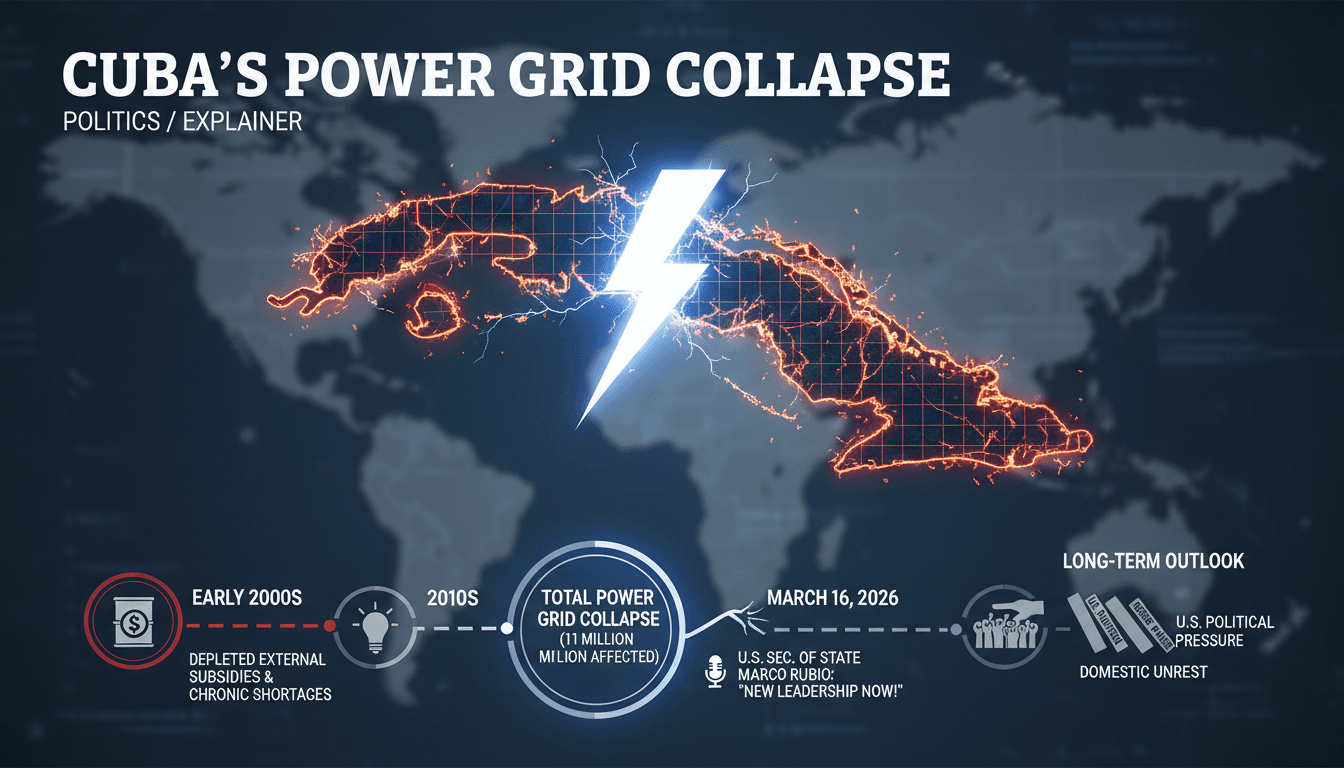
- On March 16, 2026, Cuba experienced a total national power grid collapse, affecting approximately 11 million people.
- U.S. Secretary of State Marco Rubio called for new leadership in Cuba, citing the blackout as evidence of governmental dysfunction.
- Cuban officials blamed U.S. sanctions for the crisis, while protests erupted across the island amid slow recovery efforts.
The context you actually need
- Chronic energy shortages have plagued Cuba since 2024, exacerbated by aging infrastructure and reduced fuel imports due to U.S. sanctions.
- Cuba's government attributes its energy woes to an external "energy blockade," while the U.S. demands political reforms in exchange for sanction relief.
- This blackout marks the third nationwide outage in four months, indicating a deteriorating situation that could escalate unrest and political instability.
What's really happening
The March 16 blackout was a culmination of years of systemic failures within Cuba's energy sector. The national power grid, managed by Union Electrica, has been unable to meet demand due to a combination of aging infrastructure, insufficient fuel supplies, and chronic mismanagement. The Antonio Guiteras thermoelectric plant, a key facility, has frequently failed, contributing to the ongoing crisis.
The geopolitical backdrop is crucial: U.S. sanctions, intensified under the Trump administration, have significantly reduced oil imports from Venezuela and Russia, which have historically supported Cuba's energy needs. This reduction has left the island vulnerable, as it relies heavily on external subsidies to maintain its energy supply. The U.S. government has linked the lifting of these sanctions to demands for political reforms and the release of political prisoners, creating a standoff that exacerbates the energy crisis.
In the wake of the blackout, the Cuban government has activated microsystems to restore power selectively, prioritizing essential services like hospitals. However, the slow recovery process has led to public frustration, manifesting in protests characterized by pot-banging and calls for change. The U.S. response has been swift, with Rubio's comments signaling a potential shift towards more aggressive policies aimed at regime change in Cuba. President Trump has hinted at forthcoming actions, which could include increased sanctions or even military options.
The implications of this situation extend beyond Cuba. As the U.S. considers its next steps, the potential for increased intervention could reshape diplomatic relations in the region. Moreover, the energy crisis could lead to a broader discussion about energy security and dependency on foreign oil, impacting global markets and energy strategies.
Who feels it first (and how)
- Cuban citizens: Directly affected by power outages, leading to unrest and demands for change.
- U.S. policymakers: Facing pressure to respond to the crisis and its implications for regional stability.
- Energy sector professionals: Monitoring potential shifts in U.S. energy policy and market dynamics.
- Investors in Latin America: Evaluating risks associated with political instability in Cuba and its effects on regional markets.
What to watch next
- U.S. policy changes: Watch for announcements regarding sanctions or diplomatic initiatives aimed at Cuba, as these could influence regional stability and energy markets.
- Public unrest in Cuba: Increased protests could lead to significant political changes, impacting both domestic and international responses.
- Energy market fluctuations: Monitor global oil prices and supply chains, as disruptions in Cuba could have ripple effects in the broader energy landscape.
The blackout has affected 11 million people and highlighted systemic failures in Cuba's energy infrastructure.
Increased U.S. political pressure on Cuba, potentially leading to sanctions or intervention.
The long-term impact on U.S.-Cuba relations and how it will affect regional stability.
Frequently Asked Questions
- Why it matters?
- The collapse of Cuba's power grid highlights systemic failures that could lead to significant geopolitical shifts and increased U.S. intervention.
- What happened (in 30 seconds)?
- On March 16, 2026, Cuba experienced a total national power grid collapse, affecting approximately 11 million people. U.S. Secretary of State Marco Rubio called for new leadership in Cuba, citing the blackout as evidence of governmental dysfunction. Cuban officials blamed U.S. sanctions for the crisis, while protests erupted across the island amid slow recovery efforts.
- What's really happening?
- The March 16 blackout was a culmination of years of systemic failures within Cuba's energy sector. The national power grid, managed by Union Electrica, has been unable to meet demand due to a combination of aging infrastructure, insufficient fuel supplies, and chronic mismanagement. The Antonio Guiteras thermoelectric plant, a key facility, has frequently failed, contributing to the ongoing crisis. The geopolitical backdrop is crucial: U.S. sanctions, intensified under the Trump administration
- Who feels it first (and how)?
- Cuban citizens: Directly affected by power outages, leading to unrest and demands for change. U.S. policymakers: Facing pressure to respond to the crisis and its implications for regional stability. Energy sector professionals: Monitoring potential shifts in U.S. energy policy and market dynamics. Investors in Latin America: Evaluating risks associated with political instability in Cuba and its effects on regional markets.
- What to watch next?
- U.S. policy changes: Watch for announcements regarding sanctions or diplomatic initiatives aimed at Cuba, as these could influence regional stability and energy markets. Public unrest in Cuba: Increased protests could lead to significant political changes, impacting both domestic and international responses. Energy market fluctuations: Monitor global oil prices and supply chains, as disruptions in Cuba could have ripple effects in the broader energy landscape.
English-language reporting on Saudi politics, policy, and society.
"Saudi Gazette reflects mainstream Saudi institutional perspectives."
— A47 Editor
Rubio says Cuba needs “new leaders” as blackout exposes system failure
U.S. Secretary of State Marco Rubio stated that Cuba's leadership is unable to address the country's escalating power crisis, calling for significant political change after a nationwide blackout left millions without electricity. He emphasized that t...
Conservative-leaning coverage of current events.
"Fox News is a highly influential conservative news outlet known for right-leaning political commentary and coverage."
— A47 Editor
Rubio says Cuba needs ‘new people in charge’ as blackouts, unrest grip island
Marco Rubio has stated that Cuba requires 'new people in charge' as the island grapples with severe blackouts and widespread unrest, linking the situation to the need for political change amid an ongoing economic crisis affecting millions.
Global news coverage with extensive reporting on Middle Eastern conflicts and geopolitics.
"Al Jazeera is a Qatar-based broadcaster known for wide regional coverage and alternative perspectives."
— A47 Editor
Rubio says Cuba needs to ‘get new people in charge’ as US ratchets pressure
Marco Rubio stated that Cuba needs new leadership as the U.S. increases pressure on the island amid ongoing fuel shortages and blackouts. This comes as former President Trump hints at potential actions regarding Cuba in the near future, signaling a s...
Comprehensive coverage of Middle Eastern and global issues.
"Al Jazeera is a prominent voice from the Global South, especially the Middle East, with an emphasis on underreported stories."
— A47 Editor
Rubio says Cuba needs to ‘get new people in charge’ as US ratchets pressure
Marco Rubio stated that Cuba needs new leadership as the U.S. increases pressure on the island amid ongoing fuel shortages and blackouts. This comes as former President Trump hints at potential actions regarding Cuba in the near future, signaling a s...