
Greenland Prime Minister Denounces Trump's Remarks on Island's Governance
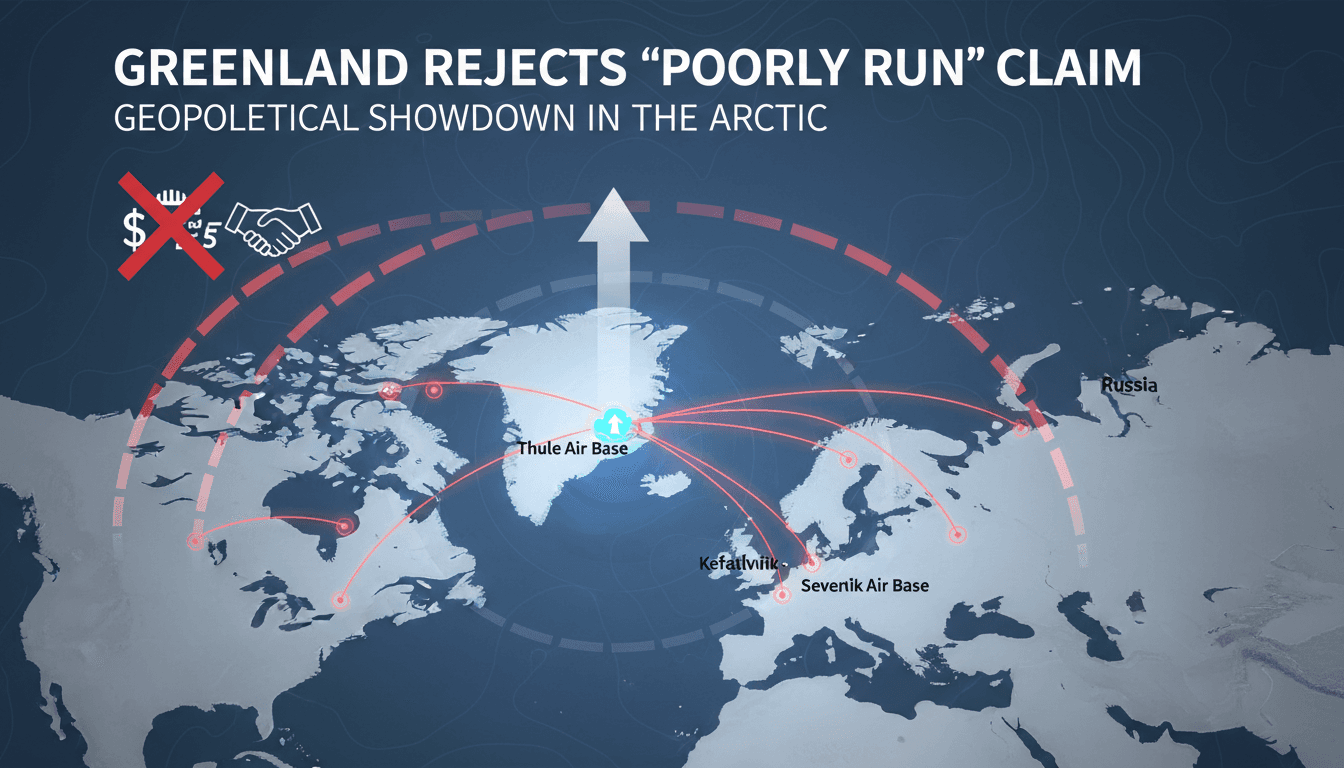
Here's what it means for you.
As global tensions rise, your business strategies may need to adapt to shifting geopolitical landscapes.
Why it matters
The ongoing Greenland crisis highlights the fragility of international alliances and the potential for economic repercussions in global trade.
What happened (in 30 seconds)
- Greenland Prime Minister Jens-Frederik Nielsen rejected U.S. President Donald Trump's description of Greenland as a "poorly run piece of ice."
- Trump's comments followed renewed U.S. interest in acquiring Greenland for strategic reasons amid tensions with Russia and China.
- Diplomatic talks continue under the 1951 U.S.-Denmark treaty, with no changes to Greenland's sovereignty.
The context you actually need
- Trump's interest in Greenland dates back to 2019 but intensified after his reelection in late 2025, driven by security concerns in the Arctic.
- European NATO allies, including Germany and France, have deployed troops to Greenland in solidarity with Denmark, reflecting heightened military tensions.
- Nielsen's response emphasizes Greenland's identity and autonomy, countering U.S. narratives while urging NATO unity to uphold international law.
What's really happening
The exchange between Trump and Nielsen is emblematic of a broader geopolitical struggle over Arctic territories, where natural resources and strategic military positioning are at stake. The U.S. has long viewed Greenland as a critical asset due to its geographical location and potential mineral wealth, which is increasingly important as global warming opens up new shipping routes and resource extraction opportunities.
In the wake of Trump's controversial remarks, Nielsen's rebuttal serves not only to defend Greenland's dignity but also to reinforce its position on the global stage. With a population of just 57,000, Greenland is often overshadowed by larger nations, yet its strategic significance cannot be understated. The island's autonomy is a point of pride for its residents, and any perceived threat to that autonomy could lead to unrest and further diplomatic complications.
The U.S. has been pursuing a dual strategy: exerting pressure on Denmark to cede control while simultaneously engaging in military posturing. Trump's threats of tariffs against NATO allies signal a willingness to leverage economic tools to achieve geopolitical aims. This has created a precarious environment where European nations feel compelled to respond militarily to protect their interests and those of their allies.
The ongoing diplomatic talks under the 1951 U.S.-Denmark treaty illustrate the complexities of sovereignty and defense in the Arctic. While the U.S. seeks to expand its military presence, Denmark and Greenland have firmly stated that sovereignty is non-negotiable. This tension is further complicated by the backdrop of NATO's strained relations due to the U.S.-Israel conflict over Iran, which has led to a reevaluation of military commitments in the region.
As the situation unfolds, the implications for global trade and security are profound. The Arctic is becoming a focal point for international competition, and how nations navigate these tensions will have lasting impacts on global alliances, trade routes, and resource management.
Who feels it first (and how)
- Businesses in the Arctic region: Increased military presence may disrupt local economies and trade.
- European NATO allies: Heightened tensions could lead to increased military expenditures and strategic realignments.
- Greenland's residents: Concerns over sovereignty and identity may lead to domestic unrest or calls for greater autonomy.
What to watch next
- Diplomatic negotiations: Watch for developments in U.S.-Denmark talks, as any concessions could reshape Arctic governance.
- Military deployments: Monitor troop movements from NATO allies in response to U.S. actions, which could indicate escalating tensions.
- Public sentiment in Greenland: Pay attention to local protests or political movements advocating for greater autonomy, which could influence international perceptions.
Greenland's population is 57,000, and it remains committed to its sovereignty.
Continued NATO military presence in Greenland as a counter to U.S. strategic interests.
The long-term implications of U.S. tariffs on NATO allies and how they will affect international relations.
Frequently Asked Questions
- Why it matters?
- The ongoing Greenland crisis highlights the fragility of international alliances and the potential for economic repercussions in global trade.
- What happened (in 30 seconds)?
- Greenland Prime Minister Jens-Frederik Nielsen rejected U.S. President Donald Trump's description of Greenland as a "poorly run piece of ice." Trump's comments followed renewed U.S. interest in acquiring Greenland for strategic reasons amid tensions with Russia and China. Diplomatic talks continue under the 1951 U.S.-Denmark treaty, with no changes to Greenland's sovereignty.
- What's really happening?
- The exchange between Trump and Nielsen is emblematic of a broader geopolitical struggle over Arctic territories, where natural resources and strategic military positioning are at stake. The U.S. has long viewed Greenland as a critical asset due to its geographical location and potential mineral wealth, which is increasingly important as global warming opens up new shipping routes and resource extraction opportunities. In the wake of Trump's controversial remarks, Nielsen's rebuttal serves not
- Who feels it first (and how)?
- Businesses in the Arctic region: Increased military presence may disrupt local economies and trade. European NATO allies: Heightened tensions could lead to increased military expenditures and strategic realignments. Greenland's residents: Concerns over sovereignty and identity may lead to domestic unrest or calls for greater autonomy.
- What to watch next?
- Diplomatic negotiations: Watch for developments in U.S.-Denmark talks, as any concessions could reshape Arctic governance. Military deployments: Monitor troop movements from NATO allies in response to U.S. actions, which could indicate escalating tensions. Public sentiment in Greenland: Pay attention to local protests or political movements advocating for greater autonomy, which could influence international perceptions.
Arabic-language UAE newspaper coverage focused on domestic affairs, public institutions, business, society, and regional developments.
"Al Khaleej coverage generally reflects a mainstream UAE editorial lens with strong attention to public affairs, institutions, and regional developments."
— A47 Editor
غرينلاند ترد على ترامب: لسنا مجرد قطعة جليد
Greenland's Prime Minister, Jens Frederik Nielsen, has called on NATO countries to unite in defense of international law, responding to remarks made by former U.S. President Donald Trump, who previously suggested that Greenland is merely an ice block...
Global news coverage with extensive reporting on Middle Eastern conflicts and geopolitics.
"Al Jazeera is a Qatar-based broadcaster known for wide regional coverage and alternative perspectives."
— A47 Editor
‘Not some piece of ice’: Greenland hits back at Trump insult
Greenland's Prime Minister Mette Frederiksen has responded to former U.S. President Donald Trump's derogatory remark, referring to the territory as a 'piece of ice,' by asserting that Greenland is a proud nation committed to maintaining global order....
Comprehensive coverage of Middle Eastern and global issues.
"Al Jazeera is a prominent voice from the Global South, especially the Middle East, with an emphasis on underreported stories."
— A47 Editor
‘Not some piece of ice’: Greenland hits back at Trump insult
Greenland's Prime Minister Mette Frederiksen has responded to former U.S. President Donald Trump's derogatory remark, referring to the territory as a 'piece of ice,' by asserting that Greenland is a proud nation committed to maintaining global order....