
Amazon Implements 3.5% Surcharge on Fulfillment Fees for US and Canada Sellers
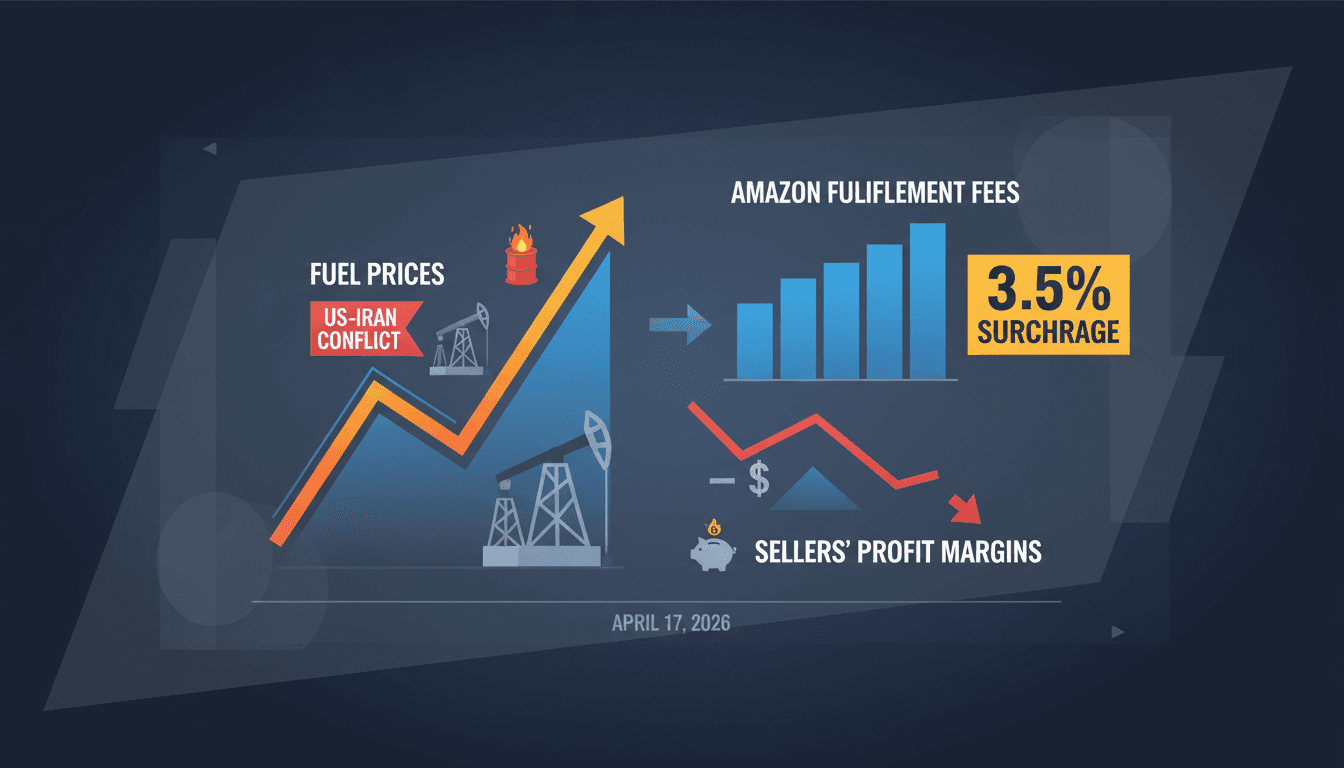
Here's what it means for you.
If you're a seller on Amazon in the US or Canada, expect your fulfillment costs to rise, impacting your profit margins.
Why it matters
This surcharge reflects broader economic pressures from global conflicts, affecting logistics and operational costs across the e-commerce landscape.
What happened (in 30 seconds)
- April 2, 2026: Amazon announces a 3.5% temporary surcharge on Fulfillment by Amazon (FBA) fees due to rising fuel costs.
- April 17, 2026: The surcharge takes effect for US FBA sellers, with Multi-Channel Fulfillment and Buy with Prime following on May 2.
- Seller Reaction: Many sellers express skepticism about the surcharge's temporary nature and frustration over increased fees.
The context you actually need
- Fuel Prices Surge: The US-Israeli war against Iran, which began in late February 2026, has disrupted oil supplies, causing US diesel prices to rise by 46% and gasoline prices to exceed $4 per gallon.
- Amazon's Competitive Edge: The 3.5% surcharge is lower than proposed increases from competitors like USPS (8%) and FedEx/UPS, indicating Amazon's strategy to balance cost recovery with seller retention.
- Sellers' Concerns: Many sellers fear that the surcharge will not be as temporary as Amazon claims, leading to potential exits from the FBA program due to profit erosion.
What's really happening
The introduction of a 3.5% fuel and logistics surcharge by Amazon is a direct response to the escalating fuel prices triggered by geopolitical tensions, specifically the US-Israeli conflict with Iran. As fuel prices surged—diesel up 46% to $5.5 per gallon and gasoline over $4—Amazon found itself facing increased operational costs that it had previously absorbed. This surcharge, averaging $0.17 per unit for US FBA, is positioned as a temporary measure, yet its implementation raises questions about the long-term sustainability of seller margins.
Amazon's decision to implement a lower surcharge compared to competitors reflects its strategic positioning within the e-commerce market. By keeping the surcharge at 3.5%, Amazon aims to mitigate seller dissatisfaction and retain its competitive edge against other logistics providers that are proposing higher increases. This move is also indicative of Amazon's ongoing efforts to manage costs while maintaining efficiency, as it has previously absorbed rising costs without passing them onto sellers.
However, the reaction from sellers has been mixed. Many express skepticism regarding the temporary nature of the surcharge, fearing that it may become a permanent fixture. This sentiment is compounded by the fact that sellers are already grappling with thin profit margins, and any additional costs could push some to reconsider their participation in the FBA program. The potential for sellers to exit FBA could lead to a ripple effect, impacting Amazon's overall fulfillment capabilities and seller diversity on the platform.
Moreover, the surcharge's implications extend beyond the US and Canada. While no specific fuel surcharge has been announced for Amazon's UAE operations as of April 3, 2026, the indirect effects of rising fuel prices could elevate logistics costs in the region. This is particularly relevant as the war disrupts oil markets, potentially affecting operational costs for e-commerce businesses in the UAE.
In summary, Amazon's surcharge is a calculated response to external pressures, but it also poses significant challenges for sellers who must navigate increased costs while maintaining competitiveness in a volatile market.
Who feels it first (and how)
- Third-party sellers: Directly impacted by increased fulfillment fees, affecting profit margins.
- Logistics providers: May see shifts in demand as sellers evaluate their options.
- Consumers: Potentially face higher prices as sellers adjust to increased operational costs.
What to watch next
- Seller Retention Rates: Monitor how many sellers choose to remain in the FBA program versus those who exit due to increased costs. This will indicate the surcharge's long-term impact on Amazon's marketplace.
- Fuel Price Trends: Keep an eye on global oil prices and their fluctuations, as sustained high prices could lead to further surcharges or adjustments in logistics strategies.
- Competitor Responses: Watch for how other logistics providers adjust their pricing strategies in response to Amazon's surcharge, which could reshape the competitive landscape.
Amazon's 3.5% surcharge is effective for US and Canadian sellers starting April 17, 2026.
Increased operational costs will lead to some sellers exiting the FBA program, impacting Amazon's fulfillment capabilities.
The duration of the surcharge and whether it will become a permanent feature of Amazon's pricing structure.
Frequently Asked Questions
- Why it matters?
- This surcharge reflects broader economic pressures from global conflicts, affecting logistics and operational costs across the e-commerce landscape.
- What happened (in 30 seconds)?
- April 2, 2026: Amazon announces a 3.5% temporary surcharge on Fulfillment by Amazon (FBA) fees due to rising fuel costs. April 17, 2026: The surcharge takes effect for US FBA sellers, with Multi-Channel Fulfillment and Buy with Prime following on May 2. Seller Reaction: Many sellers express skepticism about the surcharge's temporary nature and frustration over increased fees.
- What's really happening?
- The introduction of a 3.5% fuel and logistics surcharge by Amazon is a direct response to the escalating fuel prices triggered by geopolitical tensions, specifically the US-Israeli conflict with Iran. As fuel prices surged—diesel up 46% to $5.5 per gallon and gasoline over $4—Amazon found itself facing increased operational costs that it had previously absorbed. This surcharge, averaging $0.17 per unit for US FBA, is positioned as a temporary measure, yet its implementation raises questions abou
- Who feels it first (and how)?
- Third-party sellers: Directly impacted by increased fulfillment fees, affecting profit margins. Logistics providers: May see shifts in demand as sellers evaluate their options. Consumers: Potentially face higher prices as sellers adjust to increased operational costs.
- What to watch next?
- Seller Retention Rates: Monitor how many sellers choose to remain in the FBA program versus those who exit due to increased costs. This will indicate the surcharge's long-term impact on Amazon's marketplace. Fuel Price Trends: Keep an eye on global oil prices and their fluctuations, as sustained high prices could lead to further surcharges or adjustments in logistics strategies. Competitor Responses: Watch for how other logistics providers adjust their pricing strategies in response to Amazo
Latest tech news, product reviews, and analysis for consumers and professionals.
"CNET delivers accessible and detailed technology reporting, including trusted product reviews and how-to guides."
— A47 Editor
Amazon to Add 3.5% Fulfillment Surcharge as Fuel Costs Rise
Amazon has announced the implementation of a 3.5% fulfillment surcharge for third-party sellers in the US and Canada, a decision driven by rising fuel costs. This new fee will affect the overall expenses for sellers utilizing Amazon's platform for th...
Startup news with frequent AI coverage.
"Covers launches, funding, and product updates in AI."
— A47 Editor
Amazon hits sellers with ‘fuel surcharge’ as Iran war roils global energy markets
Amazon has announced a temporary 3.5% fuel surcharge for sellers using its platform, citing rising fuel and logistics costs linked to the ongoing conflict in Iran. This decision comes as the company faces increased operational expenses due to fluctua...
U.S. business news, corporate developments, and economy.
"The Wall Street Journal is respected for deep financial and economic reporting with a center-right editorial perspective."
— A47 Editor
Amazon to Apply 3.5% Fuel Surcharge to Third-Party Sellers
Amazon has announced a 3.5% fuel surcharge for third-party sellers, a decision influenced by rising energy prices due to the ongoing conflict in Iran. This temporary fee reflects the company's response to increased operational costs stemming from geo...
National coverage of politics and current events across Canada.
"Global News is a mainstream Canadian outlet with a centrist editorial stance, focusing on factual reporting."
— A47 Editor
Amazon imposing 3.5% fuel surcharge on sellers
Amazon has announced the implementation of a 3.5% fuel and logistics-related surcharge on fulfillment fees for sellers, which is reportedly lower than surcharges imposed by other major carriers, according to a company spokesperson. This change is set...
Business and tech news excluding paywalled content.
"High-volume business/tech outlet with frequent AI coverage."
— A47 Editor
Amazon tells sellers it's adding a 3.5% charge to offset rising fuel and logistics costs
Amazon has announced that it will implement a 3.5% surcharge on certain orders, attributing this decision to the increasing costs associated with fuel and logistics, which have been affected by rising oil prices. This move is part of the company's st...
Technology business news, market impacts, and innovation trends.
"Bloomberg is a premier financial and tech news provider, respected for its in-depth reporting and analytical rigor."
— A47 Editor
Amazon Imposes 3.5% Fuel Surcharge for Many Online Merchants
Amazon.com Inc. is set to implement a 3.5% fuel and logistics surcharge for sellers utilizing its shipping services, a move prompted by rising oil prices due to the ongoing conflict in Iran. This surcharge will take effect later this month, reflectin...
Technology business and AI-related headlines.
"Data-driven tech newsroom with global scope."
— A47 Editor
Amazon Imposes 3.5% Fuel Surcharge for Many Online Merchants
Amazon.com Inc. is set to implement a 3.5% fuel and logistics surcharge for sellers utilizing its shipping services, a move prompted by rising oil prices due to the ongoing conflict in Iran. This surcharge will take effect later this month, reflectin...