
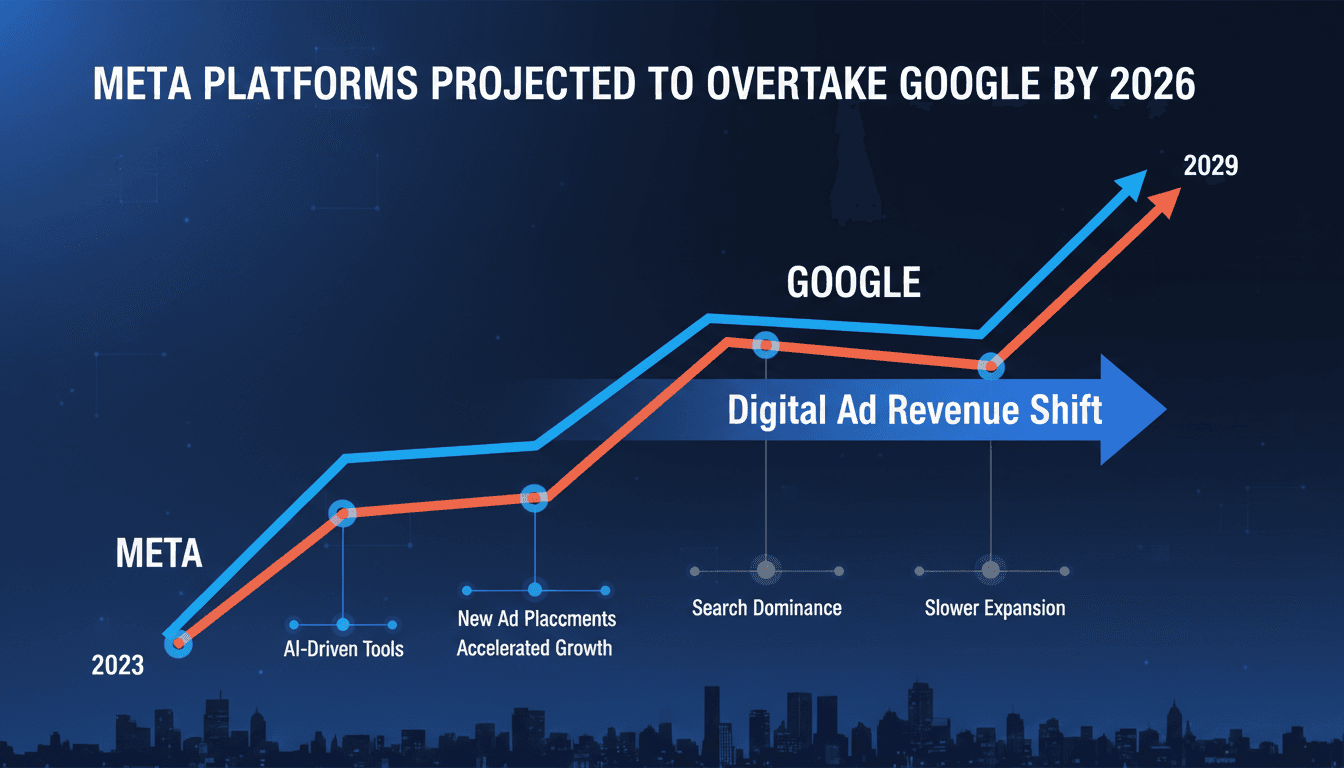
Meta Platforms Projected to Overtake Google in Digital Advertising Revenue by 2026
Here's what it means for you.
If you’re in marketing or e-commerce, this shift could redefine your advertising strategies and budget allocations.
Why it matters
This forecast signals a significant shift in the digital advertising landscape, impacting how brands allocate their marketing budgets.
What happened (in 30 seconds)
- eMarketer projected that Meta Platforms will exceed Alphabet's Google in global net digital advertising revenue by the end of 2026.
- Meta's revenue is expected to reach $243.46 billion, surpassing Google's $239.54 billion, marking the first time in two decades that Google will not lead.
- Growth drivers for Meta include AI-driven tools like Advantage+ and new ad placements on platforms such as WhatsApp and Threads.
The context you actually need
- Google's dominance in digital advertising has been unchallenged for approximately 20 years, primarily through search ads.
- Meta's growth has accelerated due to innovations in social media advertising, particularly with short-form video formats and AI optimizations.
- Recent trends show that Meta's ad growth rate is outpacing Google's, with Meta's growth projected at 24.1% compared to Google's steady 11.9%.
What's really happening
The digital advertising landscape is undergoing a seismic shift, driven by technological advancements and changing consumer behaviors. Meta Platforms, formerly known as Facebook, is leveraging artificial intelligence to enhance its advertising capabilities, particularly through its Advantage+ suite. This tool automates ad campaigns, allowing businesses to optimize their advertising strategies with minimal manual intervention. As a result, advertisers are increasingly drawn to Meta's platforms, which include Facebook, Instagram, WhatsApp, and Threads, for their ability to deliver targeted ads effectively.
In contrast, Google's revenue growth has remained steady but slower, primarily due to its reliance on search ads, which, while still dominant, are facing increasing competition from social media platforms. Meta's expansion into short-form video content, a direct response to the popularity of platforms like TikTok, has also played a crucial role in its revenue growth. This shift not only diversifies Meta's ad offerings but also attracts a younger demographic that prefers engaging video content over traditional search ads.
The implications of this forecast extend beyond just revenue figures. As Meta's market share in digital advertising grows, businesses will need to reassess their marketing strategies. The rise of Meta as a leader in digital advertising could lead to increased competition among platforms, driving innovation and potentially lowering ad costs for advertisers. However, it also raises concerns about market concentration, as the combined market share of Meta, Google, and Amazon is projected to reach 62.3%.
Moreover, in regions like the UAE, where Google holds a staggering 96.07% search engine market share, the implications of Meta's rise could be particularly pronounced. Local businesses may find new opportunities for targeted advertising through Meta's platforms, which could enhance their reach and effectiveness in a rapidly growing digital economy.
Who feels it first (and how)
- Marketing professionals: They will need to adapt strategies to leverage Meta's new ad capabilities effectively.
- E-commerce businesses: Increased competition for ad space may lead to more cost-effective advertising options.
- Consumers: They may experience more personalized and engaging ads across social media platforms.
- Investors: They will closely monitor Meta's performance and its impact on Alphabet's stock value.
What to watch next
- Ad spending trends: Monitor how businesses adjust their advertising budgets between Meta and Google in response to this forecast.
- AI advancements: Keep an eye on how Meta continues to innovate with AI tools and their impact on ad effectiveness.
- Market share shifts: Watch for changes in market share among major players in digital advertising, particularly in emerging markets.
Meta is projected to surpass Google in digital ad revenue by the end of 2026.
Businesses will increasingly adopt Meta's advertising tools to optimize their campaigns.
The long-term effects on Google's search dominance and how it will respond to this competitive pressure.
Frequently Asked Questions
- Why it matters?
- This forecast signals a significant shift in the digital advertising landscape, impacting how brands allocate their marketing budgets.
- What happened (in 30 seconds)?
- eMarketer projected that Meta Platforms will exceed Alphabet's Google in global net digital advertising revenue by the end of 2026. Meta's revenue is expected to reach $243.46 billion, surpassing Google's $239.54 billion, marking the first time in two decades that Google will not lead. Growth drivers for Meta include AI-driven tools like Advantage+ and new ad placements on platforms such as WhatsApp and Threads.
- What's really happening?
- The digital advertising landscape is undergoing a seismic shift, driven by technological advancements and changing consumer behaviors. Meta Platforms, formerly known as Facebook, is leveraging artificial intelligence to enhance its advertising capabilities, particularly through its Advantage+ suite. This tool automates ad campaigns, allowing businesses to optimize their advertising strategies with minimal manual intervention. As a result, advertisers are increasingly drawn to Meta's platforms, w
- Who feels it first (and how)?
- Marketing professionals: They will need to adapt strategies to leverage Meta's new ad capabilities effectively. E-commerce businesses: Increased competition for ad space may lead to more cost-effective advertising options. Consumers: They may experience more personalized and engaging ads across social media platforms. Investors: They will closely monitor Meta's performance and its impact on Alphabet's stock value.
- What to watch next?
- Ad spending trends: Monitor how businesses adjust their advertising budgets between Meta and Google in response to this forecast. AI advancements: Keep an eye on how Meta continues to innovate with AI tools and their impact on ad effectiveness. Market share shifts: Watch for changes in market share among major players in digital advertising, particularly in emerging markets.
Curated insights and thought leadership in enterprise technology.
"Ciente.io delivers curated insights, thought leadership, and trends in B2B tech and innovation."
— A47 Editor
Google, the King of Search, Is Losing Its Crown to Meta
Meta is projected to surpass Google in digital advertising revenue for the first time by 2026, marking a significant shift in the digital advertising landscape where Google has dominated for two decades. This change is highlighted by a recent report ...
Tech business coverage, major deals, product launches, and Silicon Valley trends.
"WSJ’s tech section offers authoritative reporting on the intersection of technology and business, including exclusive industry analysis."
— A47 Editor
Meta Expected to Unseat Google as World’s Largest Digital-Ad Player
Meta is poised to surpass Google as the world's largest digital advertising player, driven by innovative advertising products and advancements in artificial intelligence. This shift reflects a growing confidence in Meta's ability to leverage its plat...
U.S. business news, corporate developments, and economy.
"The Wall Street Journal is respected for deep financial and economic reporting with a center-right editorial perspective."
— A47 Editor
Meta Expected to Unseat Google as World’s Largest Digital-Ad Player
Meta is poised to surpass Google as the world's largest digital advertising player, driven by the introduction of innovative advertising products and advancements in artificial intelligence. This shift comes as Meta continues to enhance its platforms...