
Salesforce shifts focus to AI agents impacting hiring strategies
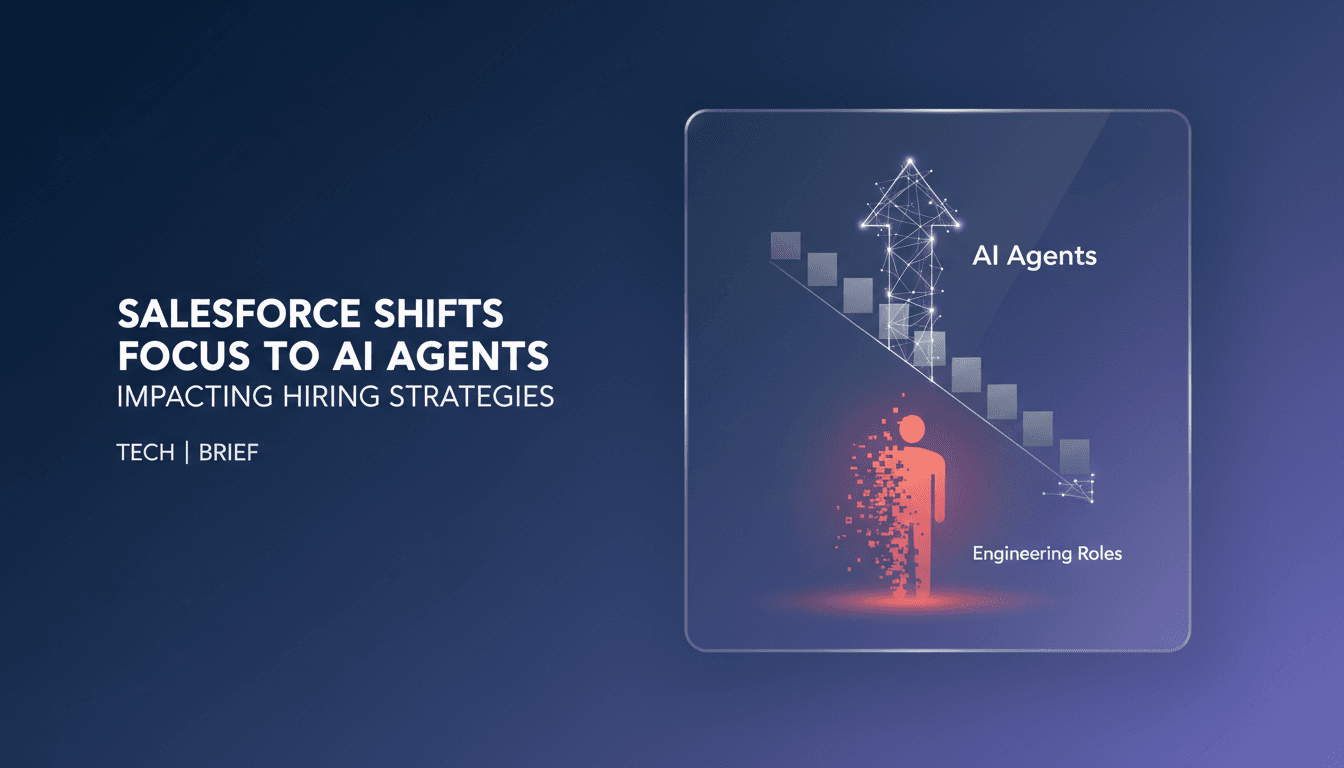
Here's what it means for you.
Salesforce's pivot towards AI agents signifies a major shift in workforce dynamics, particularly in the tech sector. As companies increasingly leverage AI to enhance efficiency, the demand for traditional engineering roles may diminish. This trend highlights the importance of human interaction in sales, suggesting that while technology evolves, certain roles remain irreplaceable. The implications of this shift could reshape hiring strategies across the industry, prompting organizations to reassess their workforce needs. As AI continues to advance, the balance between technology and human talent will be crucial for future success.
What happened
Salesforce is prioritizing AI agents, which is significantly impacting its hiring practices. During the fiscal first-quarter 2027 earnings call, CEO Marc Benioff emphasized this strategic shift, noting that advancements in AI technology are streamlining operations. As a result, the company is reducing its need for engineering hires while still actively recruiting for sales roles.
This dual approach reflects Salesforce's recognition of the ongoing demand for human interaction in sales, even as it minimizes engineering positions. The company's market valuation stands at $145 billion, underscoring its significant influence in the tech industry.
The Context
Salesforce's engineering team is being kept slim due to the capabilities of AI, which enhances operational efficiency and reduces costs. Despite the overall reduction in hiring, the company continues to seek talent in sales roles, indicating a strategic focus on maintaining human connections with clients. Benioff's comments during the earnings call on May 27, 2026, resonate with a broader trend of AI's impact on white-collar job markets.
This shift in hiring practices is not just a Salesforce phenomenon; it reflects a larger transformation within the tech sector as companies adapt to the evolving role of AI. The implications of these changes could redefine workforce structures and job roles in the coming years.
Takeaway
As Salesforce integrates AI into its operations, the focus on sales roles may signal a broader shift in workforce dynamics across the tech industry. Observers should monitor Salesforce's future hiring trends, particularly the balance between sales and engineering positions. Additionally, developments in AI technology will likely continue to influence job markets and staffing strategies.
The ongoing evolution of AI presents both challenges and opportunities for companies as they navigate the changing landscape of workforce needs. Understanding these trends will be essential for businesses aiming to remain competitive in an increasingly automated world.
Stock market news, investing ideas, and trading analysis.
"TheStreet provides market news and retail-investor-focused analysis."
— A47 Editor
Salesforce CEO delivers blunt message on AI agents
Salesforce CEO Marc Benioff emphasized the company's commitment to artificial intelligence (AI) during the fiscal first-quarter 2027 earnings call, marking AI agents as a crucial component of Salesforce's strategy. The company reported a profit of $2...
Corporate leadership, finance, technology, and market trends.
"Fortune covers financial trends, leadership, and innovation with a pragmatic editorial approach."
— A47 Editor
As AI slashes white-collar jobs, Salesforce CEO Marc Benioff says almost no one is being hired—except in sales
Salesforce CEO Marc Benioff announced that the company is hiring primarily in sales roles while keeping its engineering team lean due to advancements in artificial intelligence (AI). This reflects a shift in workforce dynamics as AI continues to resh...
Business and tech news excluding paywalled content.
"High-volume business/tech outlet with frequent AI coverage."
— A47 Editor
Marc Benioff said Salesforce is still hiring in one department, and it's not in engineering
Salesforce CEO Marc Benioff announced that the company continues to hire in areas outside of engineering, highlighting the irreplaceable role of human employees in certain functions despite advancements in AI technology.