
Israel Continues Military Operations in Lebanon Despite US-Iran Ceasefire Agreement
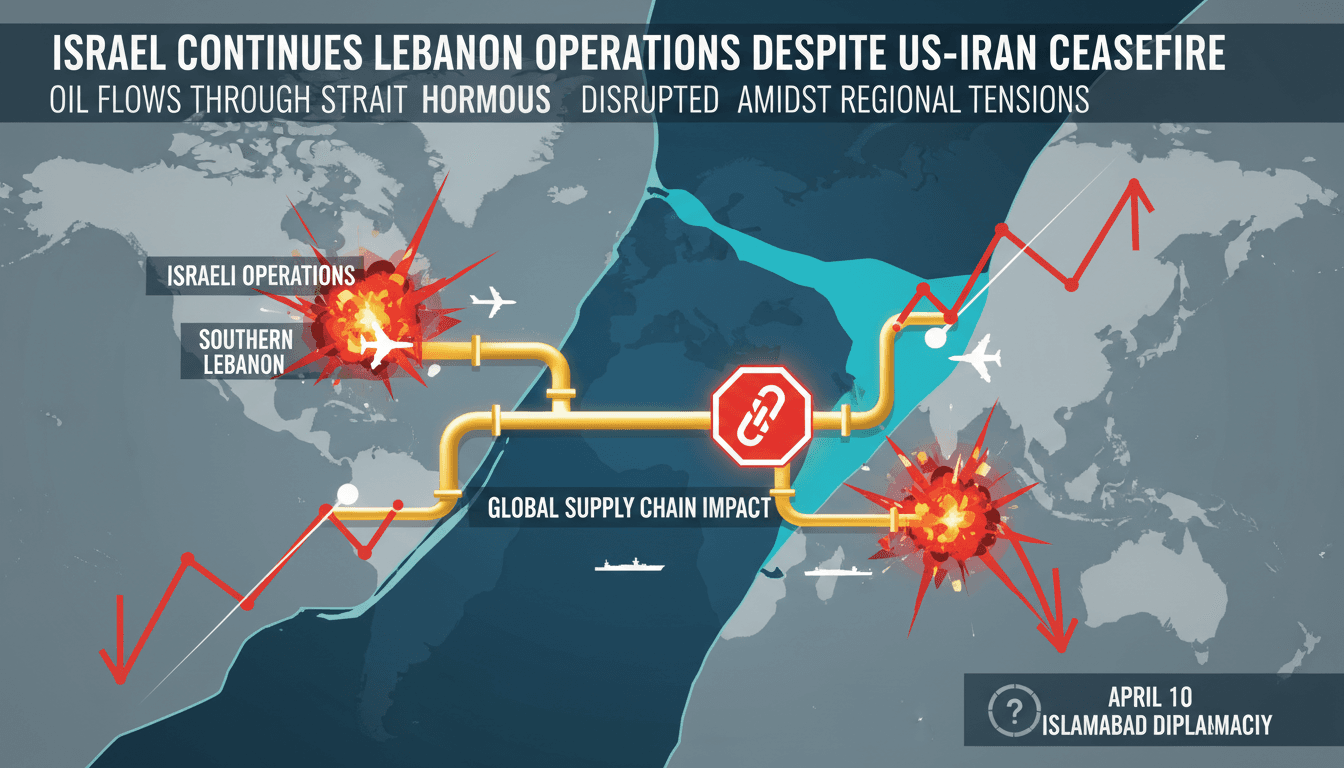
Here's what it means for you.
The ongoing conflict in the Middle East could disrupt global supply chains and fuel prices, impacting your business operations.
Why it matters
The exclusion of Lebanon from the ceasefire could escalate tensions in the region, affecting geopolitical stability and international trade.
What happened (in 30 seconds)
- Israel announced that the two-week ceasefire between the US and Iran does not apply to military operations in Lebanon.
- Ongoing Israeli strikes against Hezbollah continue, prompting new evacuation orders and reports of civilian casualties in Beirut.
- Iran accepted the ceasefire conditionally, framing it as a strategic victory while talks are set to occur in Islamabad.
The context you actually need
- The conflict escalated on February 28, 2026, when US and Israeli strikes targeted Iranian positions following Hezbollah attacks from Lebanon.
- Iran retaliated with missile and drone strikes on Gulf states, leading to the closure of the Strait of Hormuz and stranding over 1,400 ships.
- President Trump's ultimatum for reopening the Strait culminated in the conditional ceasefire, which excludes broader peace efforts.
What's really happening
The recent ceasefire agreement between the US and Iran, brokered through Pakistan, marks a significant yet limited diplomatic effort to stabilize a volatile region. However, Israel's exclusion of Lebanon from this ceasefire indicates a strategic choice to continue military operations against Hezbollah, a group it views as a direct threat. This decision reflects Israel's ongoing commitment to countering Iranian influence in Lebanon and the broader Middle East.
The conflict's roots lie in a complex web of historical grievances and geopolitical rivalries. Since the war's escalation in February, the region has seen a dramatic increase in military activity, with Hezbollah intensifying its operations and Israel responding with air strikes and ground operations. The humanitarian impact has been severe, with over 1.1 million people displaced and civilian casualties reported.
The ceasefire, while providing a temporary pause in US and Israeli strikes against Iran, does not address the underlying tensions between Israel and Hezbollah. This exclusion suggests that Israel is willing to risk further escalation in Lebanon to maintain its military objectives. The ongoing strikes in southern Lebanon are not just a tactical maneuver; they are part of a broader strategy to weaken Hezbollah's capabilities and deter future attacks.
The implications of this conflict extend beyond the immediate region. With the Strait of Hormuz, a critical chokepoint for global oil shipments, under Iranian control, the potential for disruptions in oil supply remains high. This situation could lead to increased fuel prices and economic instability, affecting markets worldwide. Additionally, the ongoing military operations and the humanitarian crisis in Lebanon may prompt international calls for intervention, further complicating the geopolitical landscape.
As the situation develops, the focus will shift to the upcoming talks in Islamabad, where Iran and Pakistan will discuss the ceasefire's future. The outcome of these discussions could influence the trajectory of the conflict and the broader regional dynamics.
Who feels it first (and how)
- Business sectors: Companies reliant on oil and shipping will face increased costs and potential supply chain disruptions.
- Local populations: Civilians in southern Lebanon and Beirut suburbs are at immediate risk due to ongoing military operations and evacuation orders.
- Governments: Gulf states and international powers may need to reassess their diplomatic strategies in light of escalating tensions.
What to watch next
- Iran's response: Monitor Iran's actions following the ceasefire and its implications for regional stability.
- Israeli military operations: Continued Israeli strikes in Lebanon could escalate the conflict, prompting international reactions.
- Diplomatic negotiations: The outcome of talks in Islamabad on April 10 will be crucial in determining the future of the ceasefire and regional dynamics.
The ceasefire excludes Lebanon from US-Iran negotiations, allowing Israeli operations to continue.
Escalation of military conflict in Lebanon, with potential for increased civilian casualties and displacement.
The long-term impact of the ceasefire on regional stability and international relations.
Frequently Asked Questions
- Why it matters?
- The exclusion of Lebanon from the ceasefire could escalate tensions in the region, affecting geopolitical stability and international trade.
- What happened (in 30 seconds)?
- Israel announced that the two-week ceasefire between the US and Iran does not apply to military operations in Lebanon. Ongoing Israeli strikes against Hezbollah continue, prompting new evacuation orders and reports of civilian casualties in Beirut. Iran accepted the ceasefire conditionally, framing it as a strategic victory while talks are set to occur in Islamabad.
- What's really happening?
- The recent ceasefire agreement between the US and Iran, brokered through Pakistan, marks a significant yet limited diplomatic effort to stabilize a volatile region. However, Israel's exclusion of Lebanon from this ceasefire indicates a strategic choice to continue military operations against Hezbollah, a group it views as a direct threat. This decision reflects Israel's ongoing commitment to countering Iranian influence in Lebanon and the broader Middle East. The conflict's roots lie in a compl
- Who feels it first (and how)?
- Business sectors: Companies reliant on oil and shipping will face increased costs and potential supply chain disruptions. Local populations: Civilians in southern Lebanon and Beirut suburbs are at immediate risk due to ongoing military operations and evacuation orders. Governments: Gulf states and international powers may need to reassess their diplomatic strategies in light of escalating tensions.
- What to watch next?
- Iran's response: Monitor Iran's actions following the ceasefire and its implications for regional stability. Israeli military operations: Continued Israeli strikes in Lebanon could escalate the conflict, prompting international reactions. Diplomatic negotiations: The outcome of talks in Islamabad on April 10 will be crucial in determining the future of the ceasefire and regional dynamics.
International coverage from The Guardian's global desks.
"The Guardian is known for its progressive editorial stance and in-depth analysis."
— A47 Editor
Trump vents frustation with Nato – as it happened
A provisional two-week ceasefire has been agreed upon between the United States and Iran, allowing for the reopening of the strategically vital Strait of Hormuz. This agreement follows escalating tensions and threats from President Donald Trump, who ...
Top international stories selected by The Guardian editors.
"The Guardian is known for its progressive editorial stance and in-depth analysis."
— A47 Editor
Middle East ceasefire threatens to unravel as Israel assaults Lebanon and Iran blocks oil tankers
The fragile two-week ceasefire in the Iran conflict is at risk of collapse as Israel escalates its military operations in Lebanon, claiming the ceasefire does not apply to the country. Iran, which brokered the truce alongside Pakistan, asserts that L...
Global news coverage with extensive reporting on Middle Eastern conflicts and geopolitics.
"Al Jazeera is a Qatar-based broadcaster known for wide regional coverage and alternative perspectives."
— A47 Editor
What to know about Israel’s strikes on Lebanon amid US-Iran ceasefire
Israel has launched extensive airstrikes across Lebanon, intensifying military operations a day after a ceasefire agreement was reached between the US and Iran. The strikes have particularly targeted neighborhoods in Beirut and other regions, resulti...
Comprehensive coverage of Middle Eastern and global issues.
"Al Jazeera is a prominent voice from the Global South, especially the Middle East, with an emphasis on underreported stories."
— A47 Editor
What to know about Israel’s strikes on Lebanon amid US-Iran ceasefire
Israel has launched extensive airstrikes across Lebanon, intensifying military operations a day after a ceasefire agreement was reached between the US and Iran. The strikes have particularly targeted neighborhoods in Beirut and other regions, resulti...
Capitol Hill news, legislation, and policy insight.
"The Hill specializes in U.S. politics and policy, with a focus on Capitol Hill developments and a reputation for insider reporting."
— A47 Editor
Strait of Hormuz, Lebanon emerge as obstacles for Iran ceasefire
A two-week ceasefire between the U.S. and Iran, announced by President Trump, is showing signs of fragility as Israel intensifies its military operations in Lebanon and Iran reportedly closes the Strait of Hormuz. This closure is a direct response to...
Comprehensive coverage of Middle Eastern and global issues.
"Al Jazeera is a prominent voice from the Global South, especially the Middle East, with an emphasis on underreported stories."
— A47 Editor
Lebanon excluded from ceasefire as Israeli strikes continue
Israel has confirmed that the recent ceasefire agreement between the United States and Iran does not apply to Lebanon, where Israeli airstrikes continue unabated. This announcement comes amid escalating military operations in Lebanon, which have resu...
Global news coverage with extensive reporting on Middle Eastern conflicts and geopolitics.
"Al Jazeera is a Qatar-based broadcaster known for wide regional coverage and alternative perspectives."
— A47 Editor
Lebanon excluded from ceasefire as Israeli strikes continue
Israel has confirmed that the recent ceasefire agreement between the United States and Iran does not apply to Lebanon, where Israeli airstrikes continue unabated. This announcement comes amid escalating military operations in Lebanon, which have resu...