
Israel Launches Airstrikes in Lebanon Amid Ongoing Conflict with Hezbollah
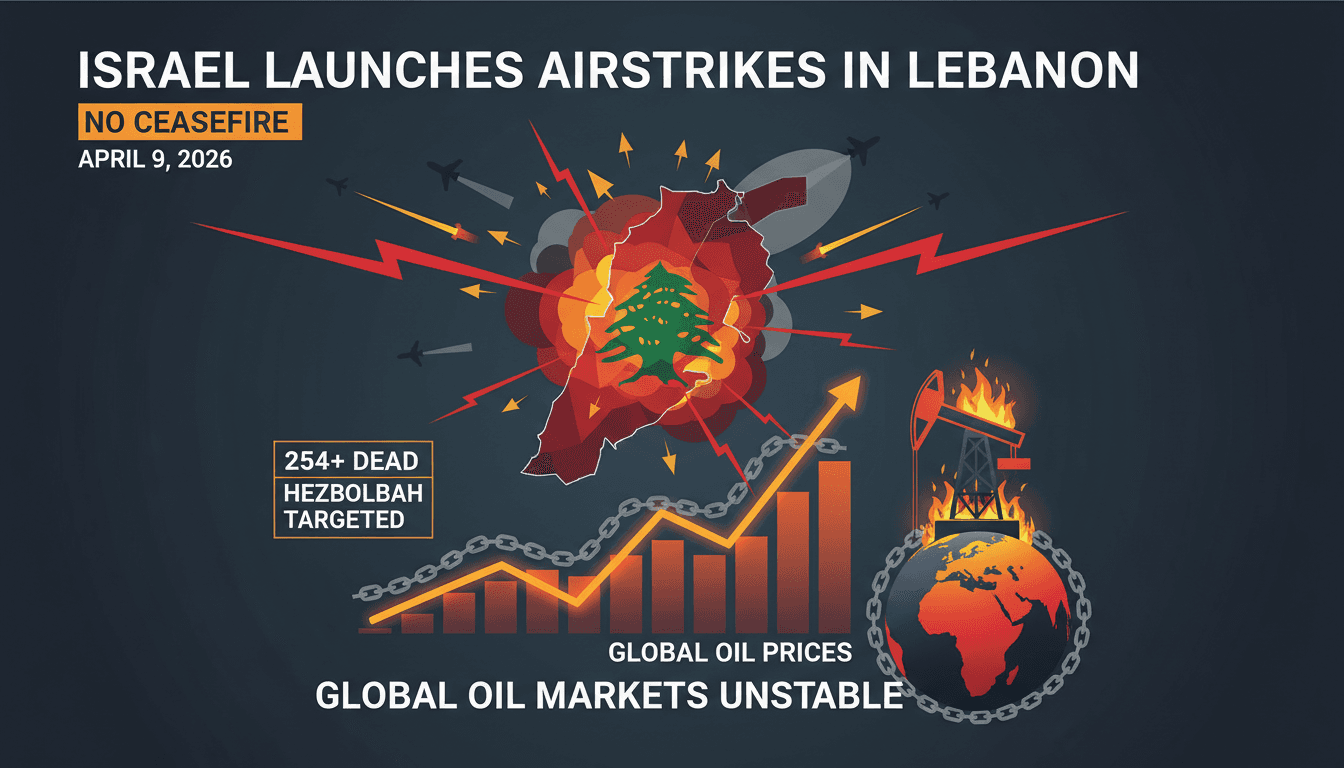
Here's what it means for you.
As geopolitical tensions rise, energy markets may face volatility, affecting global oil prices and economic stability.
Why it matters
The ongoing conflict has direct implications for global oil supply chains and regional security, impacting economies far beyond the Middle East.
What happened (in 30 seconds)
- Netanyahu declared no ceasefire in Lebanon while Israel launched airstrikes targeting Hezbollah, resulting in at least 254 deaths.
- The strikes occurred hours after a US-brokered ceasefire with Iran, which Israel claims does not include Lebanon.
- Direct negotiations with Lebanon are set to focus on Hezbollah disarmament, despite ongoing military operations.
The context you actually need
- The US-Iran ceasefire was brokered on April 8, 2026, amid escalating tensions following US-Israeli attacks on Iran.
- Hezbollah's actions have prompted Israeli military responses, including ground operations and aerial campaigns to protect northern Israel.
- Disruptions in the Strait of Hormuz, a critical oil shipping route, have heightened geopolitical tensions and could lead to increased oil prices.
What's really happening
On April 9, 2026, Israeli Prime Minister Benjamin Netanyahu made a decisive move by declaring that there would be no ceasefire in Lebanon, even as a US-brokered truce with Iran was announced just hours earlier. This declaration coincided with a significant military operation involving over 100 airstrikes targeting Hezbollah infrastructure in Lebanon, particularly in densely populated areas like Beirut. The strikes resulted in substantial casualties, with reports indicating at least 254 deaths, including high-profile targets such as Naim Qassem, the secretary to Hezbollah's leader.
Netanyahu's rationale for this military action is rooted in the need to restore security to northern Israel, where Hezbollah has been perceived as a direct threat. He emphasized that the US-Iran agreement did not extend to Lebanon, thereby justifying Israel's continued military operations. Concurrently, he initiated preparations for direct negotiations with Lebanon, focusing on disarming Hezbollah and addressing border security issues. This dual approach—military action alongside diplomatic negotiations—reflects a complex strategy aimed at both immediate security concerns and long-term stability in the region.
The airstrikes and subsequent casualties have drawn international condemnation, with various nations labeling the strikes as disproportionate. Iran has dismissed the negotiations as "meaningless" if military actions persist, while the US Vice President described the situation as a "legitimate misunderstanding." The conflicting narratives highlight the precarious balance of power in the region, where military actions can quickly escalate into broader conflicts.
The situation is further complicated by the geopolitical implications of the Strait of Hormuz, a vital shipping route that carries a significant portion of the world's oil supply. Disruptions in this area could lead to increased oil prices, which would have ripple effects on global markets, including those in Dubai, a key regional trading hub. The rising tensions and military actions could also exacerbate the already volatile oil markets, leading to economic pressures that affect consumers and businesses worldwide.
Who feels it first (and how)
- Energy sector professionals: Increased oil prices may impact profitability and operational costs.
- Middle Eastern expatriates: Concerns for family safety amid escalating violence in Lebanon.
- Global consumers: Rising oil prices could lead to increased costs for goods and services, affecting household budgets.
What to watch next
- Oil price fluctuations: Monitor how the conflict affects oil supply and prices, which can impact global markets.
- Diplomatic developments: Watch for any shifts in negotiations between Israel and Lebanon, particularly regarding Hezbollah disarmament.
- Regional military escalations: Keep an eye on potential escalations in military actions that could draw in other nations or groups.
Israel's airstrikes have resulted in significant casualties and ongoing military operations.
Increased oil prices and market volatility as a result of geopolitical tensions.
The long-term effectiveness of negotiations with Lebanon and the potential for a broader conflict.
Frequently Asked Questions
- Why it matters?
- The ongoing conflict has direct implications for global oil supply chains and regional security, impacting economies far beyond the Middle East.
- What happened (in 30 seconds)?
- Netanyahu declared no ceasefire in Lebanon while Israel launched airstrikes targeting Hezbollah, resulting in at least 254 deaths. The strikes occurred hours after a US-brokered ceasefire with Iran, which Israel claims does not include Lebanon. Direct negotiations with Lebanon are set to focus on Hezbollah disarmament, despite ongoing military operations.
- What's really happening?
- On April 9, 2026, Israeli Prime Minister Benjamin Netanyahu made a decisive move by declaring that there would be no ceasefire in Lebanon, even as a US-brokered truce with Iran was announced just hours earlier. This declaration coincided with a significant military operation involving over 100 airstrikes targeting Hezbollah infrastructure in Lebanon, particularly in densely populated areas like Beirut. The strikes resulted in substantial casualties, with reports indicating at least 254 deaths, i
- Who feels it first (and how)?
- Energy sector professionals: Increased oil prices may impact profitability and operational costs. Middle Eastern expatriates: Concerns for family safety amid escalating violence in Lebanon. Global consumers: Rising oil prices could lead to increased costs for goods and services, affecting household budgets.
- What to watch next?
- Oil price fluctuations: Monitor how the conflict affects oil supply and prices, which can impact global markets. Diplomatic developments: Watch for any shifts in negotiations between Israel and Lebanon, particularly regarding Hezbollah disarmament. Regional military escalations: Keep an eye on potential escalations in military actions that could draw in other nations or groups.
International coverage from The Guardian's global desks.
"The Guardian is known for its progressive editorial stance and in-depth analysis."
— A47 Editor
Netanyahu says there is no ceasefire in Lebanon as Israel launches fresh strikes
Israeli Prime Minister Benjamin Netanyahu has declared that there will be no ceasefire in Lebanon, as Israel continues its military operations against Hezbollah, resulting in over 300 casualties. This announcement follows a series of airstrikes targe...
News from the United States including domestic politics, society, and culture.
"The Guardian is known for its progressive editorial stance and in-depth analysis, often advocating for social justice, environmental issues, and liberal values."
— A47 Editor
Netanyahu says there is no ceasefire in Lebanon as Israel launches fresh strikes
Israeli Prime Minister Benjamin Netanyahu has declared that there will be no ceasefire in Lebanon, as Israel continues its military operations against Hezbollah, resulting in over 300 casualties. This announcement follows a series of airstrikes targe...
International coverage of politics, culture, and current affairs.
"BBC News is widely regarded as a reputable international news organization, known for its impartial tone and public service mandate."
— A47 Editor
Trump says Iran's handling of Strait of Hormuz is 'not the agreement we have'
U.S. President Donald Trump criticized Iran's management of the Strait of Hormuz, stating it does not align with the agreements made, amidst rising tensions in the region. This statement comes as Israel and Lebanon prepare to engage in peace talks in...
Editor-curated FT homepage stories spanning markets, business, world, and opinion.
"The Financial Times is a globally respected business publication with a centrist/center-left tone and strong markets focus."
— A47 Editor
Netanyahu authorises Israeli talks with Lebanon after Trump intervention
Israeli Prime Minister Benjamin Netanyahu has authorized talks with Lebanon following a significant military escalation against Hezbollah, which threatens a fragile ceasefire agreement involving the U.S. and Iran. This development comes amid ongoing ...
Comprehensive coverage of global events, politics, and international issues.
"NBC News is a mainstream outlet known for comprehensive national and international coverage with a centrist to slightly left-leaning editorial tone."
— A47 Editor
Netanyahu: ‘There is no ceasefire in Lebanon’
Israeli Prime Minister Benjamin Netanyahu announced that the bombardment of Lebanon will continue, asserting that there is no ceasefire in the region despite recent agreements involving the United States and Iran. He indicated that his cabinet would ...
Global news coverage with extensive reporting on Middle Eastern conflicts and geopolitics.
"Al Jazeera is a Qatar-based broadcaster known for wide regional coverage and alternative perspectives."
— A47 Editor
Netanyahu: ‘No ceasefire in Lebanon’, Israel open to peace talks
Israeli Prime Minister Benjamin Netanyahu has declared that there is no ceasefire in Lebanon, emphasizing that military operations will continue despite recent agreements involving the United States and Iran. He stated that Israel remains open to pea...
Comprehensive coverage of Middle Eastern and global issues.
"Al Jazeera is a prominent voice from the Global South, especially the Middle East, with an emphasis on underreported stories."
— A47 Editor
Netanyahu: ‘No ceasefire in Lebanon’, Israel open to peace talks
Israeli Prime Minister Benjamin Netanyahu has declared that there is no ceasefire in Lebanon, emphasizing that military operations will continue despite recent agreements involving the United States and Iran. He stated that Israel remains open to pea...
European coverage of Middle East politics and security issues.
"France 24 offers international reporting with a European editorial perspective."
— A47 Editor
Sidelined by Trump’s truce with Iran, Israel pummels Lebanon – then agrees to talks
Following a ceasefire agreement between the United States and Iran, Israel has intensified its military operations in Lebanon, leading to significant casualties and prompting Israeli Prime Minister Benjamin Netanyahu to agree to peace talks under U.S...
Coverage of current events and conflicts in the Middle East.
"France 24 is viewed as a globally focused outlet with balanced coverage and a European perspective."
— A47 Editor
Sidelined by Trump’s truce with Iran, Israel pummels Lebanon – then agrees to talks
Following a ceasefire agreement between the United States and Iran, Israel has intensified its military operations in Lebanon, leading to significant casualties and prompting Israeli Prime Minister Benjamin Netanyahu to agree to peace talks under U.S...
Capitol Hill news, legislation, and policy insight.
"The Hill specializes in U.S. politics and policy, with a focus on Capitol Hill developments and a reputation for insider reporting."
— A47 Editor
Israel to negotiate with Lebanon: Netanyahu
Israeli Prime Minister Benjamin Netanyahu announced that he has instructed his Cabinet to initiate direct negotiations with the Lebanese government, responding to Lebanon's repeated requests for dialogue amid ongoing military operations against Hezbo...
Conservative-leaning political and national coverage.
"The Washington Times is a conservative-leaning newspaper known for its political coverage and advocacy of right-of-center viewpoints."
— A47 Editor
Israel seeks talks with Lebanon as globe rallies to preserve U.S.-Iran ceasefire
Israeli Prime Minister Benjamin Netanyahu has directed his government to initiate negotiations with Lebanon to disarm Hezbollah fighters, as tensions between the two nations escalate, threatening the fragile U.S.-Iran ceasefire established by Preside...
Regional coverage and analysis focused on politics, diplomacy, and business across the Middle East.
"Al-Monitor is known for analytical reporting on Middle East politics and policy developments."
— A47 Editor
Netanyahu: Israel wants to start peace talks with Lebanon 'as soon as possible'
Israeli Prime Minister Benjamin Netanyahu announced on April 9, 2026, that he has instructed the cabinet to initiate peace talks with Lebanon, focusing on disarming Hezbollah and establishing peaceful relations. This decision follows Lebanon's repeat...
Global business headlines with AI angles.
"General business outlet that frequently covers AI."
— A47 Editor
Israel Begins Direct Negotiations With Lebanon As Hezbollah Attacks Threaten Iran Ceasefire Talks
Israeli Prime Minister Benjamin Netanyahu announced that Israel has commenced direct negotiations with Lebanon, a significant step amid escalating tensions as Iran threatens to withdraw from ceasefire talks if attacks against Hezbollah continue.
Focused political reporting and governmental affairs.
"NBC News is a mainstream media outlet known for comprehensive national and international news coverage with a centrist to slightly left-leaning editorial tone."
— A47 Editor
New Strikes in Middle East Threaten Fragile US-Iran Ceasefire
Israel has intensified its military operations against Hezbollah in Lebanon, launching powerful airstrikes that have reportedly killed at least 250 people, according to Lebanon's Ministry of Health. This escalation follows a recently declared ceasefi...
U.S. national news with a West Coast perspective.
"The Los Angeles Times is a major West Coast newspaper offering in-depth reporting with a liberal editorial tone and strong regional focus."
— A47 Editor
Netanyahu says ceasefire doesn't include Lebanon. Then 50 Israeli jets drop 160 bombs
Israeli Prime Minister Benjamin Netanyahu stated that the recent U.S.-brokered ceasefire does not apply to Lebanon, leading to a significant escalation in military operations as Israeli jets dropped 160 bombs on Hezbollah positions. This marks one of...
International news with cultural insight.
"The Los Angeles Times is a major West Coast newspaper offering in-depth reporting with a liberal editorial tone and strong regional focus."
— A47 Editor
Netanyahu says ceasefire doesn't include Lebanon. Then 50 Israeli jets drop 160 bombs
Israeli Prime Minister Benjamin Netanyahu stated that the recent U.S.-brokered ceasefire does not apply to Lebanon, leading to a significant escalation in military operations as Israeli jets dropped 160 bombs on Hezbollah positions. This marks one of...